Loading...
This comparison has not been analyzed yet.
One-time AI generation (~1 minute). Scores and timeline are already available below.
Jordi Pujol vs Kizza Besigye
Jordi Pujol leads by 13.5 pts · 2 figures compared
…

Jordi Pujol
Politician · Modern
58.0Total
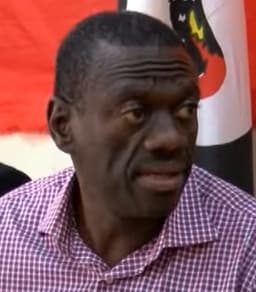
Kizza Besigye
Politician · Modern
44.5Total
Basic Information
Born
1930
1956
Died
—
—
Era
Modern
Modern
Nationality
Spain
Uganda
Occupation
Politician
Politician
Civilization
Western
Other
Score Comparison
Military (10%)
47.4
50.0
Political (20%)
60.0
29.3
Influence (20%)
60.0
47.9
Legacy (20%)
54.0
39.2
Leadership (15%)
78.0
58.8
Strategy (15%)
40.7
44.9
TOTAL
58.0
44.5
Jordi Pujol — Complete Timeline
1960 AD
Imprisoned by the Franco regimePolitical Action
Pujol was arrested and imprisoned for his involvement in Catalan nationalist activities, including organizing a protest during a Francoist event. He served several months in prison.
Francoist RepressionCatalan NationalismImprisonment
Impact: regionaltragic
1974 AD
Founded Convergència Democràtica de Catalunya (CDC)Political Action
Pujol founded the CDC, a Catalan nationalist party. It became the dominant political force in Catalonia for decades, advocating for greater autonomy and cultural recognition.
Catalan NationalismCDCParty Foundation
Impact: regionalconstructive
1979 AD
Led the campaign for the Statute of Autonomy of CataloniaPolitical Action◆ Major
Pujol was a key figure in negotiating and campaigning for the 1979 Statute of Autonomy, which granted Catalonia significant self-government powers. The statute was approved by referendum.
Catalan AutonomyStatuteNegotiation
Impact: regionalconstructive
1980 AD
Elected President of the Generalitat de CatalunyaPolitical Action
Pujol was elected President of the Generalitat de Catalunya, the regional government, after the first democratic elections since the Franco era. He served for 23 consecutive years, until 2003.
Catalan GovernmentAutonomyDemocracy
Impact: regionalconstructive
Kizza Besigye — Complete Timeline
2001 AD
Presidential Election 2001Political Action◆ Major
Besigye ran as the main challenger to Yoweri Museveni in Uganda's presidential election. He received 28% of the vote against Museveni's 69%. This was his first presidential bid, establishing him as the leading opposition figure.
UgandaElectionOpposition
Impact: national
2006 AD
Presidential Election 2006Political Action◆ Major
Besigye ran as the FDC candidate in Uganda's first multi-party election in 25 years. He received 37% of the vote against Museveni's 59%. His campaign was hampered by his arrest on treason and rape charges, which were later dropped.
UgandaElectionMulti-party
Impact: national
2011 AD
Presidential Election 2011Political Action◆ Major
Besigye contested the Ugandan presidential election as the FDC candidate. He received 26% of the vote against Museveni's 68%. Following the election, he led protests against rising prices and poor governance, which were met with police crackdowns.
UgandaElectionProtests
Impact: national
2016 AD
Presidential Election 2016Political Action◆ Major
Besigye ran as the Forum for Democratic Change candidate in Uganda's presidential election against Yoweri Museveni. Official results gave Museveni 60% and Besigye 35%. Besigye rejected the results, alleging widespread fraud, and was placed under house arrest.
UgandaElectionOpposition
Impact: national
This comparison has not been analyzed yet.
One-time AI generation (~1 minute). Scores and timeline are already available below.
Rankings
🥇
Jordi PujolLeader
Mil: 47.4Pol: 60.0Inf: 60.0
58.0
🥈
Kizza Besigye
Mil: 50.0Pol: 29.3Inf: 47.9
44.5
+13.5 behind
How This Comparison Works
Algorithm
Each figure is scored on 6 dimensions (0—100 scale) based on structured historical data: Military (10%), Political (20%), Influence (20%), Legacy (20%), Leadership (15%), Strategy (15%). The weighted total produces the final ranking.
Data Sources
Scores are computed from structured sub-indicators in the database. Scale factors adjust for era (Ancient ×0.85, Modern ×1.0) and civilization size (Eastern ×1.05, Other ×0.80) to account for differences in population and military scale.
Maximum 3 Figures
Comparisons are limited to 2—3 figures to ensure readability and statistical meaningfulness.
Error Margins
±5 points per dimension — Sub-scores are derived from historical records with inherent uncertainty. Two figures within 5 points on a dimension should be considered roughly equivalent in that area.
Total Score Accuracy
±3 points overall — The weighted combination of 6 dimensions produces a total score with approximately ±3 points of uncertainty. Differences of less than 3 points are not statistically significant— the figures are effectively tied.
Known Limitations
- Historical records are incomplete and uneven across civilizations
- Figures from oral-tradition societies may be underrepresented
- Occupation labels can misclassify multi-role figures
- Scores measure capability and impact, not moral character
- Quantitative scoring is a comparison tool, not absolute truth
Capability Radar
Military (10%) — Battles & Warfare
Battles
30
24
Win Rate
33
22
Expansion
37
30
Political (20%) — Governance & Reform
Reform
60
20
Diplomacy
70
25
Economy
65
10
Influence (20%) — Cultural & Global Reach
Cultural
55
15
Global
45
10
Legacy (20%) — Historical Impact
Historical
60
20
Longevity
55
15
Leadership (15%) — Power & Stability
Tenure
85
0
Stability
75
5
Strategy (15%) — Tactics & Innovation
Strategy
35
32
Tactics
40
33
Reform
42
34
Similar Comparisons
Comments & Discussion
No comments yet. Be the first to share your thoughts!