Loading...
This comparison has not been analyzed yet.
One-time AI generation (~1 minute). Scores and timeline are already available below.
Jorge Ubico vs Shehu Musa YarAdua
Shehu Musa YarAdua leads by 9.6 pts · 2 figures compared
…
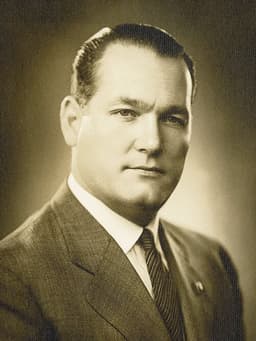
Jorge Ubico
General · Modern
45.5Total

Shehu Musa YarAdua
General · Modern
55.1Total
Basic Information
Born
1878
1943
Died
1946
—
Era
Modern
Modern
Nationality
Guatemala
Nigeria
Occupation
General
General
Civilization
Western
Other
Score Comparison
Military (10%)
25.9
50.0
Political (20%)
39.4
68.0
Influence (20%)
49.4
56.4
Legacy (20%)
40.0
47.5
Leadership (15%)
72.0
67.0
Strategy (15%)
38.6
38.3
TOTAL
45.5
55.1
Jorge Ubico — Complete Timeline
1931 AD
Assumed the Presidency in 1931Political Action◆ Major
Jorge Ubico became president of Guatemala after winning a rigged election. He quickly established a dictatorship, suspending civil liberties, and centralizing power.
GuatemalaDictatorship1930s
Impact: nationaldestructive
Granted Extensive Concessions to the United Fruit CompanyPolitical Action◆ Major
Ubico continued and expanded the policies of Estrada Cabrera, granting the United Fruit Company vast land holdings, tax exemptions, and control over infrastructure. This deepened U.S. corporate influence in Guatemala.
GuatemalaUnited Fruit CompanyEconomic Imperialism
Impact: nationaldestructive
1934 AD
Enacted the Vagrancy LawReform◆ Major
Ubico enacted a vagrancy law requiring all landless peasants to work a certain number of days per year on coffee plantations or public works. This effectively created a system of forced labor that benefited large landowners.
GuatemalaLaborForced Labor
Impact: nationaldestructive
1944 AD
Resigned Under Pressure in 1944Political Action
Ubico resigned the presidency in June 1944 after widespread protests and a general strike. His resignation ended 13 years of dictatorship and paved the way for the Guatemalan Revolution.
GuatemalaResignation1944 Revolution
Impact: nationalprogressive
Shehu Musa YarAdua — Complete Timeline
1976 AD
Chief of Staff, Supreme HeadquartersPolitical Action◆ Major
Shehu Musa Yar'Adua served as Chief of Staff, Supreme Headquarters under General Olusegun Obasanjo from 1976 to 1979. In this role, he was the de facto vice president and played a key part in overseeing Nigeria's transition from military rule to civilian government, which culminated in the Second Republic.
Military RuleTransitionNigeria
Impact: nationalconstructive
1995 AD
Imprisonment for alleged coup plotPolitical Action◆ Major
Shehu Musa Yar'Adua was arrested and sentenced to life imprisonment by the Abacha regime for his alleged involvement in a phantom coup plot. He was held in solitary confinement for several years, enduring harsh conditions. His imprisonment was widely condemned as politically motivated.
ImprisonmentPolitical RepressionNigeria
Impact: nationaldestructive
1998 AD
Role in founding the Peoples Democratic PartyPolitical Action◆ Major
After the death of General Abacha, Yar'Adua was a key figure in the formation of the Peoples Democratic Party (PDP), which became the dominant political party in Nigeria. He helped broker alliances among various political groups, laying the groundwork for the return to civilian rule in 1999.
Political PartyDemocracyNigeria
Impact: nationalconstructive
This comparison has not been analyzed yet.
One-time AI generation (~1 minute). Scores and timeline are already available below.
Rankings
🥇
Shehu Musa YarAduaLeader
Mil: 50.0Pol: 68.0Inf: 56.4
55.1
🥈
Jorge Ubico
Mil: 25.9Pol: 39.4Inf: 49.4
45.5
+9.6 behind
How This Comparison Works
Algorithm
Each figure is scored on 6 dimensions (0—100 scale) based on structured historical data: Military (10%), Political (20%), Influence (20%), Legacy (20%), Leadership (15%), Strategy (15%). The weighted total produces the final ranking.
Data Sources
Scores are computed from structured sub-indicators in the database. Scale factors adjust for era (Ancient ×0.85, Modern ×1.0) and civilization size (Eastern ×1.05, Other ×0.80) to account for differences in population and military scale.
Maximum 3 Figures
Comparisons are limited to 2—3 figures to ensure readability and statistical meaningfulness.
Error Margins
±5 points per dimension — Sub-scores are derived from historical records with inherent uncertainty. Two figures within 5 points on a dimension should be considered roughly equivalent in that area.
Total Score Accuracy
±3 points overall — The weighted combination of 6 dimensions produces a total score with approximately ±3 points of uncertainty. Differences of less than 3 points are not statistically significant— the figures are effectively tied.
Known Limitations
- Historical records are incomplete and uneven across civilizations
- Figures from oral-tradition societies may be underrepresented
- Occupation labels can misclassify multi-role figures
- Scores measure capability and impact, not moral character
- Quantitative scoring is a comparison tool, not absolute truth
Capability Radar
Military (10%) — Battles & Warfare
Battles
10
15
Win Rate
15
15
Expansion
5
10
Political (20%) — Governance & Reform
Reform
20
45
Diplomacy
30
55
Economy
25
40
Influence (20%) — Cultural & Global Reach
Cultural
15
35
Global
10
35
Legacy (20%) — Historical Impact
Historical
20
45
Longevity
10
30
Leadership (15%) — Power & Stability
Tenure
60
40
Stability
40
30
Strategy (15%) — Tactics & Innovation
Strategy
15
20
Tactics
20
20
Reform
25
25
Similar Comparisons
Comments & Discussion
No comments yet. Be the first to share your thoughts!