Loading...
Jose de San Martin vs Mark W. Clark
Jose de San Martin leads by 19.2 pts · 2 figures compared
…

Jose de San Martin
General · Modern
59.1Total
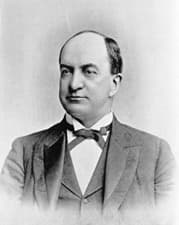
Mark W. Clark
General · Modern
39.9Total
Basic Information
Born
1778
1896
Died
1850
1984
Era
Modern
Modern
Nationality
Argentina
United States
Occupation
General
General
Civilization
Western
Western
Score Comparison
Military (10%)
85.0
10.0
Political (20%)
45.0
27.9
Influence (20%)
65.0
54.1
Legacy (20%)
40.0
42.5
Leadership (15%)
72.0
40.4
Strategy (15%)
68.0
45.0
TOTAL
59.1
39.9
Jose de San Martin — Complete Timeline
1813 AD
Battle of San LorenzoWar◆ Major
San Martín led the Granaderos a Caballo regiment to victory against Spanish forces at San Lorenzo, Argentina. This was his first major action in the Argentine War of Independence, securing the Paraná River region and establishing his reputation as a military commander.
Argentine War of IndependenceBattleCavalry
Impact: regionalconstructive
1814 AD
Governorship of CuyoPolitical Action◆ Major
San Martín was appointed governor of Cuyo Province in western Argentina. He organized the Army of the Andes, secured local support, and prepared for the liberation of Chile, using Mendoza as his base for the trans-Andean campaign.
AdministrationMilitary PreparationIndependence
Impact: regionalconstructive
1817 AD
Crossing of the AndesWar
San Martín led the Army of the Andes across the Andes Mountains from Argentina into Chile, a 21-day march over high passes. The surprise crossing enabled the liberation of Chile from Spanish rule, culminating in the Battle of Chacabuco.
Military CampaignAndesChilean Independence
Impact: regionalconstructive
Battle of ChacabucoWar◆ Major
San Martín's forces defeated the Spanish royalist army at Chacabuco, Chile. The victory allowed the patriots to enter Santiago and declare Chilean independence, though Spanish resistance continued in the south.
Chilean IndependenceBattleDecisive Victory
Impact: regionalconstructive
1818 AD
Battle of MaipúWar
San Martín decisively defeated the Spanish army at Maipú, Chile, securing Chilean independence. The battle ended major Spanish military operations in Chile and allowed San Martín to focus on the liberation of Peru.
Chilean IndependenceBattleDecisive Victory
Impact: regionalconstructive
1820 AD
Expedition to PeruWar◆ Major
San Martín led a naval and land expedition from Chile to Peru, landing at Paracas. He employed a strategy of blockading Lima and negotiating with royalists, avoiding a major battle, which led to the Spanish evacuation of Lima in 1821.
Peruvian IndependenceMilitary CampaignNaval
Impact: regionalconstructive
1821 AD
Proclamation of Peruvian IndependencePolitical Action◆ Major
San Martín proclaimed the independence of Peru from Spanish rule in Lima. He assumed the title of Protector of Peru, but his government faced internal divisions and economic challenges, leading to his resignation in 1822.
IndependencePeruProclamation
Impact: regionalconstructive
1822 AD
Meeting with Simón Bolívar at GuayaquilPolitical Action
San Martín met Simón Bolívar in Guayaquil to discuss the future of South American independence. The meeting resulted in San Martín's decision to resign and leave Bolívar in charge of completing the liberation of Peru, as they disagreed on governance and strategy.
LeadershipIndependenceDiplomacy
Impact: regional
Mark W. Clark — Complete Timeline
1942 AD
Appointment as Youngest US Lieutenant GeneralPolitical Action◆ Major
Clark was promoted to lieutenant general at age 46, becoming the youngest officer to hold that rank in the US Army at the time. This promotion placed him in command of the US Fifth Army for the invasion of Italy.
World War IIPromotionCareer
Impact: nationalconstructive
1943 AD
Command of the Allied Invasion of Italy (Operation Avalanche)War◆ Major
Clark commanded the US Fifth Army during the Allied invasion of mainland Italy at Salerno. The landings faced strong German resistance but succeeded in establishing a beachhead, leading to the eventual Allied advance up the Italian peninsula.
World War IIItalian CampaignInvasion
Impact: regional
1944 AD
Capture of RomeWar◆ Major
Clark's Fifth Army captured Rome on June 4, 1944, two days before the D-Day landings. The capture was a strategic victory, though Clark's decision to prioritize entering Rome over cutting off German retreat routes has been criticized.
World War IIItalian CampaignVictory
Impact: regionalconstructive
Command at the Battle of the Bulge (Relief of Bastogne)War◆ Major
Clark's 15th Army Group, including the US Third Army under Patton, relieved the besieged town of Bastogne during the Battle of the Bulge. This action helped halt the German offensive in the Ardennes.
World War IIBattle of the BulgeRelief
Impact: regionalconstructive
Expert Analysis
Origins
José de San Martín was born on February 25, 1778, in Yapeyú, a small town in the Viceroyalty of the Río de la Plata (modern Argentina). His father, Juan de San Martín, was a Spanish military officer, and his mother, Gregoria Matorras, came from a wealthy family. At age seven, San Martín moved to Spain for education, attending the Royal Seminary of Nobles in Madrid and later the School of Temporal. He joined the Spanish Army as a cadet in 1789, fighting in campaigns against the Moors in Oran and against the British in the Peninsular War. His early military experience in Spain shaped his tactical skills but also exposed him to Enlightenment ideas that fueled his later revolutionary sentiment.
Mark Wayne Clark was born on May 1, 1896, in Madison Barracks, New York, into a military family. His father, Charles Clark, was a career Army officer, and his mother, Frances Clark, came from a prominent family. Clark attended the United States Military Academy at West Point, graduating in 1917 (class of 1917, but accelerated due to World War I). He served in France during WWI, though he saw limited combat. His early career was marked by staff assignments and a reputation for administrative competence. Clark's rise was accelerated by his friendship with Dwight D. Eisenhower, whom he met in the 1920s.
Rise to Power
San Martín's rise began after his return to South America in 1812. He joined the revolutionary forces in Buenos Aires and quickly gained prominence due to his military expertise. In 1813, he commanded the Grenadiers on Horseback regiment and won his first major battle at San Lorenzo on February 3, 1813. However, his strategic vision extended beyond local victories. He recognized that Spanish power in the continent was concentrated in Peru and devised a plan to liberate Chile and Peru by crossing the Andes. Appointed Governor of Cuyo province in 1814, he spent two years preparing the Army of the Andes, carefully planning logistics and training. His crossing of the Andes in January 1817 was a masterstroke of military planning, covering over 500 miles of treacherous terrain in 21 days. The surprise attack led to victories at Chacabuco (February 12, 1817) and Maipú (April 5, 1818), securing Chilean independence.
Clark's rise was more conventional. After WWI, he served in various staff and training roles, including as an instructor at the Infantry School. During World War II, he was appointed deputy commander of Allied Forces in North Africa under Eisenhower. In 1943, at age 46, he was promoted to lieutenant general, the youngest in US Army history. He was then given command of the US Fifth Army for the invasion of Italy. Operation Avalanche, the landings at Salerno in September 1943, was his first major independent command. Despite fierce German resistance, the beachhead was secured, and Clark's forces advanced northward. His capture of Rome on June 4, 1944, was a significant propaganda victory, though it came at a cost.
Leadership & Governance
San Martín's leadership style was characterized by meticulous planning, personal discipline, and a willingness to delegate. He was known for his austere lifestyle and commitment to the cause of independence. As Protector of Peru, he attempted to establish a constitutional monarchy, but his political governance was less effective than his military leadership. He favored gradual reforms and sought to avoid the chaos he saw in other new republics. His meeting with Simón Bolívar in Guayaquil in July 1822 revealed his preference for unity over personal ambition, as he ceded command to Bolívar and resigned.
Clark's leadership was more bureaucratic and driven by personal ambition. He was seen as a competent organizer but often criticized for his tactical decisions. During the Italian campaign, Clark's decision to prioritize the capture of Rome over cutting off German forces (Operation Diadem) allowed the German 10th Army to escape, prolonging the war. His command style was top-down, and he maintained close ties with political leaders. After the war, he served as commander of UN forces in Korea and later as president of The Citadel.
Triumph & Tragedy
San Martín's greatest triumphs were the liberation of Argentina, Chile, and Peru. His strategic vision of attacking the Spanish stronghold in Peru via Chile was audacious and successful. The crossing of the Andes is considered one of the greatest military feats in history. However, his greatest failure was his inability to consolidate political power. After the Guayaquil meeting, he retired to Europe, leaving Bolívar to complete the liberation of Peru. His withdrawal from public life meant he did not shape the post-independence governments, which descended into internal strife. His military score of 85.0 reflects his tactical brilliance, but his political score of 45.0 highlights his limitations.
Clark's triumph was commanding the successful Italian campaign, capturing Rome and forcing Italy's surrender. His promotion to the youngest lieutenant general was a personal achievement. However, his legacy is marred by operational errors. The failure to block the German retreat at the Anzio beachhead and the decision to race to Rome rather than encircle the German forces are widely criticized. He also faced controversy for his command during the Battle of the Bulge, where his 15th Army Group relieved Bastogne, but his overall impact was limited. His military score of 10.0 is notably low, reflecting his poor tactical performance compared to peers.
Character & Destiny
San Martín was introspective, humble, and idealistic. He believed in the cause of independence above personal glory. His decision to meet Bolívar and step aside was a testament to his selflessness. He died in relative obscurity in France in 1850. His character shaped his destiny: he achieved great military victories but lacked the political ruthlessness to build a lasting state.
Clark was ambitious, politically savvy, and determined to advance his career. He cultivated relationships with superiors like Eisenhower and Marshall. However, his ambition sometimes clouded his judgment, as seen in his Rome decision. He died in 1984, having written memoirs defending his actions. His character led to a mixed legacy: he rose high but is often ranked among the less effective US generals of WWII.
Legacy
San Martín is revered as a national hero in Argentina, Chile, and Peru. His military strategies are studied, and his role in South American independence is foundational. However, his political legacy is limited because he did not establish enduring institutions. His name adorns streets, monuments, and currencies, but his direct influence waned after 1822.
Clark's legacy is more controversial. He is remembered as a competent but flawed commander. The Italian campaign's slow progress and high casualties are often attributed to his leadership. He is not among the most celebrated US generals; his overall score of 39.9 reflects this. His influence is limited to military history circles, and his reputation has been overshadowed by Eisenhower, Patton, and Bradley.
Conclusion
José de San Martín had a far greater impact than Mark Clark. San Martín's military score of 85.0 to Clark's 10.0 underscores the disparity in their achievements. San Martín liberated entire nations and changed the course of South American history, while Clark's contributions to WWII were significant but not decisive. San Martín's strategic vision and selfless leadership contrast with Clark's tactical errors and personal ambition. The score gap of 19.2 points in overall rating (59.1 vs 39.9) does not fully capture the qualitative difference. San Martín is a foundational figure, while Clark is a footnote. Therefore, San Martín's legacy is vastly superior.
Rankings
🥇
Jose de San MartinLeader
Mil: 85.0Pol: 45.0Inf: 65.0
59.1
🥈
Mark W. Clark
Mil: 10.0Pol: 27.9Inf: 54.1
39.9
+19.2 behind
How This Comparison Works
Algorithm
Each figure is scored on 6 dimensions (0—100 scale) based on structured historical data: Military (10%), Political (20%), Influence (20%), Legacy (20%), Leadership (15%), Strategy (15%). The weighted total produces the final ranking.
Data Sources
Scores are computed from structured sub-indicators in the database. Scale factors adjust for era (Ancient ×0.85, Modern ×1.0) and civilization size (Eastern ×1.05, Other ×0.80) to account for differences in population and military scale.
Maximum 3 Figures
Comparisons are limited to 2—3 figures to ensure readability and statistical meaningfulness.
Error Margins
±5 points per dimension — Sub-scores are derived from historical records with inherent uncertainty. Two figures within 5 points on a dimension should be considered roughly equivalent in that area.
Total Score Accuracy
±3 points overall — The weighted combination of 6 dimensions produces a total score with approximately ±3 points of uncertainty. Differences of less than 3 points are not statistically significant— the figures are effectively tied.
Known Limitations
- Historical records are incomplete and uneven across civilizations
- Figures from oral-tradition societies may be underrepresented
- Occupation labels can misclassify multi-role figures
- Scores measure capability and impact, not moral character
- Quantitative scoring is a comparison tool, not absolute truth
Capability Radar
Military (10%) — Battles & Warfare
Battles
75
45
Win Rate
85
40
Expansion
85
25
Political (20%) — Governance & Reform
Reform
60
10
Diplomacy
80
15
Economy
40
10
Influence (20%) — Cultural & Global Reach
Cultural
70
15
Global
70
20
Legacy (20%) — Historical Impact
Historical
80
25
Longevity
75
20
Leadership (15%) — Power & Stability
Tenure
55
20
Stability
45
15
Strategy (15%) — Tactics & Innovation
Strategy
90
30
Tactics
80
35
Reform
70
20
Similar Comparisons
Comments & Discussion
No comments yet. Be the first to share your thoughts!