Loading...
Jose Maria Sison vs Mangal Pandey
Mangal Pandey leads by 0.3 pts · 2 figures compared
…
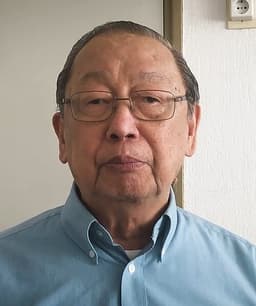
Jose Maria Sison
Revolutionary · Modern
48.3Total
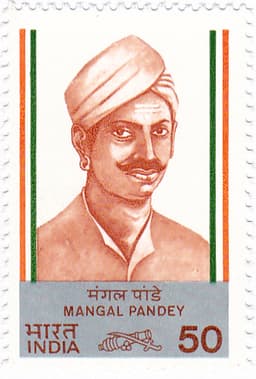
Mangal Pandey
Revolutionary · Modern
48.6Total
Basic Information
Born
1939
1827
Died
—
1857
Era
Modern
Modern
Nationality
Philippines
India
Occupation
Revolutionary
Revolutionary
Civilization
Eastern
Indian
Score Comparison
Military (10%)
41.6
39.9
Political (20%)
35.1
35.0
Influence (20%)
53.3
51.8
Legacy (20%)
45.0
46.7
Leadership (15%)
58.8
62.6
Strategy (15%)
54.6
53.8
TOTAL
48.3
48.6
Jose Maria Sison — Complete Timeline
1968 AD
Founded the Communist Party of the PhilippinesPolitical Action◆ Major
Sison re-established the Communist Party of the Philippines (CPP) along Maoist lines, breaking from the old Partido Komunista ng Pilipinas. The CPP launched a protracted people's war against the Philippine state, becoming one of Asia's longest-running insurgencies.
CommunismMaoismInsurgency
Impact: nationaldestructive
1969 AD
Founded the New People's ArmyPolitical Action◆ Major
Sison established the New People's Army (NPA) as the armed wing of the CPP. The NPA began guerrilla operations in rural areas, targeting government forces and infrastructure. The group has been designated a terrorist organization by the Philippines and the US.
GuerrillaInsurgencyArmed Struggle
Impact: nationaldestructive
1977 AD
Arrested and imprisoned under MarcosPolitical Action◆ Major
Sison was arrested by the Marcos regime and imprisoned for seven years. During his detention, he continued to direct the CPP/NPA through written orders smuggled out of prison. He was released in 1986 after the People Power Revolution.
ImprisonmentMartial LawMarcos
Impact: nationaltragic
1987 AD
Exiled to the NetherlandsPolitical Action◆ Major
After the 1986 revolution, Sison went into self-exile in the Netherlands. From there, he continued to lead the CPP/NPA, issuing directives and negotiating peace talks with the Philippine government. He remains in exile as of 2024.
ExilePeace TalksLeadership
Impact: national
Mangal Pandey — Complete Timeline
1857 AD
Attack on British officers at BarrackporePolitical Action◆ Major
Mangal Pandey attacked two British officers at the Barrackpore military cantonment. He was arrested after the attack, and his actions sparked widespread unrest among Indian sepoys, leading to the 1857 rebellion.
Indian Rebellion of 1857Trigger Event
Impact: regional
Execution by hangingPolitical Action◆ Major
Mangal Pandey was tried by a British military court and executed by hanging at Barrackpore. His execution made him a martyr and a symbol of resistance against British rule in India.
Indian Rebellion of 1857ExecutionMartyr
Impact: regionaltragic
Expert Analysis
Mangal Pandey vs Jose Maria Sison
**The Revolutionary and the Rebel: Two Paths to Defiance**
In March 1857, a sepoy named Mangal Pandey stood on the parade ground at Barrackpore, near Calcutta, and fired a musket ball at his British sergeant. The shot missed, but it did not fail. Within minutes, Pandey had turned his weapon on a British adjutant, slashing at him with a sword before being subdued. One hundred and eleven years later, on a December evening in 1968, a young Filipino intellectual named Jose Maria Sison gathered a handful of followers in a Manila suburb and formally reconstituted the Communist Party of the Philippines, drafting a document that would light a guerrilla war lasting decades. Between these two moments—a single, desperate act of violence and a deliberate, ideological birth—lies a chasm in the nature of revolution itself. Why did one man’s fury end at the gallows, while another’s vision outlasted empires?
**Origins**
Mangal Pandey was born in 1827 into a high-caste Brahmin family in the village of Nagwa, in what is now Uttar Pradesh. The British East India Company had ruled Bengal for decades, and young men like Pandey found employment in its armies—a path that offered pay and purpose but demanded obedience. He was a sepoy, a cog in a vast colonial machine, and his world was defined by drill, discipline, and the simmering resentments of a conquered people. His education was minimal; his horizon was the cantonment. He had no library of political theory, no network of conspirators. He was, in every sense, a product of his time—a time when resistance meant a musket and a cry.
Jose Maria Sison, born in 1939 in the northern Philippine province of Ilocos Sur, grew up in a different world. His father was a lawyer and a landowner, and his family had means. Sison attended the University of the Philippines, where he encountered the works of Marx, Lenin, and Mao Zedong. The Philippines was a newly independent nation, still scarred by American colonialism and a brutal Japanese occupation. But Sison was not a soldier; he was a thinker. His revolution would be born not in a barracks but in a classroom, not with a musket but with a manifesto.
**Rise to Power**
Mangal Pandey’s entry into history was instantaneous. On March 29, 1857, he walked onto the parade ground at Barrackpore, his musket loaded. The immediate grievance was the new Enfield rifle cartridges, rumored to be greased with cow and pig fat—an offense to both Hindu and Muslim sepoys. Pandey acted alone, though he called out to his comrades to join him. None did. He was arrested, tried, and hanged on April 8, 1857. His entire rebellion lasted less than two weeks. Yet his name became a spark: within months, the Indian Rebellion of 1857 had engulfed northern India, toppling British authority in Delhi and forcing the Crown to abolish the East India Company.
Sison’s rise was measured in years, not days. In 1968, he founded the Communist Party of the Philippines, breaking from the old, moribund Partido Komunista ng Pilipinas. The next year, he established the New People’s Army, a guerrilla force that began operations in the rural hinterlands of Luzon. Unlike Pandey, Sison built an organization—a party, a military wing, a theoretical framework. He was arrested in 1977 under the dictatorship of Ferdinand Marcos and spent seven years in prison, but from his cell he continued to direct the movement. When he was released and went into exile in the Netherlands in 1987, the CPP and NPA did not collapse. They endured, because Sison had created something that could outlast him.
**Leadership & Governance**
Mangal Pandey was never a leader in the organizational sense. He was a symbol—a martyr whose death catalyzed a rebellion that others would lead. He issued no decrees, wrote no treatises, commanded no army. His military score of 28.2 and political score of 32.3 reflect this: his power was not in strategy but in the purity of his defiance. The rebellion that followed his execution was chaotic, divided by caste, region, and ambition. It failed militarily but succeeded in shaking the foundations of British rule.
Sison, by contrast, was a master of political architecture. His leadership score of 73.0 and political score of 54.4 speak to a man who understood that revolution requires not just courage but structure. He adapted Mao’s theory of protracted people’s war to the Philippine context, emphasizing rural bases, land reform, and mass mobilization. The NPA grew to tens of thousands of fighters, controlling vast areas of the countryside. Sison’s strategy score, however, is a low 30.0—a telling number. Critics argue that his ideological rigidity, his insistence on Maoist orthodoxy, led to tactical failures and a failure to adapt to changing realities. The NPA never captured state power, and the CPP remains a persistent but peripheral insurgency.
**Triumph & Tragedy**
Mangal Pandey’s greatest moment was his execution. Hanged before a crowd at Barrackpore, he became a martyr whose name echoed across India. His tragedy is that he did not live to see the rebellion he inspired; he was a match that lit a fire but was consumed in the flame.
Sison’s triumph was longevity. He built a movement that survived his imprisonment, his exile, and the death of the Cold War. The CPP and NPA continue to operate, a testament to his organizational genius. His tragedy is that the revolution he dreamed of—a socialist Philippines—remains unrealized. He spent decades in exile, directing a war he could not fight, and his movement has been accused of human rights abuses, extortion, and a dogmatic refusal to negotiate. The idealism of 1968 has faded into a weary stalemate.
**Character & Destiny**
Mangal Pandey was a man of action, not words. His rebellion was visceral, born of anger and faith. He did not calculate the odds; he acted because he could no longer bear the insult. His destiny was to be a symbol, not a strategist. Sison was the opposite: a man of words who lived through his ideas. He wrote, organized, and theorized, even as his followers fought and died. His destiny was to be a ghost in the machine—a founder who outlived his relevance.
**Legacy**
Mangal Pandey is remembered as a hero of India’s first war of independence. Statues stand in his honor; his name is taught in every school. His legacy is pure, uncomplicated by the messiness of governance. Sison’s legacy is more ambiguous. He is revered by his followers as “Joma,” the father of the Filipino revolution, but to the Philippine government and many ordinary Filipinos, he is a terrorist who prolonged a conflict that has killed tens of thousands. His scores—influence 74.8, legacy 63.2—reflect a figure who shaped history but could not control its judgment.
**Conclusion**
One man fired a shot and died. The other wrote a book and lived. Between them lies the difference between rebellion and revolution—the first a cry, the second a system. Mangal Pandey’s musket ball missed its target, but it hit history. Jose Maria Sison’s pen never missed its mark, but history moved on without him. Both men were revolutionaries, but they belonged to different species of defiance: one the spark, the other the flame. In the end, the spark is remembered, and the flame burns on, uncertain of its end.
Rankings
🥇
Mangal PandeyLeader
Mil: 39.9Pol: 35.0Inf: 51.8
48.6
🥈
Jose Maria Sison
Mil: 41.6Pol: 35.1Inf: 53.3
48.3
+0.3 behind
How This Comparison Works
Algorithm
Each figure is scored on 6 dimensions (0—100 scale) based on structured historical data: Military (10%), Political (20%), Influence (20%), Legacy (20%), Leadership (15%), Strategy (15%). The weighted total produces the final ranking.
Data Sources
Scores are computed from structured sub-indicators in the database. Scale factors adjust for era (Ancient ×0.85, Modern ×1.0) and civilization size (Eastern ×1.05, Other ×0.80) to account for differences in population and military scale.
Maximum 3 Figures
Comparisons are limited to 2—3 figures to ensure readability and statistical meaningfulness.
Error Margins
±5 points per dimension — Sub-scores are derived from historical records with inherent uncertainty. Two figures within 5 points on a dimension should be considered roughly equivalent in that area.
Total Score Accuracy
±3 points overall — The weighted combination of 6 dimensions produces a total score with approximately ±3 points of uncertainty. Differences of less than 3 points are not statistically significant— the figures are effectively tied.
Known Limitations
- Historical records are incomplete and uneven across civilizations
- Figures from oral-tradition societies may be underrepresented
- Occupation labels can misclassify multi-role figures
- Scores measure capability and impact, not moral character
- Quantitative scoring is a comparison tool, not absolute truth
Capability Radar
Military (10%) — Battles & Warfare
Battles
5
5
Win Rate
5
5
Expansion
10
5
Political (20%) — Governance & Reform
Reform
40
5
Diplomacy
30
5
Economy
20
5
Influence (20%) — Cultural & Global Reach
Cultural
40
40
Global
40
40
Legacy (20%) — Historical Impact
Historical
50
60
Longevity
40
50
Leadership (15%) — Power & Stability
Tenure
60
5
Stability
15
5
Strategy (15%) — Tactics & Innovation
Strategy
10
5
Tactics
10
10
Reform
15
5
Similar Comparisons
Comments & Discussion
Muskets-and-Memos6/16/2026
Comparing Pandey to Sison is like comparing a firecracker to a slow-burning fuse. Pandey's act was pure reflex—a high-caste sepoy losing his mind over animal fat cartridges in 1857. He had no plan, no ideology, just rage. Sison, born in 1939, wrote Maoist manifestos while Pandey could barely write his name. One man created a peasant army; the other created a heroic legend that scared the British for a few months. Pandey’s legacy is emotion; Sison’s is structure.
种姓与枪膛6/16/2026
拿潘迪和西松比,简直是拿单发火枪和导弹发射架相提并论。潘迪是1857年一个高种姓士兵对着牛脂子弹发疯,一个孤立无援的暴怒瞬间,三小时后就完了。西松1968年重建菲共,拿着毛主义文本写了三十年计划,领导了新人民军打了四十多年游击战。潘迪的武器是肉体,西松的是组织。历史记住潘迪是因为他第一个扣下扳机,但革命从来不是靠第一个开枪的人赢的。
Revolt-vs-Revolution6/16/2026
Here’s the key difference: Pandey’s rebellion ended the second his sword hit the ground—personal, reactive, finite. Sison’s revolution was a machine designed to outlive him. Pandey faced a firing squad in April 1857; Sison died in a Dutch hospital in 2022, still directing his movement from exile. Pandey’s story is a tragic poem; Sison’s is a structural blueprint. If you want to understand how one bullet can change nothing and one pamphlet can change everything, look no further.
热情与理性6/16/2026
一个用血,一个用纸。潘迪在巴拉克普尔阅兵场上挥剑砍向英国副官,那是1857年3月29日,印度民族起义的火花,但也是一次孤注一掷的绝望行动。西松1968年在马尼拉郊区一家小屋里重构菲共,他写下的《人民民主革命纲领》让菲律宾丛林里的游击战争延续到今天。一个起义持续了不到一年,一个革命坚持了好几代。历史不是靠愤怒改写的,是靠耐心。
Short-Fuse-Long-Play6/16/2026
Everyone loves a martyr, but no one wants to admit his tactics sucked. Pandey attacked two British officers with a musket and a sword—alone, unprepared, and doomed. He lit a fire, sure, but it burned out fast. Sison played the long game: wrote the documents, built the networks, survived the purges. Pandey gave the British an excuse to tighten control; Sison gave his followers a framework that outlasted the Cold War. Revolution isn’t a