Loading...
This comparison has not been analyzed yet.
One-time AI generation (~1 minute). Scores and timeline are already available below.
Jose Sarney vs Matsudaira Nobutsuna
Matsudaira Nobutsuna leads by 5.9 pts · 2 figures compared
…

Jose Sarney
Politician · Modern
46.6Total
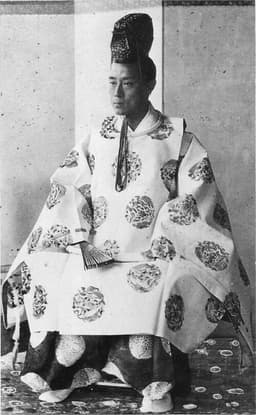
Matsudaira Nobutsuna
Politician · Modern
52.5Total
Basic Information
Born
1930
1596
Died
—
1662
Era
Modern
Modern
Nationality
Brazil
Japan
Occupation
Politician
Politician
Civilization
Western
Eastern
Score Comparison
Military (10%)
12.9
30.0
Political (20%)
48.0
68.0
Influence (20%)
51.8
51.8
Legacy (20%)
43.3
45.0
Leadership (15%)
74.0
72.0
Strategy (15%)
32.2
43.3
TOTAL
46.6
52.5
Jose Sarney — Complete Timeline
1985 AD
Assumed the Presidency of BrazilPolitical Action
José Sarney assumed the presidency on April 21, 1985, after the death of President-elect Tancredo Neves. He became the first civilian president since the 1964 military coup, serving until March 15, 1990.
PresidencyDemocratizationBrazil
Impact: nationalconstructive
Appointed as Vice PresidentPolitical Action
Sarney was elected vice president in 1985 on the ticket of Tancredo Neves. When Neves fell ill and died before taking office, Sarney succeeded him, becoming president under the transitional democratic government.
Vice PresidencyTransitionBrazil
Impact: nationalconstructive
1986 AD
Launched the Cruzado PlanReform◆ Major
Sarney launched the Cruzado Plan in February 1986, a heterodox economic program to combat hyperinflation. It included a currency reform, price freezes, and wage adjustments. The plan initially succeeded but later collapsed, leading to renewed inflation.
Economic PolicyInflationBrazil
Impact: national
1987 AD
Faced the 1987 Economic CrisisOther◆ Major
In 1987, Brazil faced a severe economic crisis with hyperinflation reaching over 200% per month. Sarney's government declared a moratorium on foreign debt payments in February 1987, straining relations with international creditors.
Economic CrisisDebt MoratoriumBrazil
Impact: nationaldestructive
1988 AD
Promulgated the 1988 ConstitutionPolitical Action
Sarney oversaw the promulgation of Brazil's new constitution on October 5, 1988, which replaced the 1967 military-era constitution. The 1988 constitution expanded social rights, decentralized power, and established democratic institutions.
ConstitutionDemocracyBrazil
Impact: nationalprogressive
Matsudaira Nobutsuna — Complete Timeline
1633 AD
Appointment as Senior Councilor (Roju)Political Action◆ Major
Nobutsuna was appointed to the powerful position of roju under Shogun Tokugawa Iemitsu. This role made him one of the highest-ranking officials in the Tokugawa shogunate, responsible for major policy decisions and military command.
AppointmentTokugawa shogunateRoju
Impact: nationalconstructive
1638 AD
Suppression of the Shimabara RebellionWar◆ Major
As a senior councilor, Matsudaira Nobutsuna commanded shogunate forces in the siege of Hara Castle, crushing the Christian-led peasant uprising. The rebellion's suppression led to the finalization of Japan's national seclusion policy and the persecution of Christians.
Shimabara RebellionChristian persecutionSiege
Impact: nationaldestructive
1642 AD
Oversight of the Kan'ei Great Famine ReliefReform
During the severe Kan'ei famine, Nobutsuna implemented relief measures including rice distribution and tax reductions in domains under his control. His actions mitigated some suffering but the famine still caused widespread death across Japan.
Famine reliefKan'ei eraDisaster response
Impact: nationalconstructive
This comparison has not been analyzed yet.
One-time AI generation (~1 minute). Scores and timeline are already available below.
Rankings
🥇
Matsudaira NobutsunaLeader
Mil: 30.0Pol: 68.0Inf: 51.8
52.5
🥈
Jose Sarney
Mil: 12.9Pol: 48.0Inf: 51.8
46.6
+5.9 behind
How This Comparison Works
Algorithm
Each figure is scored on 6 dimensions (0—100 scale) based on structured historical data: Military (10%), Political (20%), Influence (20%), Legacy (20%), Leadership (15%), Strategy (15%). The weighted total produces the final ranking.
Data Sources
Scores are computed from structured sub-indicators in the database. Scale factors adjust for era (Ancient ×0.85, Modern ×1.0) and civilization size (Eastern ×1.05, Other ×0.80) to account for differences in population and military scale.
Maximum 3 Figures
Comparisons are limited to 2—3 figures to ensure readability and statistical meaningfulness.
Error Margins
±5 points per dimension — Sub-scores are derived from historical records with inherent uncertainty. Two figures within 5 points on a dimension should be considered roughly equivalent in that area.
Total Score Accuracy
±3 points overall — The weighted combination of 6 dimensions produces a total score with approximately ±3 points of uncertainty. Differences of less than 3 points are not statistically significant— the figures are effectively tied.
Known Limitations
- Historical records are incomplete and uneven across civilizations
- Figures from oral-tradition societies may be underrepresented
- Occupation labels can misclassify multi-role figures
- Scores measure capability and impact, not moral character
- Quantitative scoring is a comparison tool, not absolute truth
Capability Radar
Military (10%) — Battles & Warfare
Battles
13
45
Win Rate
12
60
Expansion
17
20
Political (20%) — Governance & Reform
Reform
40
50
Diplomacy
45
55
Economy
35
45
Influence (20%) — Cultural & Global Reach
Cultural
20
25
Global
20
15
Legacy (20%) — Historical Impact
Historical
40
40
Longevity
20
30
Leadership (15%) — Power & Stability
Tenure
60
65
Stability
30
60
Strategy (15%) — Tactics & Innovation
Strategy
21
50
Tactics
23
55
Reform
27
30
Similar Comparisons
Comments & Discussion
No comments yet. Be the first to share your thoughts!