Loading...
Joseph Kabila vs Lal Bahadur Shastri
Lal Bahadur Shastri leads by 10.4 pts · 2 figures compared
…
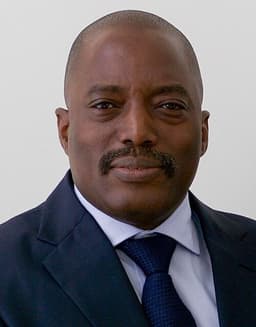
Joseph Kabila
Politician · Modern
47.2Total

Lal Bahadur Shastri
Politician · Modern
57.6Total
Basic Information
Born
1971
1904
Died
—
1966
Era
Modern
Modern
Nationality
Congo
India
Occupation
Politician
Politician
Civilization
Other
Indian
Score Comparison
Military (10%)
20.0
41.5
Political (20%)
40.8
59.3
Influence (20%)
49.4
61.0
Legacy (20%)
40.8
50.0
Leadership (15%)
74.0
72.0
Strategy (15%)
54.6
60.0
TOTAL
47.2
57.6
Joseph Kabila — Complete Timeline
2001 AD
Became President of the Democratic Republic of the CongoPolitical Action◆ Major
Joseph Kabila became President of the DRC at age 29 after his father Laurent Kabila's assassination. He inherited a country embroiled in the Second Congo War and faced the challenge of ending the conflict.
PresidencySuccessionDRC
Impact: national
2002 AD
Signed Sun City AgreementPolitical Action
Kabila's government signed the Sun City Agreement, a peace deal that ended the Second Congo War. The agreement established a transitional government and paved the way for democratic elections.
Peace AgreementSecond Congo WarTransition
Impact: regionalconstructive
2006 AD
Won First Democratic Elections in DRCPolitical Action◆ Major
Joseph Kabila won the first democratic presidential elections in the DRC since independence, defeating Jean-Pierre Bemba in a runoff. The elections were largely peaceful but marred by allegations of irregularities.
ElectionsDemocracyDRC
Impact: nationalconstructive
2016 AD
Refused to Step Down After 2016 ElectionsPolitical Action◆ Major
Kabila's refusal to step down after his constitutional term limit expired in 2016 sparked political crisis and protests. He remained in power until 2019, citing delays in organizing elections.
Constitutional CrisisTerm LimitsPolitical Instability
Impact: nationaldestructive
2019 AD
Peacefully Transferred Power to Félix TshisekediPolitical Action
Joseph Kabila peacefully transferred power to opposition leader F
Power TransferDemocracyDRC
Impact: nationalconstructive
Lal Bahadur Shastri — Complete Timeline
1964 AD
Appointed Prime Minister of IndiaPolitical Action◆ Major
Following the death of Jawaharlal Nehru, Shastri was chosen as the second Prime Minister of India. He led the country during a period of food shortage and war with Pakistan.
Prime MinisterSuccessionIndia
Impact: national
1965 AD
Indo-Pakistani War of 1965War◆ Major
Shastri led India during the war with Pakistan over Kashmir. The conflict ended in a UN-brokered ceasefire. Shastri's leadership and the slogan 'Jai Jawan Jai Kisan' (Hail the soldier, Hail the farmer) became iconic.
WarKashmirPakistan
Impact: regional
Coined 'Jai Jawan Jai Kisan'Cultural
During the 1965 war, Shastri popularized the slogan 'Jai Jawan Jai Kisan' to honor soldiers and farmers. The phrase became a national rallying cry and a symbol of his leadership.
SloganNational UnityAgriculture
Impact: nationalconstructive
1966 AD
Tashkent AgreementPolitical Action◆ Major
Shastri signed the Tashkent Agreement with Pakistan's President Ayub Khan, mediated by the Soviet Union. The agreement restored pre-war borders and established a framework for peaceful relations. Shastri died in Tashkent the following day.
Peace TreatySoviet MediationDeath
Impact: regional
Expert Analysis
Origins
**Joseph Kabila** was born on June 4, 1971, in Hewa Bora, Belgian Congo, to Laurent-Désiré Kabila and Sifa Mahanya. He spent much of his youth in Tanzania and Uganda, receiving military training there. His father was a rebel leader who later became president. Joseph had limited formal education, attending school in Tanzania and later studying law at the University of Kinshasa but not graduating.
**Lal Bahadur Shastri** was born on October 2, 1904, in Mughalsarai, British India, to Sharada Prasad Srivastava and Ramdulari Devi. He was the second child, but his father died when he was young. He attended Kashi Vidyapeeth, where he earned the title 'Shastri' (scholar). He was deeply influenced by Mahatma Gandhi's ideals and joined the Indian independence movement.
Rise to Power
Joseph Kabila's rise was abrupt. After his father Laurent Kabila was assassinated on January 16, 2001, Joseph was named president at age 29, despite being in Uganda at the time. He had no prior political experience but was seen as a compromise candidate. He inherited a country in the midst of the Second Congo War, which involved multiple African nations and armed groups.
Lal Bahadur Shastri rose through the ranks of India's Congress party. He was a key organizer in the independence movement, jailed several times. After independence, he served as Minister of Police and Transport, then as Home Minister and Minister of External Affairs. Following Jawaharlal Nehru's death on May 27, 1964, Shastri was chosen as Prime Minister over Morarji Desai, due to his reputation for integrity and humility.
Leadership & Governance
Kabila's leadership was marked by pragmatism and a focus on stability. He signed the Sun City Agreement in 2003, ending the Second Congo War and establishing a transitional government. He won the first democratic elections in 2006, defeating Jean-Pierre Bemba. However, his later years were marred by authoritarianism: he amended the constitution to remove term limits and postponed elections, leading to protests and a political crisis. His governance score is 74.0, reflecting his ability to hold the country together but with mixed results on democracy.
Shastri led India during a severe food shortage and the 1965 war with Pakistan. He promoted the Green Revolution by appointing M.S. Swaminathan and coined the slogan 'Jai Jawan Jai Kisan' (Hail the soldier, Hail the farmer) to boost morale. He also expanded the Indian Navy and strengthened border security. His leadership score is 72.0, slightly lower than Kabila's, but his political score of 59.3 is higher than Kabila's 40.8.
Triumph & Tragedy
Kabila's greatest triumph was overseeing the first peaceful transfer of power in DRC's history in 2019, when he handed over to Félix Tshisekedi after disputed elections. He also ended the devastating war. His tragedy was the authoritarian turn: his refusal to step down in 2016 sparked violence that killed hundreds. He also failed to address corruption and poverty, with the DRC remaining among the world's poorest countries.
Shastri's triumph was leading India to a stalemate in the 1965 war, which boosted national pride. The Tashkent Agreement restored peace. His tragedy was his sudden death on January 11, 1966, in Tashkent, hours after signing the agreement, leading to conspiracy theories. He also could not fully resolve the food crisis, though his policies laid groundwork for later self-sufficiency.
Character & Destiny
Kabila was reserved and enigmatic, often described as aloof. He relied on a small circle of advisors and used patronage to maintain power. His character of caution and risk-aversion led to the peaceful transition but also to stagnation. Historical assessments note that he prioritized stability over democracy, scoring 40.8 in legacy and 49.4 in influence.
Shastri was known for his honesty, simplicity, and decisiveness. He was a consensus builder but could take firm action, as in the war. His early death cut short his potential, but his integrity and slogan left a lasting mark. He scores 61.0 in influence and 50.0 in legacy.
Legacy
Kabila's legacy is mixed: he is credited with ending the war and holding elections, but his authoritarian drift and failure to develop the country tarnish his record. The DRC remains fragile. His peaceful transfer of power is a rare positive in African politics, but his overall impact is limited, with a legacy score of 40.8.
Shastri is remembered as a humble leader who strengthened India's defense and agriculture. His slogan 'Jai Jawan Jai Kisan' remains iconic. Though his tenure was short, his decisions shaped India's post-Nehru course. His legacy score is 50.0, higher than Kabila's.
Conclusion
While Kabila's leadership score is slightly higher (74.0 vs 72.0), Shastri surpasses him in political acumen (59.3 vs 40.8), influence (61.0 vs 49.4), and legacy (50.0 vs 40.8). Shastri's total score of 57.6 is 10.4 points higher than Kabila's 47.2. Shastri's impact on India's national identity and policy direction was profound despite his short term. Kabila's achievements are overshadowed by his later failures and the DRC's ongoing challenges. Therefore, Lal Bahadur Shastri had greater impact.
Rankings
🥇
Lal Bahadur ShastriLeader
Mil: 41.5Pol: 59.3Inf: 61.0
57.6
🥈
Joseph Kabila
Mil: 20.0Pol: 40.8Inf: 49.4
47.2
+10.4 behind
How This Comparison Works
Algorithm
Each figure is scored on 6 dimensions (0—100 scale) based on structured historical data: Military (10%), Political (20%), Influence (20%), Legacy (20%), Leadership (15%), Strategy (15%). The weighted total produces the final ranking.
Data Sources
Scores are computed from structured sub-indicators in the database. Scale factors adjust for era (Ancient ×0.85, Modern ×1.0) and civilization size (Eastern ×1.05, Other ×0.80) to account for differences in population and military scale.
Maximum 3 Figures
Comparisons are limited to 2—3 figures to ensure readability and statistical meaningfulness.
Error Margins
±5 points per dimension — Sub-scores are derived from historical records with inherent uncertainty. Two figures within 5 points on a dimension should be considered roughly equivalent in that area.
Total Score Accuracy
±3 points overall — The weighted combination of 6 dimensions produces a total score with approximately ±3 points of uncertainty. Differences of less than 3 points are not statistically significant— the figures are effectively tied.
Known Limitations
- Historical records are incomplete and uneven across civilizations
- Figures from oral-tradition societies may be underrepresented
- Occupation labels can misclassify multi-role figures
- Scores measure capability and impact, not moral character
- Quantitative scoring is a comparison tool, not absolute truth
Capability Radar
Military (10%) — Battles & Warfare
Battles
15
42
Win Rate
20
48
Expansion
10
49
Political (20%) — Governance & Reform
Reform
30
65
Diplomacy
40
70
Economy
25
60
Influence (20%) — Cultural & Global Reach
Cultural
15
50
Global
20
45
Legacy (20%) — Historical Impact
Historical
25
55
Longevity
20
40
Leadership (15%) — Power & Stability
Tenure
65
55
Stability
20
55
Strategy (15%) — Tactics & Innovation
Strategy
15
51
Tactics
10
57
Reform
25
57
Similar Comparisons
Comments & Discussion
No comments yet. Be the first to share your thoughts!