Loading...
Joyce Banda vs Nana Akufo-Addo
Nana Akufo-Addo leads by 6.2 pts · 2 figures compared
…
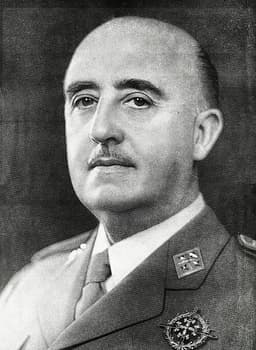
Joyce Banda
Politician · Modern
42.2Total

Nana Akufo-Addo
Politician · Modern
48.4Total
Basic Information
Born
1950
1944
Died
—
—
Era
Modern
Modern
Nationality
Malawi
Ghana
Occupation
Politician
Politician
Civilization
Other
Other
Score Comparison
Military (10%)
12.2
16.7
Political (20%)
39.4
60.0
Influence (20%)
53.3
54.9
Legacy (20%)
42.5
41.7
Leadership (15%)
45.0
66.0
Strategy (15%)
43.4
36.4
TOTAL
42.2
48.4
Joyce Banda — Complete Timeline
2009 AD
Became Vice President of MalawiPolitical Action◆ Major
Joyce Banda was elected Vice President of Malawi as running mate to President Bingu wa Mutharika. She served in this role until Mutharika's death in 2012.
Vice PresidencyElection
Impact: national
2010 AD
Expelled from Democratic Progressive PartyPolitical Action◆ Major
Banda was expelled from the DPP after she refused to support President Mutharika's plan to make his brother Peter Mutharika his successor. She subsequently formed her own party, the People's Party.
Political SplitParty Formation
Impact: national
2012 AD
Became President of MalawiPolitical Action
Following President Bingu wa Mutharika's sudden death, Banda assumed the presidency, becoming Malawi's first female president. Her succession was initially contested by Mutharika's cabinet but ultimately upheld.
PresidencyGenderSuccession
Impact: nationalprogressive
Sold Presidential Jet and Luxury CarsPolitical Action◆ Major
Banda sold the presidential jet and a fleet of luxury cars, using the proceeds to fund development projects. This act was widely praised as a symbol of austerity and anti-corruption.
AusterityAnti-Corruption
Impact: nationalconstructive
2014 AD
Lost Presidential ElectionPolitical Action◆ Major
Banda lost the presidential election to Peter Mutharika, coming third with 20% of the vote. The election was marred by allegations of fraud, and Banda challenged the results in court but was unsuccessful.
ElectionDefeat
Impact: national
Nana Akufo-Addo — Complete Timeline
2016 AD
Elected President of GhanaPolitical Action◆ Major
Nana Akufo-Addo won the 2016 presidential election as the candidate of the New Patriotic Party (NPP), defeating incumbent John Dramani Mahama. His victory was attributed to promises of economic revival and free secondary education.
ElectionDemocracyGhana
Impact: nationalconstructive
2017 AD
Free Senior High School PolicyReform◆ Major
Akufo-Addo's government implemented a policy of free secondary education for all public senior high schools. The policy aimed to increase access to education but faced challenges related to infrastructure and funding.
Education ReformSocial PolicyGhana
Impact: nationalconstructive
2020 AD
Re-elected for Second TermPolitical Action◆ Major
Akufo-Addo won re-election in the 2020 presidential election, again defeating John Dramani Mahama. The election was held during the COVID-19 pandemic and was praised for its peaceful conduct despite tensions.
ElectionDemocracyGhana
Impact: national
COVID-19 Pandemic ResponsePolitical Action◆ Major
Akufo-Addo's government implemented lockdowns, travel restrictions, and a stimulus package to mitigate the impact of the COVID-19 pandemic. The response included free water and electricity for households.
Pandemic ResponsePublic HealthGhana
Impact: national
Expert Analysis
Origins
Joyce Banda was born on 12 April 1950 in Malemia, Malawi, into a family of modest means. She attended primary and secondary school locally before earning a diploma in early childhood development and later a degree in leadership from the University of Ghana. Her early career included teaching, founding the National Association of Business Women, and working with NGOs. Nana Akufo-Addo was born on 29 March 1944 in Swalaba, Accra, Ghana, into a prominent political family. His father was a member of parliament and his uncle was a president. He studied at the University of Ghana and the University of Cambridge, becoming a barrister. Both came from different backgrounds: Banda from grassroots activism, Akufo-Addo from political royalty.
Rise to Power
Joyce Banda entered politics in 1999 as a member of parliament for the United Democratic Front (UDF). She became Minister of Gender, Child Welfare and Community Services in 2004, then Minister of Foreign Affairs in 2006. In 2009, she ran as vice president on the ticket of Bingu wa Mutharika (Democratic Progressive Party) and won. However, she was expelled from the party in 2010 after opposing Mutharika's plan to make his brother successor. She formed the People's Party. When Mutharika died suddenly on 5 April 2012, Banda constitutionally assumed the presidency, becoming Malawi's first female head of state. Nana Akufo-Addo was elected to parliament in 1996 and served as Attorney General and Minister of Justice under President Kufuor (2001-2003), then Minister of Foreign Affairs (2003-2007). He ran for president in 2008 and 2012 but lost both times to John Atta Mills and John Mahama. In 2016, he won with 53.8% of the vote, defeating incumbent Mahama. His rise was marked by persistence and legal expertise.
Leadership & Governance
Joyce Banda's leadership was defined by austerity and transparency. She sold the presidential jet and luxury cars, cutting the government fleet from 60 to 8 vehicles. She also reduced her salary by 30%. Her government devalued the kwacha by 49% in 2012 to secure IMF loans. However, she struggled with corruption allegations and a weak economy. She scored 45.0 in leadership and 43.4 in strategy. Nana Akufo-Addo focused on industrialization and education. His flagship policy was Free Senior High School (FSHS), implemented in 2017, which increased enrollment from 800,000 to 1.2 million. He also launched the 'One District, One Factory' initiative. His government handled the COVID-19 pandemic with early lockdowns and a stimulus package. He scored 66.0 in leadership, but only 36.4 in strategy, reflecting mixed economic outcomes. Both faced challenges: Banda with economic crisis, Akufo-Addo with debt accumulation.
Triumph & Tragedy
Joyce Banda's greatest triumph was becoming Malawi's first female president and her symbolic anti-corruption moves like selling the jet. She also passed the Gender Equality Act. Her tragedy came in 2014 when a massive corruption scandal (Cashgate) erupted, with $30 million stolen from government coffers. Her approval ratings plummeted. She lost the 2014 election, coming third with 20% of the vote. Nana Akufo-Addo's triumph is the FSHS policy, which dramatically expanded access to education. He also maintained Ghana's democratic stability. His tragedy is the economic downturn: inflation rose to 10.4% in 2022, public debt reached 78% of GDP, and he was criticized for slow growth. He scored 60.0 in political skills but only 16.7 in military, reflecting Ghana's non-conflict context.
Character & Destiny
Joyce Banda was bold and principled but sometimes isolated. Her decision to break with Mutharika and form her own party showed courage. Yet her administration was plagued by corruption she could not control. She scored 39.4 in political and 53.3 in influence. Nana Akufo-Addo is a seasoned lawyer with a measured demeanor. His persistence after two electoral losses demonstrates resilience. However, his government has been criticized for nepotism and slow justice. His character shaped a steady but unspectacular tenure. Historians note Banda's symbolic impact as a female leader in a patriarchal society, while Akufo-Addo is seen as a competent manager with limited transformative power.
Legacy
Joyce Banda's legacy is mixed. She paved the way for women in African politics but is often remembered for the Cashgate scandal. Her sale of the jet remains a powerful symbol. She scored 42.5 in legacy. Nana Akufo-Addo's FSHS policy will likely be his enduring legacy, improving literacy and opportunity. He also strengthened Ghana's democracy with two peaceful transfers of power. He scored 41.7 in legacy, slightly lower due to economic challenges. Both have score gaps: Akufo-Addo leads in total score (48.4 vs 42.2), but Banda's influence score (53.3) edges his (54.9) closely.
Conclusion
Nana Akufo-Addo had greater overall impact due to his sustained political career and implementation of a major national policy (FSHS). His total score of 48.4 exceeds Banda's 42.2 by 6.2 points. While Banda's presidency was historic, it was short (2 years) and marred by scandal. Akufo-Addo's two terms allowed more structural change. However, Banda's influence as a female leader in Africa is significant. In terms of measurable governance and legacy, Akufo-Addo takes the lead.
Rankings
🥇
Nana Akufo-AddoLeader
Mil: 16.7Pol: 60.0Inf: 54.9
48.4
🥈
Joyce Banda
Mil: 12.2Pol: 39.4Inf: 53.3
42.2
+6.2 behind
How This Comparison Works
Algorithm
Each figure is scored on 6 dimensions (0—100 scale) based on structured historical data: Military (10%), Political (20%), Influence (20%), Legacy (20%), Leadership (15%), Strategy (15%). The weighted total produces the final ranking.
Data Sources
Scores are computed from structured sub-indicators in the database. Scale factors adjust for era (Ancient ×0.85, Modern ×1.0) and civilization size (Eastern ×1.05, Other ×0.80) to account for differences in population and military scale.
Maximum 3 Figures
Comparisons are limited to 2—3 figures to ensure readability and statistical meaningfulness.
Error Margins
±5 points per dimension — Sub-scores are derived from historical records with inherent uncertainty. Two figures within 5 points on a dimension should be considered roughly equivalent in that area.
Total Score Accuracy
±3 points overall — The weighted combination of 6 dimensions produces a total score with approximately ±3 points of uncertainty. Differences of less than 3 points are not statistically significant— the figures are effectively tied.
Known Limitations
- Historical records are incomplete and uneven across civilizations
- Figures from oral-tradition societies may be underrepresented
- Occupation labels can misclassify multi-role figures
- Scores measure capability and impact, not moral character
- Quantitative scoring is a comparison tool, not absolute truth
Capability Radar
Military (10%) — Battles & Warfare
Battles
26
24
Win Rate
31
31
Expansion
30
34
Political (20%) — Governance & Reform
Reform
30
65
Diplomacy
35
70
Economy
25
60
Influence (20%) — Cultural & Global Reach
Cultural
30
30
Global
30
40
Legacy (20%) — Historical Impact
Historical
35
30
Longevity
20
20
Leadership (15%) — Power & Stability
Tenure
20
60
Stability
15
55
Strategy (15%) — Tactics & Innovation
Strategy
35
33
Tactics
38
37
Reform
39
39
Similar Comparisons
Comments & Discussion
No comments yet. Be the first to share your thoughts!