Loading...
Jozef Poniatowski vs Stanislaw Koniecpolski
Stanislaw Koniecpolski leads by 6.8 pts · 2 figures compared
…

Jozef Poniatowski
General · Modern
54.7Total
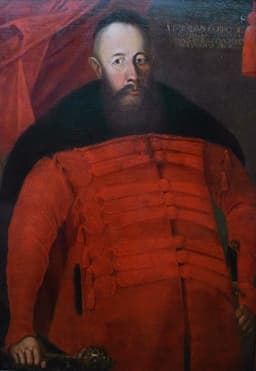
Stanislaw Koniecpolski
General · Modern
61.5Total
Basic Information
Born
1763
1591
Died
1813
1646
Era
Modern
Modern
Nationality
Poland
Poland-Lithuania
Occupation
General
General
Civilization
Western
Western
Score Comparison
Military (10%)
70.0
78.0
Political (20%)
48.0
55.0
Influence (20%)
57.2
56.7
Legacy (20%)
48.3
58.0
Leadership (15%)
61.1
62.0
Strategy (15%)
50.0
75.0
TOTAL
54.7
61.5
Jozef Poniatowski — Complete Timeline
1807 AD
Appointment as Minister of War of the Duchy of WarsawPolitical Action◆ Major
Poniatowski was appointed Minister of War of the newly created Duchy of Warsaw by Napoleon Bonaparte. He organized and commanded the Polish army, which fought alongside the French in several campaigns. This role made him a key figure in the Polish effort to regain independence.
Duchy of WarsawNapoleonic WarsPolish Army
Impact: nationalconstructive
1809 AD
Command at the Battle of RaszynWar◆ Major
Poniatowski commanded Polish forces at the Battle of Raszyn on April 19, 1809, against the Austrian army. Although the battle was tactically inconclusive, Poniatowski's leadership prevented a decisive Austrian victory and allowed the Duchy of Warsaw to survive the Austro-Polish War.
BattleAustro-Polish WarDefense
Impact: regional
1813 AD
Death at the Battle of LeipzigWar
Poniatowski drowned in the White Elster River on October 19, 1813, while covering the French retreat at the Battle of Leipzig. He was wounded and refused to surrender, attempting to cross the river on horseback. His death became a symbol of Polish sacrifice for independence.
DeathBattle of LeipzigHeroic Sacrifice
Impact: nationaltragic
Promotion to Marshal of the EmpirePolitical Action◆ Major
Napoleon promoted Poniatowski to Marshal of the Empire on October 16, 1813, during the Battle of Leipzig. He was the only foreigner to receive this honor. The promotion recognized his military service and leadership of Polish forces in the Napoleonic Wars.
MarshalNapoleonHonor
Impact: globalconstructive
Stanislaw Koniecpolski — Complete Timeline
1620 AD
Battle of CecoraWar
Koniecpolski participated as a commander in the Polish defeat at Cecora against Ottoman forces. He was captured and held captive in Istanbul for several years. This event shaped his later military strategies against the Ottomans.
Polish-Ottoman WarBattleCaptivity
Impact: regionaltragic
1624 AD
Battle of MartynowWar
Koniecpolski defeated a large Tatar raid at Martynow, killing or capturing thousands of Tatars. This victory secured the southern border of the Polish-Lithuanian Commonwealth and enhanced his reputation as a defender against Tatar incursions.
Tatar RaidsBattleBorder Defense
Impact: regional
1629 AD
Battle of TrzcianaWar◆ Major
Koniecpolski commanded Polish-Lithuanian forces against Swedish troops under Gustavus Adolphus at Trzciana. The battle resulted in a Polish victory, with Gustavus Adolphus nearly captured. This engagement demonstrated Koniecpolski's military skill against a renowned opponent.
Polish-Swedish WarBattleGustavus Adolphus
Impact: regional
1633 AD
Siege of SmolenskWar◆ Major
Koniecpolski led Polish forces to relieve the besieged city of Smolensk during the Smolensk War. His actions forced the Russian army under Mikhail Shein to surrender, securing a Polish victory and confirming the Treaty of Polyanovka.
Smolensk WarSiegeRussia
Impact: regional
Expert Analysis
Origins
Józef Poniatowski was born on May 7, 1763, in Vienna, into the Polish-Lithuanian Commonwealth’s high nobility. His father, Andrzej Poniatowski, was a Polish prince and Austrian field marshal; his mother, Maria Theresia Kinsky, was a countess. He was trained in military tactics at the Theresian Military Academy in Vienna, serving in the Austrian army before joining the Polish forces during the Kościuszko Uprising in 1794.
Stanisław Koniecpolski was born around 1590 in Koniecpol, Poland, into a wealthy magnate family. His father, Aleksander Koniecpolski, was a voivode. He studied at the Kraków Academy but left early to pursue a military career. He gained experience fighting in the Polish–Muscovite War (1605–1618) and under Hetman Stanisław Żółkiewski against the Ottomans.
Rise to Power
Poniatowski’s rise began during the Kościuszko Uprising (1794), where he served as an adjutant to Tadeusz Kościuszko. After the Third Partition of Poland, he briefly served in the Prussian army but returned to Polish service when Napoleon created the Duchy of Warsaw in 1807. Appointed Minister of War, he organized the Polish army from scratch. His loyalty to Napoleon was rewarded: after commanding the Polish corps in the 1809 Austro-Polish War, he became a key ally.
Koniecpolski rose through the ranks in the early 17th century. He fought in the Polish–Ottoman War (1620–1621), where he was captured at the Battle of Cecora (1620) and held in Istanbul for two years. After his release, he was appointed Field Crown Hetman in 1625 and Grand Crown Hetman in 1632. His decisive victory over Gustavus Adolphus at the Battle of Trzciana (1629) solidified his reputation as the Commonwealth’s greatest commander.
Leadership & Governance
Poniatowski’s leadership was defined by his close collaboration with Napoleon. As Minister of War, he modernized the Polish army, introducing French-style organization and training. He emphasized cavalry and light infantry, but his strategic decisions were often subordinate to Napoleon’s grand strategy. His governance was limited to military administration; he had little role in political reforms.
Koniecpolski, as Grand Hetman, exercised near-autonomous command over the Polish-Lithuanian military. He reformed the Commonwealth’s army, focusing on cavalry tactics (especially the winged hussars) and fortifications. He also played a key role in diplomacy, negotiating with the Ottomans and Swedes. His leadership was more independent than Poniatowski’s, as he answered only to the king.
Triumph & Tragedy
Poniatowski’s greatest triumph was his promotion to Marshal of the Empire by Napoleon during the Battle of Leipzig (1813), the only foreigner to receive that honor. He also led successful campaigns in 1809 against Austria. His tragedy came at Leipzig: covering the French retreat, he drowned in the White Elster River, his body never recovered. His death symbolized the end of Polish hopes for independence through Napoleon.
Koniecpolski’s greatest success was the Battle of Trzciana (1629), where he defeated Gustavus Adolphus, capturing his war chest and forcing the Swedes to negotiate. He also relieved Smolensk in 1634, ending the Smolensk War. His tragedy was the defeat at Cecora (1620), where he was captured; his captivity weakened the Commonwealth’s southern defenses. He died of natural causes in 1646, still in command.
Character & Destiny
Poniatowski was a loyal, brave, and chivalric figure, devoted to the Polish cause and Napoleon. His decision to stay with the rearguard at Leipzig reflected his sense of honor but also led to his death. He scored 50.0 in strategy, indicating limitations as an independent strategist. His destiny was tied to Napoleon’s fall.
Koniecpolski was pragmatic, disciplined, and a master of mobile warfare. His 75.0 in strategy reflects his ability to outmaneuver superior forces. He was also politically astute, balancing the interests of the king and magnates. His destiny was to defend the Commonwealth during its Silver Age, though his death before the Khmelnytsky Uprising left Poland unprepared for the storm.
Legacy
Poniatowski is remembered as a national hero in Poland, a symbol of sacrifice for independence. His legacy is romanticized in literature and art. However, his military achievements were tied to Napoleon’s ephemeral empire. He scored 48.3 in legacy, reflecting limited long-term impact.
Koniecpolski’s legacy is as the most successful Polish commander before Sobieski. His tactics influenced later Polish military thought. He scored 58.0 in legacy, higher than Poniatowski, because his victories secured the Commonwealth’s borders for decades. Yet his name is less known outside Poland.
Conclusion
Stanisław Koniecpolski had a greater impact on Polish military history than Józef Poniatowski. His independent command, strategic skill (75.0 vs 50.0), and decisive victories against Sweden and Russia shaped the Commonwealth’s survival. Poniatowski, while valiant, was a subordinate commander in Napoleon’s system, and his death did not alter history’s course. Koniecpolski’s total score of 61.5 versus Poniatowski’s 54.7 reflects this assessment.
Rankings
🥇
Stanislaw KoniecpolskiLeader
Mil: 78.0Pol: 55.0Inf: 56.7
61.5
🥈
Jozef Poniatowski
Mil: 70.0Pol: 48.0Inf: 57.2
54.7
+6.8 behind
How This Comparison Works
Algorithm
Each figure is scored on 6 dimensions (0—100 scale) based on structured historical data: Military (10%), Political (20%), Influence (20%), Legacy (20%), Leadership (15%), Strategy (15%). The weighted total produces the final ranking.
Data Sources
Scores are computed from structured sub-indicators in the database. Scale factors adjust for era (Ancient ×0.85, Modern ×1.0) and civilization size (Eastern ×1.05, Other ×0.80) to account for differences in population and military scale.
Maximum 3 Figures
Comparisons are limited to 2—3 figures to ensure readability and statistical meaningfulness.
Error Margins
±5 points per dimension — Sub-scores are derived from historical records with inherent uncertainty. Two figures within 5 points on a dimension should be considered roughly equivalent in that area.
Total Score Accuracy
±3 points overall — The weighted combination of 6 dimensions produces a total score with approximately ±3 points of uncertainty. Differences of less than 3 points are not statistically significant— the figures are effectively tied.
Known Limitations
- Historical records are incomplete and uneven across civilizations
- Figures from oral-tradition societies may be underrepresented
- Occupation labels can misclassify multi-role figures
- Scores measure capability and impact, not moral character
- Quantitative scoring is a comparison tool, not absolute truth
Capability Radar
Military (10%) — Battles & Warfare
Battles
65
85
Win Rate
60
90
Expansion
40
75
Political (20%) — Governance & Reform
Reform
30
60
Diplomacy
55
70
Economy
20
55
Influence (20%) — Cultural & Global Reach
Cultural
40
60
Global
35
55
Legacy (20%) — Historical Impact
Historical
50
65
Longevity
40
50
Leadership (15%) — Power & Stability
Tenure
40
65
Stability
25
60
Strategy (15%) — Tactics & Innovation
Strategy
65
85
Tactics
70
88
Reform
30
70
Similar Comparisons
Comments & Discussion
No comments yet. Be the first to share your thoughts!