Loading...
This comparison has not been analyzed yet.
One-time AI generation (~1 minute). Scores and timeline are already available below.
Juan Alvarez vs Pazhassi Raja
Pazhassi Raja leads by 0.4 pts · 2 figures compared
…
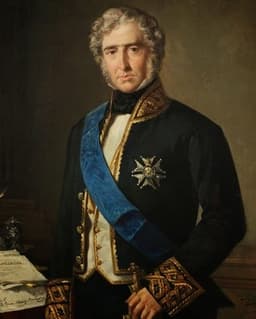
Juan Alvarez
General · Modern
47.0Total
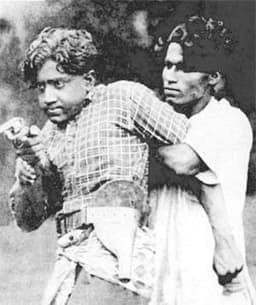
Pazhassi Raja
General · Modern
47.4Total
Basic Information
Born
1790
1753
Died
1867
1805
Era
Modern
Modern
Nationality
Mexico
India
Occupation
General
General
Civilization
Western
Indian
Score Comparison
Military (10%)
45.0
10.0
Political (20%)
43.7
37.9
Influence (20%)
51.8
58.0
Legacy (20%)
44.2
48.3
Leadership (15%)
54.2
54.2
Strategy (15%)
38.6
60.0
TOTAL
47.0
47.4
Juan Alvarez — Complete Timeline
1854 AD
Led the Revolution of AyutlaPolitical Action
Alvarez issued the Plan of Ayutla, calling for the overthrow of Santa Anna's dictatorship. He led a rebellion in southern Mexico that gained widespread support, forcing Santa Anna into exile in 1855.
Revolution of AyutlaSanta AnnaPlan of Ayutla
Impact: nationalprogressive
1855 AD
Became President of MexicoPolitical Action◆ Major
After Santa Anna's fall, Alvarez was elected interim president of Mexico. He served for only a few months, but his government initiated the liberal Reforma, including the Ley Ju
PresidencyReformaLey Juárez
Impact: nationalconstructive
Resigned the PresidencyPolitical Action
Alvarez resigned the presidency in favor of Ignacio Comonfort, citing his age and the need for a more moderate leader. He returned to his home state of Guerrero, where he remained a political figure.
ResignationComonfortGuerrero
Impact: national
Pazhassi Raja — Complete Timeline
1793 AD
Cotiote WarWar◆ Major
Pazhassi Raja initiated a guerrilla war against the British East India Company in the forests of Wayanad and Kottayam. He refused to pay tribute and resisted British annexation, using local terrain to ambush Company forces for over a decade.
British East India CompanyGuerrilla WarKerala
Impact: regional
1802 AD
Battle of PanamaramWar◆ Major
Pazhassi Raja's forces attacked and captured the British fort at Panamaram in Wayanad. The victory temporarily expelled British control from the region and boosted rebel morale, though the British later regrouped and retaliated.
BattleBritish East India CompanyWayanad
1805 AD
Death in BattleWar
Pazhassi Raja was killed in a skirmish with British forces near Mavila Thodu in Wayanad. His death ended the Cotiote War, and the British subsequently annexed Kottayam. He became a symbol of resistance in Kerala.
DeathBritish East India CompanyResistance
Impact: regionaltragic
This comparison has not been analyzed yet.
One-time AI generation (~1 minute). Scores and timeline are already available below.
Rankings
🥇
Pazhassi RajaLeader
Mil: 10.0Pol: 37.9Inf: 58.0
47.4
🥈
Juan Alvarez
Mil: 45.0Pol: 43.7Inf: 51.8
47.0
+0.4 behind
How This Comparison Works
Algorithm
Each figure is scored on 6 dimensions (0—100 scale) based on structured historical data: Military (10%), Political (20%), Influence (20%), Legacy (20%), Leadership (15%), Strategy (15%). The weighted total produces the final ranking.
Data Sources
Scores are computed from structured sub-indicators in the database. Scale factors adjust for era (Ancient ×0.85, Modern ×1.0) and civilization size (Eastern ×1.05, Other ×0.80) to account for differences in population and military scale.
Maximum 3 Figures
Comparisons are limited to 2—3 figures to ensure readability and statistical meaningfulness.
Error Margins
±5 points per dimension — Sub-scores are derived from historical records with inherent uncertainty. Two figures within 5 points on a dimension should be considered roughly equivalent in that area.
Total Score Accuracy
±3 points overall — The weighted combination of 6 dimensions produces a total score with approximately ±3 points of uncertainty. Differences of less than 3 points are not statistically significant— the figures are effectively tied.
Known Limitations
- Historical records are incomplete and uneven across civilizations
- Figures from oral-tradition societies may be underrepresented
- Occupation labels can misclassify multi-role figures
- Scores measure capability and impact, not moral character
- Quantitative scoring is a comparison tool, not absolute truth
Capability Radar
Military (10%) — Battles & Warfare
Battles
25
45
Win Rate
30
40
Expansion
10
25
Political (20%) — Governance & Reform
Reform
40
15
Diplomacy
30
35
Economy
20
20
Influence (20%) — Cultural & Global Reach
Cultural
25
40
Global
15
20
Legacy (20%) — Historical Impact
Historical
35
45
Longevity
20
35
Leadership (15%) — Power & Stability
Tenure
35
30
Stability
20
25
Strategy (15%) — Tactics & Innovation
Strategy
25
50
Tactics
20
55
Reform
15
20
Similar Comparisons
Comments & Discussion
No comments yet. Be the first to share your thoughts!