Loading...
Analysis will be generated on first visit.
Scores and timeline are available below. The page will refresh automatically when ready.
Julian the Apostate vs Napoleon Bonaparte
Napoleon Bonaparte leads by 24.2 pts · 2 figures compared
…

Julian the Apostate
Emperor · Ancient
58.2Total
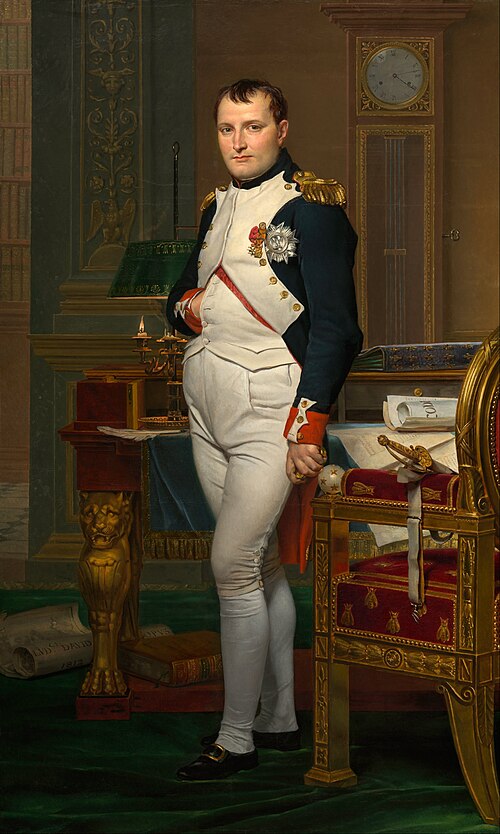
Napoleon Bonaparte
General · Modern
82.4Total
Basic Information
Born
331
1769
Died
363
1821
Era
Ancient
Modern
Nationality
Roman Empire
France
Occupation
Emperor
General
Civilization
Western
Western
Score Comparison
Military (10%)
52.4
94.0
Political (20%)
52.4
75.0
Influence (20%)
70.9
82.0
Legacy (20%)
71.3
78.0
Leadership (15%)
35.9
80.0
Strategy (15%)
58.0
93.0
TOTAL
58.2
82.4
Rankings
🥇
Napoleon BonaparteLeader
Mil: 94.0Pol: 75.0Inf: 82.0
82.4
🥈
Julian the Apostate
Mil: 52.4Pol: 52.4Inf: 70.9
58.2
+24.2 behind
How This Comparison Works
Algorithm
Each figure is scored on 6 dimensions (0—100 scale) based on structured historical data: Military (10%), Political (20%), Influence (20%), Legacy (20%), Leadership (15%), Strategy (15%). The weighted total produces the final ranking.
Data Sources
Scores are computed from structured sub-indicators in the database. Scale factors adjust for era (Ancient ×0.85, Modern ×1.0) and civilization size (Eastern ×1.05, Other ×0.80) to account for differences in population and military scale.
Maximum 3 Figures
Comparisons are limited to 2—3 figures to ensure readability and statistical meaningfulness.
Error Margins
±5 points per dimension — Sub-scores are derived from historical records with inherent uncertainty. Two figures within 5 points on a dimension should be considered roughly equivalent in that area.
Total Score Accuracy
±3 points overall — The weighted combination of 6 dimensions produces a total score with approximately ±3 points of uncertainty. Differences of less than 3 points are not statistically significant— the figures are effectively tied.
Known Limitations
- Historical records are incomplete and uneven across civilizations
- Figures from oral-tradition societies may be underrepresented
- Occupation labels can misclassify multi-role figures
- Scores measure capability and impact, not moral character
- Quantitative scoring is a comparison tool, not absolute truth
Capability Radar
Military (10%) — Battles & Warfare
Battles
65
95
Win Rate
60
90
Expansion
40
95
Political (20%) — Governance & Reform
Reform
70
95
Diplomacy
45
80
Economy
40
85
Influence (20%) — Cultural & Global Reach
Cultural
60
85
Global
50
90
Legacy (20%) — Historical Impact
Historical
70
95
Longevity
55
90
Leadership (15%) — Power & Stability
Tenure
30
85
Stability
20
70
Strategy (15%) — Tactics & Innovation
Strategy
65
95
Tactics
70
98
Reform
55
92
Analysis will be generated on first visit.
Scores and timeline are available below. The page will refresh automatically when ready.
Julian the Apostate — Complete Timeline
360 AD
Proclamation as AugustusPolitical Action◆ Major
While campaigning in Gaul, Julian was proclaimed Augustus by his troops in Paris, rejecting the authority of Emperor Constantius II. This act led to a civil war, but Constantius's death in 361 allowed Julian to become sole emperor without battle.
Civil WarProclamationConstantius II
Impact: national
362 AD
Edict of Religious TolerationPolitical Action◆ Major
Julian issued an edict granting freedom of worship to all religions, effectively ending the official persecution of pagans and allowing the restoration of pagan temples. He also recalled Christian bishops exiled by Constantius, aiming to weaken Christianity through internal division.
Religious PolicyPagan RestorationToleration
Impact: global
363 AD
Battle of SamarraWar
Julian led a massive invasion of the Sassanid Persian Empire but was mortally wounded during a skirmish near Samarra. His death ended the campaign and led to a humiliating peace treaty with the Persians, ceding territory and marking the failure of his military ambitions.
Roman-Persian WarsDeath in BattleCampaign Failure
Impact: regionaltragic
Attempt to Rebuild the Temple in JerusalemPolitical Action
Julian ordered the rebuilding of the Jewish Temple in Jerusalem, reversing the earlier Roman ban. The project was abandoned after a series of earthquakes and fires, which Christian sources attributed to divine intervention. This event highlighted Julian's anti-Christian agenda.
Jewish TempleReligious PolicyPaganism
Impact: regional
Similar Comparisons
Comments & Discussion
No comments yet. Be the first to share your thoughts!