Loading...
Julius Caesar vs Nurhaci
Nurhaci leads by 0.5 pts · 2 figures compared
…
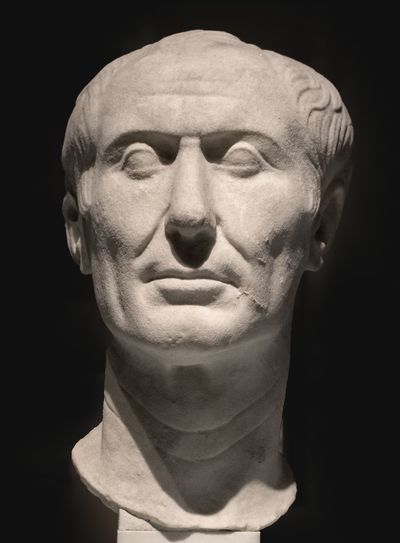
Julius Caesar
General · Ancient
83.3Total
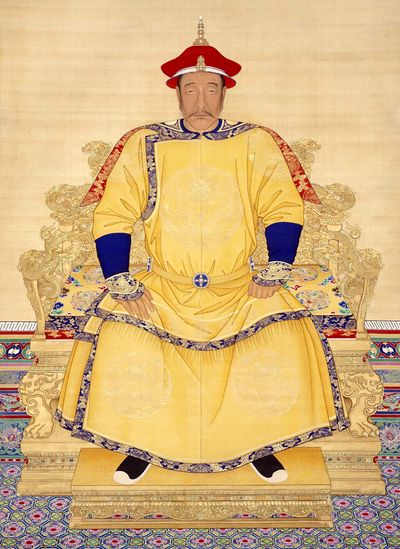
Nurhaci
Emperor · Modern
83.8Total
Basic Information
Born
-100
1559
Died
-44
1626
Era
Ancient
Modern
Nationality
Roman Republic
China
Occupation
General
Emperor
Civilization
Western
Eastern
Score Comparison
Military (10%)
88.0
79.9
Political (20%)
78.0
84.8
Influence (20%)
85.0
84.1
Legacy (20%)
82.0
87.6
Leadership (15%)
82.0
82.1
Strategy (15%)
88.0
81.1
TOTAL
83.3
83.8
Rankings
🥇
NurhaciLeader
Mil: 79.9Pol: 84.8Inf: 84.1
83.8
🥈
Julius Caesar
Mil: 88.0Pol: 78.0Inf: 85.0
83.3
+0.5 behind
How This Comparison Works
Algorithm
Each figure is scored on 6 dimensions (0—100 scale) based on structured historical data: Military (10%), Political (20%), Influence (20%), Legacy (20%), Leadership (15%), Strategy (15%). The weighted total produces the final ranking.
Data Sources
Scores are computed from structured sub-indicators in the database. Scale factors adjust for era (Ancient ×0.85, Modern ×1.0) and civilization size (Eastern ×1.05, Other ×0.80) to account for differences in population and military scale.
Maximum 3 Figures
Comparisons are limited to 2—3 figures to ensure readability and statistical meaningfulness.
Error Margins
±5 points per dimension — Sub-scores are derived from historical records with inherent uncertainty. Two figures within 5 points on a dimension should be considered roughly equivalent in that area.
Total Score Accuracy
±3 points overall — The weighted combination of 6 dimensions produces a total score with approximately ±3 points of uncertainty. Differences of less than 3 points are not statistically significant— the figures are effectively tied.
Known Limitations
- Historical records are incomplete and uneven across civilizations
- Figures from oral-tradition societies may be underrepresented
- Occupation labels can misclassify multi-role figures
- Scores measure capability and impact, not moral character
- Quantitative scoring is a comparison tool, not absolute truth
Capability Radar
Military (10%) — Battles & Warfare
Battles
95
85
Win Rate
92
90
Expansion
97
88
Political (20%) — Governance & Reform
Reform
90
85
Diplomacy
85
80
Economy
82
70
Influence (20%) — Cultural & Global Reach
Cultural
88
85
Global
94
80
Legacy (20%) — Historical Impact
Historical
95
90
Longevity
96
88
Leadership (15%) — Power & Stability
Tenure
75
75
Stability
60
78
Strategy (15%) — Tactics & Innovation
Strategy
94
85
Tactics
96
88
Reform
88
92
Expert Analysis
### The Rubicon and the Willow Palisade
On a cold January morning in 49 BCE, a Roman general stood on the banks of a small, muddy river in northern Italy. The Rubicon was nothing more than a provincial boundary, but crossing it with an army was an act of war against the Roman Republic itself. Julius Caesar, pausing at the water’s edge, is said to have uttered a gambler’s words: *"Alea iacta est"* — the die is cast. Across the world, seventeen centuries later, a Manchu chieftain in the forests of what is now northeastern China stared at a different kind of boundary. Nurhaci was not a Roman aristocrat but a Jurchen clan leader, a man who had already lost his father and grandfather to the Ming dynasty’s border wars. His boundary was not a river but a willow palisade — a man-made barrier the Ming had built to keep "barbarians" out. Both men crossed their lines. Both men never looked back. But the worlds they built from those crossings could not have been more different.
### Origins
Julius Caesar was born into the twilight of the Roman Republic, a system already creaking under the weight of its own ambition. His family, the Julii, claimed descent from the goddess Venus, but they were not among the ultra-wealthy patricians who dominated the Senate. Rome in 100 BCE was a city of marble and mud, where generals fought not just foreign enemies but each other, and where a man’s worth was measured in military glory and political favor. Caesar grew up in the shadow of Sulla and Marius, titans whose civil wars had taught him one brutal lesson: in Rome, power was the only law.
Nurhaci’s world, by contrast, was one of tribes and blood feuds. Born in 1559 in the Jianzhou Jurchen confederation, he was the son of a minor chieftain, a man whose authority was measured in horses, furs, and the number of warriors who would follow him into battle. The Ming dynasty, then in its long decline, treated the Jurchen as vassals, playing one clan against another to keep the northern frontier quiet. Nurhaci’s father and grandfather were killed in a Ming-led raid when he was just twenty-five. He was given their remains, a few bolts of silk, and an imperial seal as compensation. The message was clear: the Ming saw him as nothing.
### Rise to Power
Caesar’s rise was a masterclass in Roman political theater. He married well, borrowed heavily, and bought his way into the priesthood. He served as governor in Spain, where he borrowed more money to pay his troops. He formed the First Triumvirate with Pompey and Crassus, a backroom deal that made him consul by 59 BCE. But his true springboard was Gaul. Between 58 and 50 BCE, Caesar conquered a territory larger than Italy itself, slaughtering or enslaving perhaps a million people. He wrote his own propaganda — the *Commentaries* — and sent them back to Rome, where the public devoured tales of his heroism. By the time the Senate ordered him to disband his army, he had no intention of obeying.
Nurhaci’s path was slower, more patient, and far more personal. After his father’s death, he began avenging the slight by uniting the Jurchen clans one by one. He did not conquer with overwhelming force; he married his daughters to rivals, forged alliances, and waited. In 1587, he built a walled stronghold called Fe Ala. In 1599, he created a written script for the Jurchen language. In 1601, he organized his warriors into the Eight Banners — a military-social system that turned every Manchu into a soldier. Each step was deliberate. Each layer of power was woven into the fabric of tribal life, not imposed from above. By 1616, he declared himself Khan of the Later Jin dynasty, a name that deliberately echoed the Jurchen dynasty that had once ruled northern China.
### Leadership & Governance
Caesar ruled as a reformer and a dictator. As consul and later as dictator for life, he overhauled the Roman calendar, granted citizenship to provincials, and launched massive public works. He was generous to his enemies — too generous, some said — and filled the Senate with his supporters. But his governance was built on a single pillar: himself. He had no plan for succession, no system beyond his own genius. When he centralized power, he broke the Republic’s delicate balance without replacing it with anything durable.
Nurhaci’s leadership was collective and institutional. The Eight Banners were not just an army; they were a government, a census system, and a social order. Every Manchu knew his place. Nurhaci was ruthless — he executed rivals and absorbed their tribes — but he built structures that could outlast him. He issued a legal code, promoted agriculture, and encouraged literacy in the Manchu script. Where Caesar tore down an old world to build his own, Nurhaci slowly assembled a new one from the fragments of the old.
### Triumph & Tragedy
Caesar’s greatest moment was also the seed of his destruction. After defeating Pompey at Pharsalus in 48 BCE, he was master of the Roman world. He was made dictator for life, his face stamped on coins, his statue placed in temples. But on the Ides of March, 44 BCE, a cabal of senators stabbed him to death at the foot of Pompey’s theater. He fell, according to tradition, at the base of his rival’s statue, bleeding into the marble floor. His tragedy was that he had no successor; his murder plunged Rome into another civil war, and the Republic he had strangled never revived.
Nurhaci’s tragedy was quieter but equally profound. In 1626, at the age of sixty-seven, he led an invasion of Ming China. At the Battle of Ningyuan, a Ming general using European-style cannon — a Portuguese innovation — blasted his army to pieces. Nurhaci was wounded, possibly by shrapnel. He died a few months later, bitter and unfinished. But unlike Caesar, he had prepared. His son Hong Taiji and later his grandson, the Shunzhi Emperor, would complete his work. In 1644, just eighteen years after Nurhaci’s death, the Manchu banners marched through the Great Wall and seized Beijing.
### Character & Destiny
Caesar was a gambler, a man who believed that fortune favored the bold. He pardoned his enemies because he believed he could win them over; he crossed the Rubicon because he could not imagine losing. His fatal flaw was not arrogance but isolation — he thought he could carry the entire Roman world on his shoulders alone. Nurhaci was a builder, a man who thought in generations, not moments. He was cautious where Caesar was reckless, patient where Caesar was impulsive. He did not trust luck; he trusted systems.
### Legacy
Caesar’s legacy is the Roman Empire. Every emperor after him, from Augustus to Justinian, ruled in his shadow. His name became a title — *Kaiser*, *Tsar* — and his calendar shaped the West. But he also left a warning: a man who breaks a republic may not be able to fix it.
Nurhaci’s legacy is the Qing dynasty, the last imperial dynasty of China, which ruled for nearly three centuries. His Eight Banners became the backbone of a state that annexed Tibet, Mongolia, and Xinjiang. His script survives today as the written form of the Manchu language, though it is now nearly extinct. He is remembered not as a destroyer but as a founder — the father of a people who conquered an empire.
### Conclusion
Standing at their respective boundaries, both men chose to cross. Caesar’s crossing was a sprint; Nurhaci’s was a marathon. One built a legend; the other built a dynasty. In the end, Caesar gave the world a story — a tale of ambition, glory, and a single man’s fall. Nurhaci gave the world a system — a machine of conquest that outlasted him. Both changed the course of history, but only one of them left behind something that could survive without him. That, perhaps, is the deepest difference between a conqueror and a founder.
Frequently Asked Questions
Who ranks highest among Julius Caesar, Nurhaci?
Based on our six-dimension data-driven analysis, the ranking is determined by comparing Military, Political, Influence, Legacy, Leadership, and Strategy scores derived from quantifiable historical metrics. See the full analysis for the detailed comparison.
How accurate is this comparison?
The scoring system has a ±3 point error margin per dimension and ±3 points overall. Figures within 3 points are considered statistically tied. The analysis uses structured historical data but cannot capture every nuance of historical context.
Similar Comparisons
Comments & Discussion
IronCedar6/15/2026
Fascinating comparison between Julius Caesar and Nurhaci. The data shows how different leadership styles produce different historical outcomes.
LostWarlord6/15/2026
Quantitative scoring can't fully capture historical complexity, but this is a solid framework for structured comparison.