Loading...
Julius Nyerere vs Sihanouk Norodom
Julius Nyerere leads by 2.1 pts · 2 figures compared
…

Julius Nyerere
Politician · Modern
57.6Total
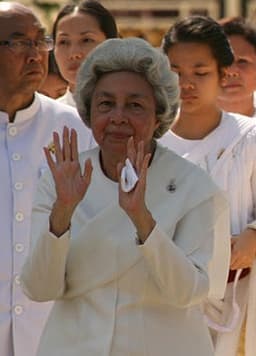
Sihanouk Norodom
Politician · Modern
55.5Total
Basic Information
Born
1922
1922
Died
—
—
Era
Modern
Modern
Nationality
Tanzania
Cambodia
Occupation
Politician
Politician
Civilization
Other
Eastern
Score Comparison
Military (10%)
10.0
14.8
Political (20%)
72.0
68.0
Influence (20%)
65.0
62.0
Legacy (20%)
56.0
52.0
Leadership (15%)
78.0
74.0
Strategy (15%)
38.3
42.6
TOTAL
57.6
55.5
Julius Nyerere — Complete Timeline
1961 AD
Tanganyika IndependencePolitical Action
Julius Nyerere led Tanganyika to independence from British colonial rule, becoming its first Prime Minister. He advocated for peaceful transition and unity, laying the foundation for his vision of a socialist African state.
IndependenceDecolonizationTanganyika
Impact: nationalconstructive
1964 AD
Union with ZanzibarPolitical Action◆ Major
Nyerere negotiated the union of Tanganyika and Zanzibar to form the United Republic of Tanzania. This merger aimed to promote stability and unity after the Zanzibar Revolution, creating a single nation with a shared identity.
UnionZanzibarNation-Building
Impact: regionalconstructive
1967 AD
Arusha DeclarationPolitical Action◆ Major
Nyerere issued the Arusha Declaration, outlining his policy of Ujamaa (African socialism). The declaration called for self-reliance, nationalization of key industries, and collectivization of agriculture. It became the guiding ideology of Tanzania's development.
SocialismUjamaaEconomic Policy
Impact: nationalprogressive
1978 AD
War with UgandaWar◆ Major
Nyerere ordered Tanzanian forces to invade Uganda after Idi Amin's troops annexed Tanzanian territory. The war resulted in the overthrow of Amin and the restoration of Ugandan President Milton Obote, demonstrating Tanzania's military capability and regional influence.
WarUgandaIdi Amin
Impact: regional
1985 AD
Retirement from PresidencyPolitical Action◆ Major
Nyerere voluntarily stepped down as President of Tanzania, a rare act among African leaders. He handed power to Ali Hassan Mwinyi but remained influential as chairman of the ruling party. His retirement set a precedent for peaceful transitions in Africa.
RetirementTransitionLeadership
Impact: nationalconstructive
Sihanouk Norodom — Complete Timeline
1955 AD
Abdicated the throne in favor of his fatherPolitical Action◆ Major
Sihanouk abdicated as King of Cambodia to pursue a political career. He formed the Sangkum Reastr Niyum political movement, winning the 1955 election and becoming Prime Minister, a position he held while remaining the dominant political figure.
AbdicationPolitical CareerSangkum
Impact: national
Declared neutrality during the Vietnam WarPolitical Action◆ Major
Sihanouk adopted a policy of neutrality and non-alignment for Cambodia during the escalating Vietnam War. He sought to avoid entanglement in the conflict between the US and communist forces, balancing relations with China, the US, and North Vietnam.
NeutralityVietnam WarForeign Policy
Impact: regional
1970 AD
Overthrown in a US-backed coupPolitical Action
While abroad, Sihanouk was deposed by a coup led by General Lon Nol, supported by the United States. This ended his 15-year rule and forced him into exile in China, where he formed a government-in-exile and allied with the Khmer Rouge.
CoupExileLon NolUS Involvement
Impact: nationaldestructive
1993 AD
Returned as King under the Paris Peace AccordsPolitical Action◆ Major
Following the UN-sponsored elections and the Paris Peace Accords, Sihanouk was reinstated as King of Cambodia. He returned from exile to a constitutional monarchy, serving as a unifying figurehead after decades of civil war and the Khmer Rouge regime.
RestorationPeace AccordsConstitutional Monarchy
Impact: nationalconstructive
2004 AD
Abdicated for the second timePolitical Action
Sihanouk abdicated the throne for health reasons, citing his age and desire for a peaceful retirement. His son, Norodom Sihamoni, succeeded him as King, marking the end of Sihanouk's direct political role in Cambodia.
AbdicationSuccessionRetirement
Impact: national
Expert Analysis
Origins
Julius Nyerere was born on April 13, 1922, in Butiama, Tanganyika (now Tanzania), to a Zanaki chief. He was one of 26 children. Nyerere attended Makerere University in Uganda and later the University of Edinburgh, becoming one of the first Tanganyikans to study abroad. He trained as a teacher, earning the nickname "Mwalimu" (teacher). His early exposure to Western education and African traditions shaped his vision for an independent, socialist Tanzania.
Norodom Sihanouk was born on October 31, 1922, in Phnom Penh, Cambodia, to King Norodom Suramarit and Queen Sisowath Kossamak. He was educated at the Lycee Chasseloup-Laubat in Saigon and later attended military school in France. Sihanouk was placed on the throne by the French at age 18, in 1941, as a figurehead monarch. His early life was steeped in royal privilege but also colonial subjugation, which fueled his desire for independence.
Rise to Power
Nyerere entered politics in the 1950s, founding the Tanganyika African National Union (TANU) in 1954. He led peaceful negotiations with the British, resulting in Tanganyika's independence on December 9, 1961. He became Prime Minister and, a year later, President when Tanganyika became a republic. His non-violent approach and pan-Africanist rhetoric gained him widespread support. The union with Zanzibar in 1964 created Tanzania, solidifying his power base.
Sihanouk became king in 1941 under French auspices. After World War II, he campaigned for independence, achieving it in 1953 through a series of negotiations known as the "Royal Crusade for Independence." In 1955, he abdicated in favor of his father to become Prime Minister, controlling the Sangkum Reastr Niyum party. He won elections overwhelmingly, ruling as a popular autocrat for 15 years. His neutrality during the Vietnam War kept Cambodia nominally stable but also isolated it.
Leadership & Governance
Nyerere implemented Ujamaa, a form of African socialism focused on communal villages and self-reliance. The Arusha Declaration of 1967 nationalized banks, industries, and large farms. He promoted education and health care, achieving high literacy rates (over 80% by the 1980s) and reduced infant mortality. However, forced villagization disrupted agriculture, leading to food shortages and economic stagnation. Tanzania remained poor, with GDP per capita around $500 by the 1980s.
Sihanouk ruled as a benevolent autocrat, blending monarchy and populism. He pursued a neutral foreign policy, accepting aid from both the US and China. Domestically, he nationalized key industries and promoted Buddhist socialism. He maintained stability but suppressed dissent, banning political parties and imprisoning opponents. His policies favored the urban elite, leaving rural areas neglected. The economy grew modestly, but corruption was rampant.
Triumph & Tragedy
Nyerere's greatest success was uniting Tanganyika and Zanzibar into a stable Tanzania, avoiding ethnic conflict. He also hosted liberation movements, like the ANC, and advocated for African unity. His voluntary retirement in 1985 set a precedent for peaceful transitions in Africa. However, his economic policies failed: Ujamaa collectivization reduced agricultural output by 50% in some areas, and Tanzania became dependent on foreign aid. He also suppressed dissent, banning opposition parties until 1992.
Sihanouk's triumph was securing Cambodia's independence and maintaining neutrality during the Vietnam War, preventing direct conflict. He also restored the monarchy after the Khmer Rouge era, returning as king in 1993. His tragedy was the unintended consequence of his policies: his neutral stance and tacit support for the Khmer Rouge before they took power contributed to their rise. The genocide that followed killed 1.5-2 million Cambodians. Sihanouk's abdication in 1955 also left a power vacuum that led to the 1970 coup.
Character & Destiny
Nyerere was idealistic, principled, and deeply committed to African socialism. He believed in consensus and shunned personal wealth, living modestly. His integrity earned him respect globally, but his rigidity on Ujamaa blinded him to its flaws. He scored 78.0 in leadership but only 38.3 in strategy, reflecting his inability to adapt economically. His destiny was to be revered as a father of the nation but criticized for poverty.
Sihanouk was charismatic, cunning, and unpredictable. He shifted alliances frequently, earning a reputation as a "weathervane." His political survival instinct was strong, but his ego and desire for control led to poor decisions, such as supporting the Khmer Rouge to counter US influence. He scored 74.0 in leadership and 42.6 in strategy. His legacy is tarnished by his role in Cambodia's tragedy, despite his earlier achievements.
Legacy
Nyerere's legacy is mixed. He is remembered as a principled pan-Africanist and educator, with Tanzania remaining peaceful and stable. His Ujamaa policies failed economically, but they fostered a sense of national unity. His influence scored 65.0, and legacy 56.0. Tanzania today is a multi-party democracy, but still poor. Nyerere's ideas on self-reliance and education endure, though his economic model is largely abandoned.
Sihanouk's legacy is deeply controversial. He is celebrated for independence and neutrality, but his association with the Khmer Rouge and failure to prevent genocide overshadow his achievements. He scored 62.0 in influence and 52.0 in legacy. Cambodia today still struggles with the trauma of the Khmer Rouge, and Sihanouk's role remains debated. His political maneuvering set the stage for disaster, yet he is still revered as the "King-Father."
Conclusion
Julius Nyerere had a greater impact on his nation and Africa than Sihanouk Norodom. Nyerere's total score of 57.6 edges Sihanouk's 55.5, but the difference is more qualitative: Nyerere built a stable, unified nation that avoided civil war, while Sihanouk's actions contributed to Cambodia's descent into genocide. Nyerere's legacy, though economically flawed, is one of peace and dignity. Sihanouk's legacy is marred by the catastrophe he helped enable. Therefore, Nyerere's impact is more positive and lasting.
Rankings
🥇
Julius NyerereLeader
Mil: 10.0Pol: 72.0Inf: 65.0
57.6
🥈
Sihanouk Norodom
Mil: 14.8Pol: 68.0Inf: 62.0
55.5
+2.1 behind
How This Comparison Works
Algorithm
Each figure is scored on 6 dimensions (0—100 scale) based on structured historical data: Military (10%), Political (20%), Influence (20%), Legacy (20%), Leadership (15%), Strategy (15%). The weighted total produces the final ranking.
Data Sources
Scores are computed from structured sub-indicators in the database. Scale factors adjust for era (Ancient ×0.85, Modern ×1.0) and civilization size (Eastern ×1.05, Other ×0.80) to account for differences in population and military scale.
Maximum 3 Figures
Comparisons are limited to 2—3 figures to ensure readability and statistical meaningfulness.
Error Margins
±5 points per dimension — Sub-scores are derived from historical records with inherent uncertainty. Two figures within 5 points on a dimension should be considered roughly equivalent in that area.
Total Score Accuracy
±3 points overall — The weighted combination of 6 dimensions produces a total score with approximately ±3 points of uncertainty. Differences of less than 3 points are not statistically significant— the figures are effectively tied.
Known Limitations
- Historical records are incomplete and uneven across civilizations
- Figures from oral-tradition societies may be underrepresented
- Occupation labels can misclassify multi-role figures
- Scores measure capability and impact, not moral character
- Quantitative scoring is a comparison tool, not absolute truth
Capability Radar
Military (10%) — Battles & Warfare
Battles
0
14
Win Rate
0
15
Expansion
0
21
Political (20%) — Governance & Reform
Reform
75
40
Diplomacy
70
75
Economy
40
30
Influence (20%) — Cultural & Global Reach
Cultural
65
55
Global
55
55
Legacy (20%) — Historical Impact
Historical
60
60
Longevity
50
50
Leadership (15%) — Power & Stability
Tenure
85
65
Stability
60
20
Strategy (15%) — Tactics & Innovation
Strategy
0
24
Tactics
0
29
Reform
10
29
Similar Comparisons
Comments & Discussion
No comments yet. Be the first to share your thoughts!