Loading...
Justo Rufino Barrios vs Napoleon Bonaparte
Napoleon Bonaparte leads by 12.3 pts · 2 figures compared
…
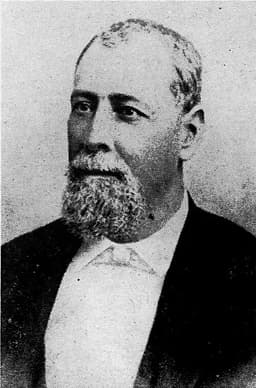
Justo Rufino Barrios
General · Modern
58.6Total

Napoleon Bonaparte
General · Modern
70.9Total
Basic Information
Born
1835
1769
Died
1885
1821
Era
Modern
Modern
Nationality
Guatemala
France
Occupation
General
General
Civilization
Western
Western
Score Comparison
Military (10%)
52.5
94.0
Political (20%)
72.0
72.0
Influence (20%)
60.0
40.0
Legacy (20%)
49.2
80.0
Leadership (15%)
65.0
78.0
Strategy (15%)
55.0
90.0
TOTAL
58.6
70.9
Justo Rufino Barrios — Complete Timeline
1871 AD
Enacted the Liberal Reforms of 1871Reform
Justo Rufino Barrios, after coming to power, implemented sweeping liberal reforms. These included the separation of church and state, confiscation of church lands, establishment of secular education, and promotion of coffee cultivation for export.
GuatemalaLiberal ReformSecularization
Impact: nationalprogressive
1873 AD
Modernized Guatemala's InfrastructureReform◆ Major
Barrios oversaw the construction of roads, telegraph lines, and railways, particularly to support coffee exports. He also promoted immigration and foreign investment, transforming Guatemala's economy.
GuatemalaInfrastructureEconomic Development
Impact: nationalconstructive
1885 AD
Killed at the Battle of ChalchuapaWar
Barrios was killed in battle at Chalchuapa, El Salvador, while leading an invasion to forcibly reunify Central America. His death ended the unification attempt and preserved the sovereignty of the individual Central American states.
Central AmericaBattleDeath
Impact: regionaltragic
Declared the Unification of Central AmericaPolitical Action◆ Major
Barrios unilaterally declared the reunification of the Central American republics by force. He issued a decree proclaiming himself supreme military commander of a unified Central America, leading to war with neighboring states.
Central AmericaUnificationWar
Impact: regionaldestructive
Napoleon Bonaparte — Complete Timeline
1799 AD
Coup of 18 BrumaireOther◆ Major
Napoleon Bonaparte, with support from his brother Lucien and key political figures, overthrew the Directory in a bloodless coup. He established the Consulate with himself as First Consul, effectively becoming the ruler of France. This event ended the French Revolution's most unstable period.
French RevolutionCoupRise to Power
Impact: regional
1804 AD
Promulgation of the Napoleonic CodeOther◆ Major
Napoleon enacted the Civil Code of the French, known as the Napoleonic Code, a comprehensive set of laws that replaced the fragmented feudal legal systems. The code established legal equality, protected property rights, and secularized law. It became the basis for legal systems in many European and world countries.
Legal ReformNapoleonic CodeCivil Law
Impact: globalconstructive
1805 AD
Battle of AusterlitzWar◆ Major
Napoleon's Grande Arm
Napoleonic WarsBattleDecisive Victory
Impact: global
1812 AD
Invasion of RussiaWar◆ Major
Napoleon led the Grande Arm
Napoleonic WarsInvasionDisaster
Impact: globaldestructive
1815 AD
Battle of WaterlooWar◆ Major
Napoleon's French army was defeated by the combined forces of the Duke of Wellington's Anglo-Allied army and Gebhard Leberecht von Bl
Napoleonic WarsBattleFinal Defeat
Impact: globaldestructive
Expert Analysis
justo-rufino-barrios-vs-napoleon-bonaparte
# The Emperor and the Reformer
On a June morning in 1815, Napoleon Bonaparte stood on a muddy field near Waterloo, watching his grand army crumble into chaos. Thirty years later and an ocean away, another general rode into battle at Chalchuapa, convinced he could forge a united Central America with the same iron will. One man had conquered an empire spanning half of Europe; the other could not even hold together a handful of small republics. Why did Napoleon, the Corsican artilleryman, reshape a continent, while Justo Rufino Barrios, the Guatemalan liberal, died in obscurity, his dream of unification buried with him? The answer lies not merely in military genius, but in the worlds they inherited and the choices they made.
Origins
Napoleon was born in 1769 on the island of Corsica, a recent French acquisition where his family had fought for independence. This marginality shaped him: he was an outsider who clawed his way into the French military academy, speaking French with an Italian accent that drew mockery. His era was the French Revolution, a cataclysm that shattered old hierarchies and opened paths to power for men of talent. Napoleon absorbed the Revolution’s energy and its contradictions—its promise of meritocracy and its appetite for war.
Justo Rufino Barrios, born in 1835 in San Lorenzo, Guatemala, came from a different world entirely. Central America had just broken free from Spanish rule and then from the United Provinces of Central America, fracturing into five squabbling republics. Barrios grew up in a land of coffee plantations, indigenous labor, and conservative oligarchies. He was a self-made man of mixed ancestry, a *ladino* who rose through the military after the Liberal Revolution of 1871. His era was the liberal reform movement sweeping Latin America—a time of positivism, railroads, and a belief that progress could be imposed by decree. But unlike Napoleon’s France, Barrios’s Guatemala was small, poor, and surrounded by rivals.
Rise to Power
Napoleon’s ascent was meteoric. In 1793, at age twenty-four, he drove the British from Toulon with a brilliant artillery plan. By 1796, he commanded the Army of Italy, winning six victories in a month. His Italian campaign was a masterclass in speed, deception, and exploiting enemy disunity. He knew how to turn a battlefield triumph into political capital: after each victory, he sent captured flags to Paris, making himself a national hero. By 1799, he seized power in a coup, naming himself First Consul. His path was forged in the crucible of revolution, where old rules had melted away.
Barrios rose differently. He was not a revolutionary but a rebel within a fragile system. In 1871, he joined the Liberal Revolution that overthrew Guatemala’s conservative president. Within two years, he became president himself. His rise owed less to strategic brilliance than to political timing: he represented the coffee-growing elite who wanted to break the power of the Catholic Church and the old aristocracy. Where Napoleon conquered nations, Barrios bargained and maneuvered among factions. His military score of 65.4 and strategy of 55.6 reflect a man who was a capable soldier but no battlefield genius.
Leadership & Governance
As emperor, Napoleon governed with a paradoxical blend of authoritarianism and reform. His Napoleonic Code of 1804 standardized French law, abolished feudal privileges, and protected property rights—but also restricted women’s rights and reestablished slavery in the colonies. He built roads, schools, and a centralized bureaucracy. He was a master of propaganda, portraying himself as the savior of the Revolution while crushing dissent. His military genius—scored at 94—lay in his ability to concentrate force at the decisive point, to live off the land, and to inspire men who would follow him through snow and fire.
Barrios, by contrast, was a reformer of a smaller stage. His Liberal Reforms of 1871 separated church and state, secularized education, and confiscated church lands to sell to coffee planters. He built telegraph lines and railways—especially to the Pacific port of San José—to boost coffee exports. He encouraged foreign investment and immigration. But his reforms came at a cost: he dispossessed indigenous communities of communal lands, creating a rural proletariat. His political score of 72 reflects a pragmatic administrator, but his governance lacked the grand vision of Napoleon. He was modernizing a country, not an empire.
Triumph & Tragedy
Napoleon’s greatest moment was Austerlitz in 1805, where he destroyed the combined armies of Russia and Austria. It was a triumph of deception and timing—he lured his enemies onto a frozen battlefield, then shattered their center. His empire stretched from Spain to Poland. But his tragedy was hubris: the invasion of Russia in 1812 cost half a million men, and his refusal to compromise led to his first abdication in 1814. Even his return in 1815 ended at Waterloo, where his old magic failed him.
Barrios’s triumph was more modest: he stabilized Guatemala, modernized its economy, and crushed conservative rebellions. But his tragedy was the Unification of Central America. In 1885, he unilaterally declared the reunification of the five republics by force, believing his army could impose unity as Napoleon had imposed the Confederation of the Rhine. He invaded El Salvador, but at Chalchuapa on April 2, 1885, he was shot dead in battle. His army scattered. The dream died with him.
Character & Destiny
Napoleon was driven by an insatiable ambition and a cold, calculating intelligence. He once said, “Impossible is a word to be found only in the dictionary of fools.” He believed he could shape history through will alone—and for a decade, he nearly did. His personality was his strength and his flaw: he could not stop, could not share power, could not accept limits.
Barrios was different. He was a liberal idealist who believed in progress and unity, but he was also a pragmatist who used force to impose his vision. His leadership score of 77.2 suggests a man who commanded loyalty, but his strategy score of 55.6 reveals a fundamental weakness: he lacked Napoleon’s ability to see the battlefield in three dimensions. Barrios died not because his cause was wrong, but because he could not match his ambition to his resources.
Legacy
Napoleon’s legacy is monumental. The Napoleonic Code influenced legal systems worldwide. He reshaped Europe’s borders and awakened nationalism in Germany and Italy. He is remembered as both a tyrant and a genius—a man who, in his own words, “opened the doors of the temple of glory.”
Barrios is remembered mostly in Guatemala and Central America. He is honored as a reformer who modernized his country, but his unification attempt is seen as a tragic overreach. His legacy score of 67.7 reflects a figure of regional, not global, importance. Yet his story matters because it shows the limits of power: even a determined leader cannot overcome geography, poverty, and the fractures of history.
Conclusion
Napoleon and Barrios both believed that a single man could change the world. Napoleon proved it—for a time. Barrios proved the opposite: that some dreams are too large for the men who dream them. The difference was not merely talent, but context. Napoleon rode the wave of a revolution that had already shattered Europe; Barrios swam against a current of fragmentation that had already torn Central America apart. In the end, one died on a remote Atlantic island, the other on a Salvadoran battlefield. Both were prisoners of their ambition—but only one had the world to lose.
Rankings
🥇
Napoleon BonaparteLeader
Mil: 94.0Pol: 72.0Inf: 40.0
70.9
🥈
Justo Rufino Barrios
Mil: 52.5Pol: 72.0Inf: 60.0
58.6
+12.3 behind
How This Comparison Works
Algorithm
Each figure is scored on 6 dimensions (0—100 scale) based on structured historical data: Military (10%), Political (20%), Influence (20%), Legacy (20%), Leadership (15%), Strategy (15%). The weighted total produces the final ranking.
Data Sources
Scores are computed from structured sub-indicators in the database. Scale factors adjust for era (Ancient ×0.85, Modern ×1.0) and civilization size (Eastern ×1.05, Other ×0.80) to account for differences in population and military scale.
Maximum 3 Figures
Comparisons are limited to 2—3 figures to ensure readability and statistical meaningfulness.
Error Margins
±5 points per dimension — Sub-scores are derived from historical records with inherent uncertainty. Two figures within 5 points on a dimension should be considered roughly equivalent in that area.
Total Score Accuracy
±3 points overall — The weighted combination of 6 dimensions produces a total score with approximately ±3 points of uncertainty. Differences of less than 3 points are not statistically significant— the figures are effectively tied.
Known Limitations
- Historical records are incomplete and uneven across civilizations
- Figures from oral-tradition societies may be underrepresented
- Occupation labels can misclassify multi-role figures
- Scores measure capability and impact, not moral character
- Quantitative scoring is a comparison tool, not absolute truth
Capability Radar
Military (10%) — Battles & Warfare
Battles
45
95
Win Rate
55
90
Expansion
55
95
Political (20%) — Governance & Reform
Reform
70
95
Diplomacy
45
80
Economy
55
85
Influence (20%) — Cultural & Global Reach
Cultural
40
85
Global
30
90
Legacy (20%) — Historical Impact
Historical
50
95
Longevity
35
90
Leadership (15%) — Power & Stability
Tenure
50
85
Stability
30
70
Strategy (15%) — Tactics & Innovation
Strategy
50
95
Tactics
40
98
Reform
60
92
Similar Comparisons
Comments & Discussion
战壕统计员6/17/2026
拿破仑在滑铁卢损失了2.5万人,但巴里奥斯在查尔丘阿帕一战就丢掉了性命和整个事业。数据不会撒谎:法帝国动员了超过百万人的军队,而中美洲联邦构想连一万人的常备军都凑不齐。拿一个征服欧洲的军事天才跟一个地方军阀比?这就像拿罗马军团比土匪帮。
CLASSICS_DUDE6/17/2026
Honestly, comparing Barrios to Napoleon is like comparing a provincial schoolmaster to Alexander the Great. Napoleon's organizational genius derived from Enlightenment state-building—he centralized France's entire military system, created the Bank of France, and codified law. Barrios just wanted to be a tin-pot dictator with a dream. His unification decree in 1885 was signed with a quill, but backed by zero administrative infrastructure. Alexander would weep, then laugh.
架空史爱好者6/17/2026
拿破仑的失败在于过度扩张,巴里奥斯的悲剧在于从未真正扩张。两人都试图重塑政治版图,但拿破仑有法国大革命这辆战车,巴里奥斯只有一把破扫帚和一群不听话的庄家。假如巴里奥斯生在1815年,他一定会在圣赫勒拿岛上一边搓咖啡豆一边骂拿破仑蠢货。历史从来不给二流野心当垫脚石。
RomanRes6/17/2026
Revisionist take: Barrios was more practical than Napoleon ever was. He actually passed progressive land reforms, built schools, and cut church power in Guatemala—things Napoleon abandoned after 1804. The real loser here is Napoleon's ego, which let him die in exile after losing everything. Barrios died charging the enemy lines, fighting for a vision. Who's the romantic failure, really? Waterloo was a battlefield; Chalchuapa was a purpose.
PolisProf6/17/2026
Waterloo's lesson is clear: Napoleon had a continent-sized stage with industrializing armies and fractured coalitions to exploit. Barrios inherited a half-baked collection of banana republics with muddy logistics and zero institutional unity. You can't unify Central America with 19th-century mule trains and coffee tariffs. Napoleon would have laughed at trying to march an army from Guatemala City to San Salvador without a proper road network. Geography and infrastructure are destiny, not just ge