Loading...
This comparison has not been analyzed yet.
One-time AI generation (~1 minute). Scores and timeline are already available below.
K. Kamaraj vs Mohammad Hatta
K. Kamaraj leads by 8.0 pts · 2 figures compared
…
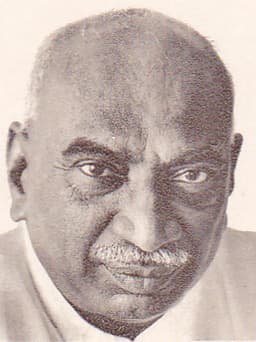
K. Kamaraj
Politician · Modern
61.2Total

Mohammad Hatta
Politician · Modern
53.2Total
Basic Information
Born
1903
1902
Died
1975
1980
Era
Modern
Modern
Nationality
India
Indonesia
Occupation
Politician
Politician
Civilization
Indian
Eastern
Score Comparison
Military (10%)
29.5
11.6
Political (20%)
72.0
65.0
Influence (20%)
61.0
55.0
Legacy (20%)
58.0
56.0
Leadership (15%)
78.0
72.0
Strategy (15%)
60.0
37.1
TOTAL
61.2
53.2
K. Kamaraj — Complete Timeline
1954 AD
Served as Chief Minister of Madras StatePolitical Action◆ Major
Kamaraj became Chief Minister of Madras State, serving from 1954 to 1963. His tenure focused on education expansion, including the introduction of free and compulsory education, and the construction of major irrigation projects.
Chief MinisterEducationDevelopment
Impact: regionalconstructive
1963 AD
Elected as Congress PresidentPolitical Action◆ Major
Kamaraj was elected President of the Indian National Congress, a position he held until 1967. He used his influence to shape party strategy and leadership, earning the title 'Kingmaker' for his role in selecting prime ministers.
Congress PresidentKingmakerLeadership
Impact: nationalconstructive
1964 AD
Orchestrated the Selection of Lal Bahadur Shastri as Prime MinisterPolitical Action◆ Major
After Nehru's death, Kamaraj played a pivotal role in securing the selection of Lal Bahadur Shastri as Prime Minister, bypassing more senior leaders. This demonstrated his influence as a key power broker within the Congress party.
Prime Minister SelectionKingmakerCongress
Impact: nationalconstructive
1966 AD
Facilitated Indira Gandhi's Rise to Prime MinisterPolitical Action◆ Major
Following Shastri's sudden death, Kamaraj again used his influence to support Indira Gandhi's candidacy for Prime Minister, helping her defeat Morarji Desai. This decision shaped Indian politics for decades.
Prime Minister SelectionIndira GandhiKingmaker
Impact: nationalconstructive
1967 AD
Resigned as Congress President after the 1967 ElectionsPolitical Action
After the Congress party's poor performance in the 1967 general elections, Kamaraj resigned as Congress President, taking responsibility for the setback. This marked the decline of the 'Syndicate' faction's dominance.
Resignation1967 ElectionsCongress
Impact: national
Mohammad Hatta — Complete Timeline
1945 AD
Proclamation of Indonesian IndependencePolitical Action
Mohammad Hatta, alongside Sukarno, proclaimed Indonesia's independence on August 17, 1945. This act declared the nation's sovereignty from Dutch colonial rule, initiating the Indonesian National Revolution.
IndependenceProclamationSukarno
Impact: nationalconstructive
Elected First Vice President of IndonesiaPolitical Action◆ Major
Hatta was elected as the first Vice President of Indonesia by the Preparatory Committee for Indonesian Independence. He served alongside President Sukarno, playing a key role in the early government and diplomacy of the new republic.
Vice PresidentEarly RepublicGovernment
Impact: nationalconstructive
1947 AD
Signed the Linggadjati AgreementPolitical Action◆ Major
As Prime Minister, Hatta signed the Linggadjati Agreement with the Netherlands, which recognized de facto Indonesian control over Java, Sumatra, and Madura. The agreement was a diplomatic effort to end the Indonesian National Revolution but later broke down.
DiplomacyLinggadjatiRevolution
Impact: national
1956 AD
Resigned as Vice PresidentPolitical Action◆ Major
Hatta resigned as Vice President due to disagreements with President Sukarno over the direction of the state, particularly regarding the shift towards Guided Democracy. His resignation marked a significant political rift in Indonesia's early leadership.
ResignationSukarnoGuided Democracy
Impact: nationaldestructive
This comparison has not been analyzed yet.
One-time AI generation (~1 minute). Scores and timeline are already available below.
Rankings
🥇
K. KamarajLeader
Mil: 29.5Pol: 72.0Inf: 61.0
61.2
🥈
Mohammad Hatta
Mil: 11.6Pol: 65.0Inf: 55.0
53.2
+8.0 behind
How This Comparison Works
Algorithm
Each figure is scored on 6 dimensions (0—100 scale) based on structured historical data: Military (10%), Political (20%), Influence (20%), Legacy (20%), Leadership (15%), Strategy (15%). The weighted total produces the final ranking.
Data Sources
Scores are computed from structured sub-indicators in the database. Scale factors adjust for era (Ancient ×0.85, Modern ×1.0) and civilization size (Eastern ×1.05, Other ×0.80) to account for differences in population and military scale.
Maximum 3 Figures
Comparisons are limited to 2—3 figures to ensure readability and statistical meaningfulness.
Error Margins
±5 points per dimension — Sub-scores are derived from historical records with inherent uncertainty. Two figures within 5 points on a dimension should be considered roughly equivalent in that area.
Total Score Accuracy
±3 points overall — The weighted combination of 6 dimensions produces a total score with approximately ±3 points of uncertainty. Differences of less than 3 points are not statistically significant— the figures are effectively tied.
Known Limitations
- Historical records are incomplete and uneven across civilizations
- Figures from oral-tradition societies may be underrepresented
- Occupation labels can misclassify multi-role figures
- Scores measure capability and impact, not moral character
- Quantitative scoring is a comparison tool, not absolute truth
Capability Radar
Military (10%) — Battles & Warfare
Battles
43
17
Win Rate
49
15
Expansion
51
22
Political (20%) — Governance & Reform
Reform
75
70
Diplomacy
80
75
Economy
70
60
Influence (20%) — Cultural & Global Reach
Cultural
50
55
Global
45
50
Legacy (20%) — Historical Impact
Historical
60
65
Longevity
55
55
Leadership (15%) — Power & Stability
Tenure
70
65
Stability
75
55
Strategy (15%) — Tactics & Innovation
Strategy
50
21
Tactics
55
23
Reform
58
30
Similar Comparisons
Comments & Discussion
No comments yet. Be the first to share your thoughts!