Loading...
Kalkot Mataskelekele vs Kurt Georg Kiesinger
Kurt Georg Kiesinger leads by 18.0 pts · 2 figures compared
…
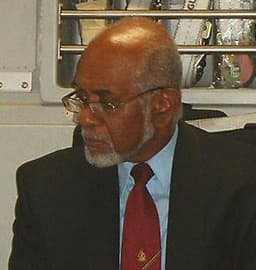
Kalkot Mataskelekele
Politician · Modern
37.4Total

Kurt Georg Kiesinger
Politician · Modern
55.4Total
Basic Information
Born
1949
1904
Died
—
1988
Era
Modern
Modern
Nationality
Vanuatu
Germany
Occupation
Politician
Politician
Civilization
Other
Western
Score Comparison
Military (10%)
27.6
49.2
Political (20%)
26.4
68.0
Influence (20%)
47.1
55.7
Legacy (20%)
36.7
45.0
Leadership (15%)
38.1
72.0
Strategy (15%)
40.2
43.0
TOTAL
37.4
55.4
Kalkot Mataskelekele — Complete Timeline
2004 AD
Elected President of VanuatuPolitical Action◆ Major
Kalkot Mataskelekele was elected as the President of Vanuatu by an electoral college. His presidency lasted from 2004 to 2009, during which he served as the head of state in a largely ceremonial role, representing the nation in diplomatic functions.
PresidencyVanuatu Politics
Impact: national
Kurt Georg Kiesinger — Complete Timeline
1966 AD
Election as Chancellor of West GermanyPolitical Action◆ Major
Kurt Georg Kiesinger was elected Chancellor of West Germany, leading a Grand Coalition between the CDU/CSU and SPD. His government aimed to address economic recession and improve relations with Eastern Europe.
ChancellorGrand CoalitionWest Germany
Impact: nationalconstructive
1967 AD
Ostpolitik InitiativesPolitical Action◆ Major
Kiesinger's government initiated a new Ostpolitik, establishing diplomatic relations with Romania and Yugoslavia. This marked a shift towards d
OstpolitikDétenteForeign Policy
Impact: regionalconstructive
1968 AD
Implementation of the Emergency Laws (Notstandsgesetze)Reform◆ Major
Kiesinger's government passed the Emergency Laws, which amended the constitution to allow the government to take emergency powers in crises. This was highly controversial, sparking massive protests from the student movement and left-wing groups.
Emergency LawsConstitutional AmendmentProtests
Impact: nationaldestructive
1969 AD
Defeat in the 1969 Federal ElectionPolitical Action◆ Major
Kiesinger's CDU/CSU lost the federal election to the SPD under Willy Brandt. This defeat ended the Grand Coalition and marked the first time the SPD led a government since the Weimar Republic.
Election DefeatPolitical ShiftSPD Victory
Impact: national
Expert Analysis
Origins
Kalkot Mataskelekele was born in 1949 in Vanuatu (then the New Hebrides), a small island nation in the Pacific. He studied law at the University of Papua New Guinea and the University of the South Pacific, becoming a lawyer and later a politician. His early career included work as a magistrate and in the Vanuatu Law Reform Commission.
Kurt Georg Kiesinger was born on April 6, 1904, in Ebingen, Germany. He studied law and political science at the University of Tübingen and the University of Berlin. In 1933, he joined the Nazi Party but remained a low-level member. After World War II, he was interned by the Allies and later became a member of the Christian Democratic Union (CDU). He served as Minister-President of Baden-Württemberg from 1958 to 1966.
Rise to Power
Mataskelekele entered politics in the 1990s, serving as Minister of Lands and later as a member of the Parliament of Vanuatu. In 2004, he was elected President of Vanuatu by an electoral college, winning 28 out of 52 votes. His presidency was largely ceremonial, as the role is a figurehead with limited executive power.
Kiesinger rose to national prominence in 1966 when the CDU/CSU and SPD formed a Grand Coalition. He was elected Chancellor of West Germany on December 1, 1966, succeeding Ludwig Erhard. His appointment was a compromise between the two major parties, and he led a government focused on economic stability and foreign policy.
Leadership & Governance
As president, Mataskelekele focused on national unity and constitutional adherence. He had limited political power, as Vanuatu's prime minister holds executive authority. His presidency saw political instability, including multiple changes of government. He scored 38.1 in leadership, reflecting the constraints of his role.
Kiesinger, with a leadership score of 72.0, governed during a period of social change and economic recovery. He implemented the Emergency Laws (Notstandsgesetze) in 1968, which allowed the government to take emergency powers, a controversial move that sparked protests. He also initiated Ostpolitik, establishing diplomatic relations with Romania and Yugoslavia in 1967, a precursor to Willy Brandt's broader policy. His style was diplomatic and pragmatic, but his Nazi past remained a liability.
Triumph & Tragedy
Mataskelekele's greatest success was serving as a stabilizing figure during a period of political turmoil. He also promoted the rule of law, given his legal background. However, his lack of executive power meant he could not enact significant reforms. His presidency ended in 2009, and he has since been a private citizen.
Kiesinger's triumphs include the passage of the Emergency Laws, which strengthened the state's crisis response, and the initial steps toward détente with Eastern Europe. His tragedy was his Nazi Party membership, which haunted his legacy. The 1969 election defeat to Willy Brandt ended his chancellorship, and he died in 1988.
Character & Destiny
Mataskelekele is described as a reserved and principled figure, with a focus on legal processes. His destiny was to be a symbolic leader in a small nation, with limited impact on global affairs.
Kiesinger was a charismatic speaker and skilled negotiator, but his character was shadowed by his past. Historians note that he never fully addressed his Nazi involvement, which undermined his moral authority. His destiny was to be a transitional figure in German politics, bridging the Erhard and Brandt eras.
Legacy
Mataskelekele's legacy is modest; he is remembered as a president who upheld constitutional norms in Vanuatu. His influence score of 47.1 reflects his limited reach beyond the Pacific.
Kiesinger's legacy is mixed. He is credited with stabilizing the economy and initiating Ostpolitik, but his Nazi past tarnishes his reputation. His legacy score of 45.0 is lower than his political score (68.0) due to this stain. The Grand Coalition he led set a precedent for future coalitions in Germany.
Conclusion
Kurt Georg Kiesinger had greater impact than Kalkot Mataskelekele, as evidenced by his higher total score (55.4 vs 37.4). He governed a major European power during a critical period of the Cold War, shaping West German foreign policy and domestic laws. While his Nazi past is a serious flaw, his political achievements outweigh those of Mataskelekele, whose role was largely symbolic. Kiesinger's influence on German history, through Ostpolitik and the Emergency Laws, marks him as a more significant figure.
Rankings
🥇
Kurt Georg KiesingerLeader
Mil: 49.2Pol: 68.0Inf: 55.7
55.4
🥈
Kalkot Mataskelekele
Mil: 27.6Pol: 26.4Inf: 47.1
37.4
+18.0 behind
How This Comparison Works
Algorithm
Each figure is scored on 6 dimensions (0—100 scale) based on structured historical data: Military (10%), Political (20%), Influence (20%), Legacy (20%), Leadership (15%), Strategy (15%). The weighted total produces the final ranking.
Data Sources
Scores are computed from structured sub-indicators in the database. Scale factors adjust for era (Ancient ×0.85, Modern ×1.0) and civilization size (Eastern ×1.05, Other ×0.80) to account for differences in population and military scale.
Maximum 3 Figures
Comparisons are limited to 2—3 figures to ensure readability and statistical meaningfulness.
Error Margins
±5 points per dimension — Sub-scores are derived from historical records with inherent uncertainty. Two figures within 5 points on a dimension should be considered roughly equivalent in that area.
Total Score Accuracy
±3 points overall — The weighted combination of 6 dimensions produces a total score with approximately ±3 points of uncertainty. Differences of less than 3 points are not statistically significant— the figures are effectively tied.
Known Limitations
- Historical records are incomplete and uneven across civilizations
- Figures from oral-tradition societies may be underrepresented
- Occupation labels can misclassify multi-role figures
- Scores measure capability and impact, not moral character
- Quantitative scoring is a comparison tool, not absolute truth
Capability Radar
Military (10%) — Battles & Warfare
Battles
25
32
Win Rate
26
30
Expansion
32
35
Political (20%) — Governance & Reform
Reform
15
45
Diplomacy
20
60
Economy
10
50
Influence (20%) — Cultural & Global Reach
Cultural
10
30
Global
10
35
Legacy (20%) — Historical Impact
Historical
10
40
Longevity
10
30
Leadership (15%) — Power & Stability
Tenure
10
55
Stability
15
55
Strategy (15%) — Tactics & Innovation
Strategy
35
40
Tactics
36
39
Reform
40
45
Similar Comparisons
Comments & Discussion
No comments yet. Be the first to share your thoughts!