Loading...
Kamal ad-Din Hussein vs Nian Gengyao
Nian Gengyao leads by 10.4 pts · 2 figures compared
…

Kamal ad-Din Hussein
General · Modern
43.6Total
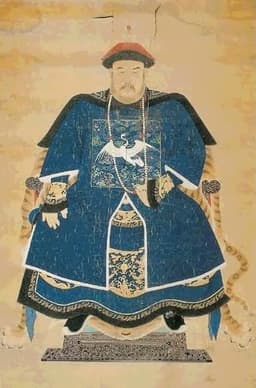
Nian Gengyao
General · Modern
54.0Total
Basic Information
Born
1921
1679
Died
—
1726
Era
Modern
Modern
Nationality
Egypt
China
Occupation
General
General
Civilization
Middle Eastern
Eastern
Score Comparison
Military (10%)
25.9
65.0
Political (20%)
40.8
42.2
Influence (20%)
51.8
54.1
Legacy (20%)
40.0
46.7
Leadership (15%)
55.3
68.0
Strategy (15%)
36.8
57.5
TOTAL
43.6
54.0
Kamal ad-Din Hussein — Complete Timeline
1952 AD
Participated in the 1952 Egyptian RevolutionPolitical Action◆ Major
Kamal ad-Din Hussein was a member of the Free Officers movement that overthrew King Farouk on July 23, 1952. He played a role in the coup that established the Republic of Egypt.
Egyptian RevolutionFree OfficersCoup
Impact: national
1954 AD
Appointed Minister of Social AffairsPolitical Action
Hussein served as Egypt's Minister of Social Affairs under President Gamal Abdel Nasser. He implemented social welfare programs and land reform policies as part of Nasser's socialist agenda.
Social ReformNasser EraGovernment
Impact: nationalconstructive
1964 AD
Resigned from GovernmentPolitical Action
Hussein resigned from his ministerial position due to disagreements with Nasser's policies. His resignation marked a break from the Nasser regime, though he remained a figure in Egyptian politics.
ResignationPolitical DisagreementNasser Era
Impact: national
Nian Gengyao — Complete Timeline
1720 AD
Suppressed Tibetan revolt in LhasaWar◆ Major
Nian Gengyao led Qing forces to expel Dzungar invaders from Tibet and restore the Dalai Lama's authority. This campaign secured Qing control over Tibet and demonstrated his military capability.
TibetMilitary CampaignQing Expansion
Impact: regional
1723 AD
Appointed Grand Secretary and Governor-General of SichuanPolitical Action◆ Major
Nian Gengyao was appointed to high civil and military posts, including Grand Secretary and Governor-General of Sichuan. This made him one of the most powerful officials in the Qing empire.
AppointmentHigh OfficeQing Administration
Impact: national
1726 AD
Arrested and forced to commit suicidePolitical Action
The Yongzheng Emperor accused Nian Gengyao of corruption, treason, and overstepping authority. He was arrested, stripped of rank, and forced to commit suicide, ending his career abruptly.
ExecutionPurgeImperial Disfavor
Impact: nationaltragic
Expert Analysis
Origins
Kamal ad-Din Hussein was born in 1921 in Egypt into a middle-class family. He studied at the Egyptian Military Academy and became a career officer. His early experiences under British occupation and the corrupt monarchy shaped his nationalist views. Nian Gengyao was born in 1679 in China during the Qing dynasty. He came from a military family; his father and grandfather served as officials. He passed the imperial examinations and rose through both civil and military ranks, gaining experience in border conflicts.
Rise to Power
Hussein joined the Free Officers movement in the late 1940s, a secret organization of junior officers dedicated to overthrowing King Farouk. He participated in the 1952 Egyptian Revolution on July 23, 1952, which successfully deposed the monarchy. After the revolution, he was appointed Minister of Social Affairs under President Gamal Abdel Nasser, implementing land reforms and social welfare programs. Nian Gengyao rose through military campaigns against the Dzungars and Tibetan rebels. In 1720, he led Qing forces to expel Dzungar invaders from Lhasa, restoring the Dalai Lama's authority. This victory earned him the posts of Grand Secretary and Governor-General of Sichuan, making him one of the most powerful officials in the empire by 1723.
Leadership & Governance
Hussein's leadership style was bureaucratic and reformist within the Nasserist framework. As Minister of Social Affairs, he oversaw the redistribution of land and expansion of education and healthcare. However, he lacked independent command authority and was subordinate to Nasser's centralization. Nian Gengyao wielded both military and civil power in the northwest. He governed Sichuan with a firm hand, enforcing strict discipline among troops and officials. His governance was efficient but autocratic, often bypassing central oversight. This independence later clashed with the Yongzheng Emperor's desire for control.
Triumph & Tragedy
Hussein's greatest success was his role in the 1952 Revolution that ended British influence and monarchy in Egypt. His social programs improved living standards for many peasants. His tragedy came when he resigned in 1959 due to disagreements with Nasser's authoritarian turn, effectively ending his political career. He scored 25.9 in military, reflecting his limited combat role. Nian Gengyao's triumph was securing Tibet for the Qing in 1720, a major strategic victory. He scored 65.0 in military and 68.0 in leadership. His tragedy was his downfall: in 1725, the Yongzheng Emperor accused him of 92 crimes, including corruption and treason. He was arrested and forced to commit suicide, his family exiled.
Character & Destiny
Hussein was a loyal but principled officer; his resignation shows integrity but also a lack of ruthless ambition. He chose exile over subservience, limiting his influence. Nian Gengyao was ambitious and arrogant, accumulating power and wealth. His success bred overconfidence, leading him to ignore imperial protocols. Historical assessments note his military brilliance but political naivety. His destiny was sealed by the emperor's fear of powerful generals. Hussein's destiny was obscurity; Nian's was a dramatic fall.
Legacy
Hussein's legacy is modest: he is remembered as a minor Free Officer who contributed to Egypt's social reforms. His resignation did not halt Nasser's policies. His total score is 43.6. Nian Gengyao's legacy is more substantial: he is remembered as a capable general who secured Tibet for the Qing. However, his cautionary tale of overreach is often cited. His total score is 54.0, higher by 10.4 points. His military achievements had lasting geopolitical impact, while Hussein's reforms were part of a collective effort.
Conclusion
Nian Gengyao had greater impact due to his decisive military campaigns that shaped Qing borders. His score of 54.0 reflects higher military (65.0 vs 25.9) and strategy (57.5 vs 36.8) scores. Hussein's political and social contributions, while meaningful, were within a broader movement and scored 40.8 in political vs Nian's 42.2. Nian's legacy of territorial expansion outweighs Hussein's domestic reforms. Therefore, Nian Gengyao is the more historically significant figure.
Rankings
🥇
Nian GengyaoLeader
Mil: 65.0Pol: 42.2Inf: 54.1
54.0
🥈
Kamal ad-Din Hussein
Mil: 25.9Pol: 40.8Inf: 51.8
43.6
+10.4 behind
How This Comparison Works
Algorithm
Each figure is scored on 6 dimensions (0—100 scale) based on structured historical data: Military (10%), Political (20%), Influence (20%), Legacy (20%), Leadership (15%), Strategy (15%). The weighted total produces the final ranking.
Data Sources
Scores are computed from structured sub-indicators in the database. Scale factors adjust for era (Ancient ×0.85, Modern ×1.0) and civilization size (Eastern ×1.05, Other ×0.80) to account for differences in population and military scale.
Maximum 3 Figures
Comparisons are limited to 2—3 figures to ensure readability and statistical meaningfulness.
Error Margins
±5 points per dimension — Sub-scores are derived from historical records with inherent uncertainty. Two figures within 5 points on a dimension should be considered roughly equivalent in that area.
Total Score Accuracy
±3 points overall — The weighted combination of 6 dimensions produces a total score with approximately ±3 points of uncertainty. Differences of less than 3 points are not statistically significant— the figures are effectively tied.
Known Limitations
- Historical records are incomplete and uneven across civilizations
- Figures from oral-tradition societies may be underrepresented
- Occupation labels can misclassify multi-role figures
- Scores measure capability and impact, not moral character
- Quantitative scoring is a comparison tool, not absolute truth
Capability Radar
Military (10%) — Battles & Warfare
Battles
10
65
Win Rate
10
70
Expansion
10
50
Political (20%) — Governance & Reform
Reform
30
20
Diplomacy
30
40
Economy
20
25
Influence (20%) — Cultural & Global Reach
Cultural
10
30
Global
10
25
Legacy (20%) — Historical Impact
Historical
20
40
Longevity
10
30
Leadership (15%) — Power & Stability
Tenure
30
45
Stability
20
30
Strategy (15%) — Tactics & Innovation
Strategy
10
55
Tactics
10
60
Reform
10
30
Similar Comparisons
Comments & Discussion
No comments yet. Be the first to share your thoughts!