Loading...
Kanini vs Michael the Brave
Michael the Brave leads by 10.7 pts · 2 figures compared
…

Kanini
Emperor · Modern
44.2Total
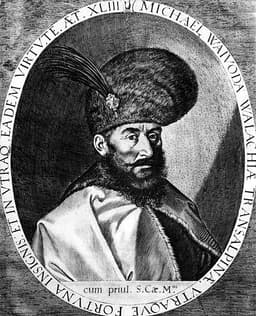
Michael the Brave
Emperor · Modern
54.9Total
Basic Information
Born
1700
1558
Died
1750
1601
Era
Modern
Modern
Nationality
Angola
Wallachia
Occupation
Emperor
Emperor
Civilization
Other
Western
Score Comparison
Military (10%)
45.0
60.0
Political (20%)
36.5
54.7
Influence (20%)
47.9
54.9
Legacy (20%)
37.5
46.7
Leadership (15%)
62.2
62.2
Strategy (15%)
35.7
60.0
TOTAL
44.2
54.9
Kanini — Complete Timeline
1720 AD
Control of Kwango Valley TradePolitical Action◆ Major
Kanini ruled as king of Kasanje, controlling the Kwango valley trade routes. His kingdom profited from the slave trade and ivory commerce, becoming a major intermediary between the interior and the coast.
TradeKasanjeKwango Valley
Impact: regional
1730 AD
Conflict with Portuguese Colonial ForcesWar
Kanini's forces engaged in conflicts with Portuguese colonial troops seeking to control the Kwango valley. The Kasanje kingdom successfully resisted Portuguese encroachment, maintaining its independence.
ConflictPortugueseResistance
Impact: regional
1750 AD
Death of KaniniPolitical Action
Kanini died around 1750, ending his reign over Kasanje. His kingdom continued to thrive as a regional power until the 19th century, when it was eventually absorbed into Portuguese Angola.
DeathKasanjeLegacy
Impact: regional
Michael the Brave — Complete Timeline
1595 AD
Battle of CălugăreniWar◆ Major
Michael the Brave defeated an Ottoman army at C
BattleOttoman WarsWallachia
Impact: regional
1599 AD
Conquest of TransylvaniaWar◆ Major
Michael the Brave invaded Transylvania and defeated the forces of Andrew B
ConquestTransylvaniaȘelimbăr
Impact: regional
1600 AD
Union of the Three PrincipalitiesPolitical Action
Michael the Brave united Wallachia, Moldavia, and Transylvania under his rule, creating a short-lived union of the three Romanian principalities. This was the first time the regions were unified.
UnificationRomanian PrincipalitiesTransylvania
Impact: regionalconstructive
1601 AD
AssassinationOther◆ Major
Michael the Brave was assassinated by agents of the Habsburg general Giorgio Basta near Turda. His death ended the union of the principalities, which collapsed shortly after.
AssassinationHabsburgsEnd of Union
Impact: regionaltragic
Expert Analysis
Origins
Kanini, born around 1700, was a king of the Kasanje kingdom in the Kwango valley of modern-day Angola. The Kasanje state emerged in the 17th century as a major power in the region, built on control of trade routes for slaves and ivory. Kanini likely came from the ruling Imbangala lineage, a warrior elite that dominated central Angola. He ascended to power in the early 18th century, inheriting a kingdom that had grown rich through its middleman role in the Atlantic slave trade, supplying Portuguese traders with captives from interior wars.
Michael the Brave (Mihai Viteazul) was born in 1558 in Wallachia, into a noble family. His father was Pătrașcu the Good, a former voivode of Wallachia, but Michael's early life was marked by exile and political instability. He spent years in Constantinople and Transylvania, learning the intricacies of Ottoman and Habsburg politics. In 1593, he was appointed Voivode of Wallachia by the Ottoman Sultan, beginning his rise.
Rise to Power
Kanini's rise was typical for Kasanje kings: he consolidated control over the Kwango valley trade routes, negotiating with Portuguese merchants and rival African states. By the 1720s, Kasanje under Kanini became the dominant intermediary between the Portuguese colony of Angola and the interior. His reign saw the expansion of slave raiding and ivory exports, which enriched his court but also deepened the region's entanglement in the Atlantic slave trade. Unlike Michael, Kanini's power was built on economic control rather than military conquest.
Michael the Brave rose through military and political maneuvering. In 1594, he joined the Holy League against the Ottomans, allying with the Habsburgs and Sigismund Báthory of Transylvania. His first major victory came at the Battle of Călugăreni on August 23, 1595, where his 16,000 troops defeated a 40,000-strong Ottoman army. This victory, though temporary, made him a Christian hero. In 1599, he invaded Transylvania and defeated Andrew Báthory at the Battle of Șelimbăr (October 18), securing control. In 1600, he entered Moldavia and ousted its voivode, Ieremia Movilă, uniting the three principalities under his rule for a brief period.
Leadership & Governance
Kanini ruled as an absolutist monarch, controlling trade and diplomacy. He maintained the Kasanje kingdom's independence against Portuguese encroachment by playing off different European factions. His governance relied on a network of local chiefs and a standing army of Imbangala warriors. Economically, he profited from the slave trade, with an estimated 10,000 slaves per year passing through his territory. However, his rule left no administrative reforms; the kingdom's structure remained decentralized, relying on personal loyalty.
Michael the Brave attempted to centralize his short-lived union. He minted coins, issued decrees in Romanian, and sought to integrate the three principalities' nobility. His governance was pragmatic: he confirmed the privileges of Transylvanian nobles while imposing Wallachian administration. However, his reign was too brief to implement lasting reforms. His leadership score of 62.2 matches Kanini's, but his political score of 54.7 reflects his inability to secure his union's permanence.
Triumph & Tragedy
Kanini's greatest success was maintaining Kasanje's independence and prosperity for decades, with the kingdom becoming a key node in the Atlantic slave trade. His tragedy was that this prosperity came at a moral cost and ultimately made the kingdom dependent on the slave trade, which collapsed in the 19th century. After his death around 1750, Kasanje declined, conquered by the Portuguese in the 1830s. His military score of 45.0 reflects limited offensive campaigns; his legacy score of 37.5 shows his impact was confined to a narrow region.
Michael the Brave's triumph was the unprecedented union of Wallachia, Moldavia, and Transylvania—a feat not repeated until 1918. His victory at Călugăreni, scoring a 60.0 in military, showcased tactical brilliance against odds. However, his tragedy was his assassination on August 9, 1601, by Habsburg agents, ending the union after only a year. His political score of 54.7 reflects his failure to build lasting alliances; the union collapsed immediately.
Character & Destiny
Kanini was a pragmatist, focused on economic gain and stability. He avoided direct confrontation with the Portuguese, preferring negotiation and tribute. This caution preserved his kingdom but limited his historical footprint. His strategy score of 35.7 is the lowest among his metrics, indicating a lack of long-term vision beyond trade.
Michael the Brave was ambitious and impulsive. His decision to unite the principalities was a bold stroke, but he overestimated his ability to hold them without Habsburg support. His assassination stemmed from his failure to secure Habsburg trust; he was seen as a threat. Historian Nicolae Iorga called him "a man of great courage but little political sense." His strategy score of 60.0 reflects his military acumen, but his political naivety led to his downfall.
Legacy
Kanini's legacy is largely forgotten outside Angolan history. Kasanje's role in the slave trade is studied by scholars, but his personal impact is minimal. His total score of 44.2 reflects a regional figure with no lasting influence beyond his lifetime.
Michael the Brave is a national hero in Romania, celebrated as the first unifier of the Romanian lands. His union inspired the 1918 unification of Transylvania with Romania. Monuments, currency, and schools bear his name. His total score of 54.9, though not high globally, is significant for Romanian history. His military and strategy scores (60.0 each) highlight his tactical skills, while his legacy score of 46.7 reflects his symbolic importance.
Conclusion
Michael the Brave had a greater impact than Kanini. While Kanini ruled a prosperous kingdom, his influence was local and tied to a morally bankrupt trade. Michael's union, though brief, provided a template for Romanian nationalism and eventual unification. His scores are higher across the board, with a 10.7-point total gap. Michael's legacy endures in national identity, while Kanini is a footnote. Thus, Michael the Brave is the more consequential historical figure.
Rankings
🥇
Michael the BraveLeader
Mil: 60.0Pol: 54.7Inf: 54.9
54.9
🥈
Kanini
Mil: 45.0Pol: 36.5Inf: 47.9
44.2
+10.7 behind
How This Comparison Works
Algorithm
Each figure is scored on 6 dimensions (0—100 scale) based on structured historical data: Military (10%), Political (20%), Influence (20%), Legacy (20%), Leadership (15%), Strategy (15%). The weighted total produces the final ranking.
Data Sources
Scores are computed from structured sub-indicators in the database. Scale factors adjust for era (Ancient ×0.85, Modern ×1.0) and civilization size (Eastern ×1.05, Other ×0.80) to account for differences in population and military scale.
Maximum 3 Figures
Comparisons are limited to 2—3 figures to ensure readability and statistical meaningfulness.
Error Margins
±5 points per dimension — Sub-scores are derived from historical records with inherent uncertainty. Two figures within 5 points on a dimension should be considered roughly equivalent in that area.
Total Score Accuracy
±3 points overall — The weighted combination of 6 dimensions produces a total score with approximately ±3 points of uncertainty. Differences of less than 3 points are not statistically significant— the figures are effectively tied.
Known Limitations
- Historical records are incomplete and uneven across civilizations
- Figures from oral-tradition societies may be underrepresented
- Occupation labels can misclassify multi-role figures
- Scores measure capability and impact, not moral character
- Quantitative scoring is a comparison tool, not absolute truth
Capability Radar
Military (10%) — Battles & Warfare
Battles
25
55
Win Rate
30
60
Expansion
30
55
Political (20%) — Governance & Reform
Reform
20
30
Diplomacy
25
50
Economy
20
30
Influence (20%) — Cultural & Global Reach
Cultural
15
40
Global
10
30
Legacy (20%) — Historical Impact
Historical
20
50
Longevity
15
40
Leadership (15%) — Power & Stability
Tenure
35
40
Stability
25
20
Strategy (15%) — Tactics & Innovation
Strategy
25
50
Tactics
20
55
Reform
15
30
Similar Comparisons
Comments & Discussion
No comments yet. Be the first to share your thoughts!