Loading...
This comparison has not been analyzed yet.
One-time AI generation (~1 minute). Scores and timeline are already available below.
Kavad II vs King Helu of Wu
King Helu of Wu leads by 11.5 pts · 2 figures compared
…
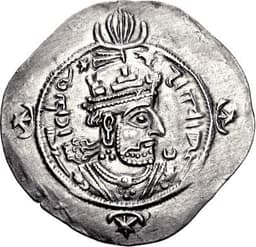
Kavad II
Emperor · Ancient
49.6Total

King Helu of Wu
Emperor · Ancient
61.1Total
Basic Information
Born
-590
-537
Died
—
-496
Era
Ancient
Ancient
Nationality
Sasanian Empire
China
Occupation
Emperor
Emperor
Civilization
Middle Eastern
Eastern
Score Comparison
Military (10%)
34.6
61.7
Political (20%)
68.0
68.0
Influence (20%)
56.4
57.2
Legacy (20%)
39.2
50.0
Leadership (15%)
45.0
74.0
Strategy (15%)
53.2
68.1
TOTAL
49.6
61.1
Kavad II — Complete Timeline
628 AD
Murder of Khosrow IIPolitical Action
Kavad II, then known as Sheroe, led a coup against his father Khosrow II, imprisoning and later executing him. This act ended Khosrow's long reign and the Sasanian-Byzantine war, but plunged the empire into civil war and decline.
CoupPatricideCivil War
Impact: regionaldestructive
Massacre of 17 BrothersPolitical Action◆ Major
Kavad II ordered the execution of 17 of his brothers to eliminate potential rivals to the throne. This massacre decimated the Sasanian royal family and weakened the dynasty's legitimacy, contributing to the empire's instability.
MassacreRoyal FamilyPower Consolidation
Impact: nationaldestructive
Peace Treaty with ByzantiumPolitical Action◆ Major
Kavad II negotiated a peace treaty with the Byzantine Empire, ending the decades-long war. The treaty restored pre-war borders and returned the True Cross to Jerusalem, but the Sasanian Empire was left exhausted and weakened.
Peace TreatyByzantiumTrue Cross
Impact: regionalconstructive
King Helu of Wu — Complete Timeline
512 BC
Employed Sun Tzu as GeneralPolitical Action◆ Major
King Helu of Wu appointed Sun Tzu as his general after Sun Tzu demonstrated his military discipline by executing two of the king's favored concubines. This decision brought Sun Tzu's strategic expertise to the Wu military, leading to successful campaigns.
Military AppointmentSun TzuWu State
Impact: regionalconstructive
506 BC
Battle of BojuWar◆ Major
King Helu led Wu forces to a decisive victory over the Chu state at Boju. Using Sun Tzu's tactics, Wu captured the Chu capital Ying, forcing King Zhao of Chu to flee. This victory established Wu as a major power in the Spring and Autumn period.
BattleWu-Chu WarSun Tzu
Impact: regional
496 BC
Invasion of YueWar◆ Major
King Helu invaded the Yue state but was defeated at the Battle of Zuili. He was wounded by an arrow during the battle and died shortly after. His death led to his son Fuchai ascending the throne, who later sought revenge against Yue.
BattleWu-Yue WarDeath
Impact: regionaltragic
This comparison has not been analyzed yet.
One-time AI generation (~1 minute). Scores and timeline are already available below.
Rankings
🥇
King Helu of WuLeader
Mil: 61.7Pol: 68.0Inf: 57.2
61.1
🥈
Kavad II
Mil: 34.6Pol: 68.0Inf: 56.4
49.6
+11.5 behind
How This Comparison Works
Algorithm
Each figure is scored on 6 dimensions (0—100 scale) based on structured historical data: Military (10%), Political (20%), Influence (20%), Legacy (20%), Leadership (15%), Strategy (15%). The weighted total produces the final ranking.
Data Sources
Scores are computed from structured sub-indicators in the database. Scale factors adjust for era (Ancient ×0.85, Modern ×1.0) and civilization size (Eastern ×1.05, Other ×0.80) to account for differences in population and military scale.
Maximum 3 Figures
Comparisons are limited to 2—3 figures to ensure readability and statistical meaningfulness.
Error Margins
±5 points per dimension — Sub-scores are derived from historical records with inherent uncertainty. Two figures within 5 points on a dimension should be considered roughly equivalent in that area.
Total Score Accuracy
±3 points overall — The weighted combination of 6 dimensions produces a total score with approximately ±3 points of uncertainty. Differences of less than 3 points are not statistically significant— the figures are effectively tied.
Known Limitations
- Historical records are incomplete and uneven across civilizations
- Figures from oral-tradition societies may be underrepresented
- Occupation labels can misclassify multi-role figures
- Scores measure capability and impact, not moral character
- Quantitative scoring is a comparison tool, not absolute truth
Capability Radar
Military (10%) — Battles & Warfare
Battles
40
60
Win Rate
40
65
Expansion
43
70
Political (20%) — Governance & Reform
Reform
0
60
Diplomacy
0
70
Economy
0
50
Influence (20%) — Cultural & Global Reach
Cultural
0
55
Global
0
50
Legacy (20%) — Historical Impact
Historical
5
65
Longevity
0
60
Leadership (15%) — Power & Stability
Tenure
5
55
Stability
0
50
Strategy (15%) — Tactics & Innovation
Strategy
49
75
Tactics
53
70
Reform
52
80
Similar Comparisons
Comments & Discussion
No comments yet. Be the first to share your thoughts!