Loading...
Khafre vs Qin Er Shi
Khafre leads by 4.7 pts · 2 figures compared
…
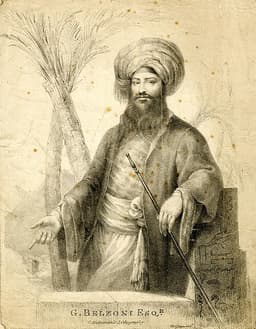
Khafre
Emperor · Ancient
48.8Total
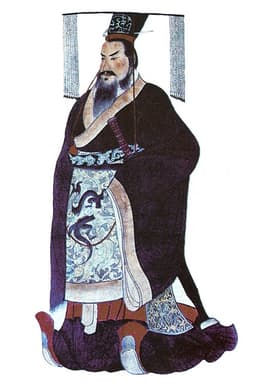
Qin Er Shi
Emperor · Ancient
44.1Total
Basic Information
Born
-2558
-229
Died
-2532
-207
Era
Ancient
Ancient
Nationality
Egypt
China
Occupation
Emperor
Emperor
Civilization
Middle Eastern
Eastern
Score Comparison
Military (10%)
25.9
20.2
Political (20%)
46.6
68.0
Influence (20%)
58.3
42.4
Legacy (20%)
52.0
35.0
Leadership (15%)
53.2
43.6
Strategy (15%)
36.8
60.0
TOTAL
48.8
44.1
Khafre — Complete Timeline
2550 BC
Construction of the Second Pyramid at GizaCultural◆ Major
Khafre built the second pyramid at Giza, slightly smaller than Khufu's but retaining some casing stones at its apex. The pyramid complex includes the Valley Temple and the Great Sphinx, which is believed to bear Khafre's face.
PyramidSphinxArchitecture
Impact: regionalconstructive
Construction of the Great SphinxCultural◆ Major
Khafre commissioned the Great Sphinx of Giza, a limestone statue with a lion's body and a human head, likely representing himself. The Sphinx, 73 meters long and 20 meters high, became a symbol of royal power and divine guardianship.
SphinxSculptureSymbolism
Impact: globalconstructive
Qin Er Shi — Complete Timeline
210 BC
Accession as Second EmperorPolitical Action◆ Major
After Qin Shi Huang's death, Zhao Gao and Li Si forged a decree to force the crown prince Fusu to commit suicide and installed Huhai as Qin Er Shi. This illegitimate succession undermined the dynasty's legitimacy and placed an incompetent ruler on the throne.
SuccessionPalace IntrigueZhao Gao
Impact: nationaldestructive
209 BC
Outbreak of Dazexiang UprisingWar
Chen Sheng and Wu Guang led a rebellion of conscripted farmers at Dazexiang, sparking widespread revolts across the Qin empire. Qin Er Shi's harsh policies and heavy taxation had created widespread discontent, and the uprising quickly spread, leading to the dynasty's collapse.
RebellionQin CollapseChen Sheng
Impact: nationaldestructive
208 BC
Execution of Li SiPolitical Action◆ Major
Zhao Gao falsely accused Chancellor Li Si of treason. Qin Er Shi ordered Li Si's execution by the Five Pains method, along with his entire family. This removed the last capable administrator from the Qin court, accelerating the dynasty's decline.
ExecutionPolitical PurgeZhao Gao
Impact: nationaldestructive
207 BC
Death at the Hands of Zhao GaoPolitical Action◆ Major
Zhao Gao, fearing Qin Er Shi's anger over military defeats, staged a coup and forced the emperor to commit suicide. Zhao Gao then installed Ziying as the new king. This event marked the effective end of Qin rule, as Ziying surrendered to Liu Bang shortly after.
CoupDeathZhao Gao
Impact: nationaltragic
Expert Analysis
Origins
Khafre, born around 2558 BCE, was a son of Pharaoh Khufu, the builder of the Great Pyramid. He belonged to the Fourth Dynasty of the Old Kingdom, a period of strong central authority and monumental construction. Little is known of his early life, but his royal lineage positioned him for power. In contrast, Qin Er Shi, born Huhai in 229 BCE, was the 18th son of Qin Shi Huang, the first emperor of a unified China. His mother was a favored concubine, but he was not the designated heir. His early years were sheltered, and he lacked experience in governance or military affairs.
Rise to Power
Khafre ascended to the throne after the death of his brother Djedefre, who had ruled briefly. Egyptologists debate whether Khafre was a usurper or legitimate successor, but he quickly consolidated power. He commissioned the second-largest pyramid at Giza, symbolizing his authority. Qin Er Shi's rise was engineered by the eunuch Zhao Gao and Chancellor Li Si. After Qin Shi Huang's death in 210 BCE, they forged a decree forcing the crown prince Fusu to commit suicide and installed Huhai as emperor. This illegitimate accession set the stage for his dependence on Zhao Gao.
Leadership & Governance
Khafre ruled with the traditional pharaonic authority, overseeing extensive building projects that reinforced religious and political centralization. His pyramid complex included the Great Sphinx, a 73-meter-long statue with his likeness, merging human intelligence with lion strength. Governance was stable, with a bureaucracy managing grain storage and labor. Qin Er Shi, by contrast, was a puppet ruler. Zhao Gao isolated him, executing opponents like Li Si. The emperor continued his father's harsh policies, including forced labor and legalism, but lacked the competence to manage the empire. His political score of 68.0 reflects his position, not skill, while Khafre's political score of 46.6 underscores his effective but less complex rule.
Triumph & Tragedy
Khafre's greatest triumph was the construction of the Second Pyramid and the Sphinx, which remain iconic symbols of ancient Egypt. His pyramid, though smaller than Khufu's, retains some casing stones, offering a glimpse of original grandeur. However, his legacy is overshadowed by his father's Great Pyramid, and his reign saw no major military or territorial expansion. His military score of 25.9 reflects this. Qin Er Shi's reign was a tragedy of misrule. The Dazexiang Uprising in 209 BCE sparked widespread revolts, and his execution of Li Si removed a capable advisor. His death at Zhao Gao's hands in 207 BCE ended the Qin dynasty after only 15 years. His greatest failure was his inability to govern, leading to the collapse of a unified China.
Character & Destiny
Khafre is depicted as a determined builder, using monumental architecture to assert divine kingship. His character was likely pragmatic, focusing on stability and legacy. The Sphinx's enigmatic expression mirrors his calculated rule. Qin Er Shi, described as weak and easily manipulated, allowed Zhao Gao to control the court. His decision to execute Li Si demonstrated poor judgment. Historical assessments paint him as a tragic figure, unfit for the throne. His character sealed the Qin dynasty's fate, scoring only 43.6 in leadership.
Legacy
Khafre's legacy endures through the Sphinx and the Second Pyramid, attracting millions of visitors. His reign contributed to the Giza plateau's status as a world heritage site. However, his impact is limited to monumental architecture; he did not innovate governance or expand Egypt. His influence score of 58.3 reflects this cultural imprint. Qin Er Shi's legacy is one of failure. He is remembered as the emperor who lost the Qin empire, a cautionary tale of misrule. The rapid collapse of the Qin dynasty led to the rise of the Han, which adopted a more moderate legalism. His legacy score of 35.0 indicates his negative impact.
Conclusion
Khafre had a greater impact on history. His architectural achievements have survived millennia, symbolizing ancient Egypt's power. Qin Er Shi's reign was a brief, destructive interlude. While Khafre's total score of 48.8 is only 4.7 points higher than Qin Er Shi's 44.1, his influence is more lasting and positive. Khafre's pyramid and Sphinx remain cultural icons, whereas Qin Er Shi's rule is a historical footnote. The builder of stone outlasts the destroyer of dynasties.
Rankings
🥇
KhafreLeader
Mil: 25.9Pol: 46.6Inf: 58.3
48.8
🥈
Qin Er Shi
Mil: 20.2Pol: 68.0Inf: 42.4
44.1
+4.7 behind
How This Comparison Works
Algorithm
Each figure is scored on 6 dimensions (0—100 scale) based on structured historical data: Military (10%), Political (20%), Influence (20%), Legacy (20%), Leadership (15%), Strategy (15%). The weighted total produces the final ranking.
Data Sources
Scores are computed from structured sub-indicators in the database. Scale factors adjust for era (Ancient ×0.85, Modern ×1.0) and civilization size (Eastern ×1.05, Other ×0.80) to account for differences in population and military scale.
Maximum 3 Figures
Comparisons are limited to 2—3 figures to ensure readability and statistical meaningfulness.
Error Margins
±5 points per dimension — Sub-scores are derived from historical records with inherent uncertainty. Two figures within 5 points on a dimension should be considered roughly equivalent in that area.
Total Score Accuracy
±3 points overall — The weighted combination of 6 dimensions produces a total score with approximately ±3 points of uncertainty. Differences of less than 3 points are not statistically significant— the figures are effectively tied.
Known Limitations
- Historical records are incomplete and uneven across civilizations
- Figures from oral-tradition societies may be underrepresented
- Occupation labels can misclassify multi-role figures
- Scores measure capability and impact, not moral character
- Quantitative scoring is a comparison tool, not absolute truth
Capability Radar
Military (10%) — Battles & Warfare
Battles
10
33
Win Rate
10
37
Expansion
10
37
Political (20%) — Governance & Reform
Reform
40
0
Diplomacy
40
0
Economy
50
0
Influence (20%) — Cultural & Global Reach
Cultural
70
5
Global
70
5
Legacy (20%) — Historical Impact
Historical
70
15
Longevity
80
5
Leadership (15%) — Power & Stability
Tenure
60
3
Stability
60
0
Strategy (15%) — Tactics & Innovation
Strategy
10
41
Tactics
10
48
Reform
10
48
Similar Comparisons
Comments & Discussion
No comments yet. Be the first to share your thoughts!