Loading...
Analysis will be generated on first visit.
Scores and timeline are available below. The page will refresh automatically when ready.
Khaleda Zia vs Napoleon Bonaparte
Napoleon Bonaparte leads by 16.6 pts · 2 figures compared
…

Khaleda Zia
Politician · Modern
65.8Total
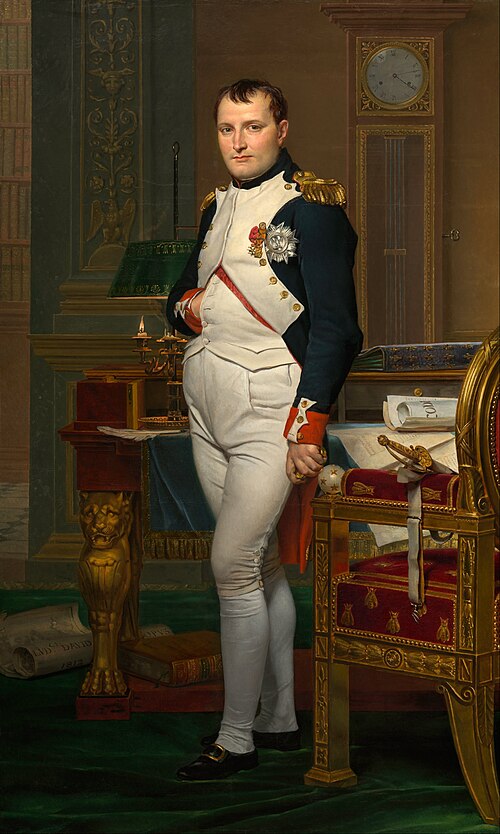
Napoleon Bonaparte
General · Modern
82.4Total
Basic Information
Born
1945
1769
Died
—
1821
Era
Modern
Modern
Nationality
Bangladesh
France
Occupation
Politician
General
Civilization
Indian
Western
Score Comparison
Military (10%)
52.2
94.0
Political (20%)
68.9
75.0
Influence (20%)
74.5
82.0
Legacy (20%)
61.5
78.0
Leadership (15%)
72.0
80.0
Strategy (15%)
58.7
93.0
TOTAL
65.8
82.4
Rankings
🥇
Napoleon BonaparteLeader
Mil: 94.0Pol: 75.0Inf: 82.0
82.4
🥈
Khaleda Zia
Mil: 52.2Pol: 68.9Inf: 74.5
65.8
+16.6 behind
How This Comparison Works
Algorithm
Each figure is scored on 6 dimensions (0—100 scale) based on structured historical data: Military (10%), Political (20%), Influence (20%), Legacy (20%), Leadership (15%), Strategy (15%). The weighted total produces the final ranking.
Data Sources
Scores are computed from structured sub-indicators in the database. Scale factors adjust for era (Ancient ×0.85, Modern ×1.0) and civilization size (Eastern ×1.05, Other ×0.80) to account for differences in population and military scale.
Maximum 3 Figures
Comparisons are limited to 2—3 figures to ensure readability and statistical meaningfulness.
Error Margins
±5 points per dimension — Sub-scores are derived from historical records with inherent uncertainty. Two figures within 5 points on a dimension should be considered roughly equivalent in that area.
Total Score Accuracy
±3 points overall — The weighted combination of 6 dimensions produces a total score with approximately ±3 points of uncertainty. Differences of less than 3 points are not statistically significant— the figures are effectively tied.
Known Limitations
- Historical records are incomplete and uneven across civilizations
- Figures from oral-tradition societies may be underrepresented
- Occupation labels can misclassify multi-role figures
- Scores measure capability and impact, not moral character
- Quantitative scoring is a comparison tool, not absolute truth
Capability Radar
Military (10%) — Battles & Warfare
Battles
45
95
Win Rate
49
90
Expansion
47
95
Political (20%) — Governance & Reform
Reform
45
95
Diplomacy
55
80
Economy
40
85
Influence (20%) — Cultural & Global Reach
Cultural
40
85
Global
40
90
Legacy (20%) — Historical Impact
Historical
45
95
Longevity
30
90
Leadership (15%) — Power & Stability
Tenure
60
85
Stability
35
70
Strategy (15%) — Tactics & Innovation
Strategy
51
95
Tactics
57
98
Reform
60
92
Analysis will be generated on first visit.
Scores and timeline are available below. The page will refresh automatically when ready.
Khaleda Zia — Complete Timeline
1991 AD
Became first female Prime Minister of BangladeshPolitical Action◆ Major
Khaleda Zia was elected Prime Minister after the Bangladesh Nationalist Party won the 1991 general election. She became the first woman to hold the office in Bangladesh, leading a coalition government and beginning a political rivalry with Sheikh Hasina.
First female PMBNPDemocracy
Impact: nationalconstructive
1996 AD
Signed the Ganges Water Sharing TreatyPolitical Action◆ Major
Khaleda Zia's government signed a 30-year treaty with India to share the waters of the Ganges River. The agreement aimed to resolve a long-standing dispute over water allocation during the dry season, benefiting both countries' agriculture and livelihoods.
Water treatyIndia-Bangladesh relationsGanges
Impact: regionalconstructive
2007 AD
Arrested on corruption chargesPolitical Action◆ Major
During the 2007-2008 caretaker government, Khaleda Zia was arrested on charges of corruption related to a charitable trust. She was detained for over a year, which her supporters claimed was politically motivated. The charges were later dropped after her party returned to power.
CorruptionPolitical crisisCaretaker government
Impact: nationaltragic
2018 AD
Sentenced to 17 years in prison for corruptionPolitical Action◆ Major
A Bangladeshi court sentenced Khaleda Zia to 17 years in prison for embezzling funds from a charitable trust. The verdict was widely seen as politically motivated by her supporters, while the government maintained it was a legal process. She was subsequently barred from contesting elections.
CorruptionImprisonmentPolitical rivalry
Impact: nationaltragic
Similar Comparisons
Comments & Discussion
No comments yet. Be the first to share your thoughts!