Loading...
This comparison has not been analyzed yet.
One-time AI generation (~1 minute). Scores and timeline are already available below.
Khalid bin Barghash vs Zaman Shah Durrani
Zaman Shah Durrani leads by 5.9 pts · 2 figures compared
…
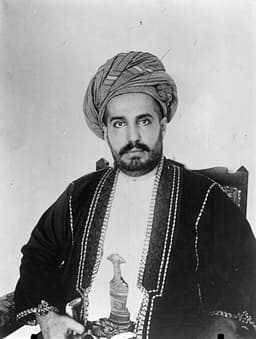
Khalid bin Barghash
Emperor · Modern
34.3Total

Zaman Shah Durrani
Emperor · Modern
40.2Total
Basic Information
Born
1874
1770
Died
1927
1844
Era
Modern
Modern
Nationality
Zanzibar
Afghanistan
Occupation
Emperor
Emperor
Civilization
Other
Middle Eastern
Score Comparison
Military (10%)
10.5
50.0
Political (20%)
27.9
27.9
Influence (20%)
45.5
46.3
Legacy (20%)
34.2
36.7
Leadership (15%)
31.2
48.4
Strategy (15%)
44.4
30.3
TOTAL
34.3
40.2
Khalid bin Barghash — Complete Timeline
1896 AD
Anglo-Zanzibar WarWar
Khalid bin Barghash's refusal to abdicate led to the Anglo-Zanzibar War, the shortest war in history. British warships bombarded the palace for 38 minutes, killing 500 defenders. Khalid fled to the German consulate and was exiled.
WarBritish EmpireZanzibar
Impact: regionaltragic
Accession as Sultan of ZanzibarPolitical Action◆ Major
Khalid bin Barghash seized the sultanate after the death of his cousin Hamad bin Thuwaini, without British approval. He declared himself Sultan, challenging British authority over Zanzibar's succession.
SuccessionZanzibarCoup
Impact: regional
Exile to Seychelles and Saint HelenaPolitical Action◆ Major
After his defeat, Khalid bin Barghash was captured by the British and exiled first to the Seychelles, then to Saint Helena. He remained in exile for decades, never returning to Zanzibar, ending his political ambitions.
ExilePunishmentColonialism
Impact: regionaltragic
Zaman Shah Durrani — Complete Timeline
1793 AD
Accession to the Durrani thronePolitical Action◆ Major
Zaman Shah Durrani became the third ruler of the Durrani Empire after the death of his father, Timur Shah. His accession was contested by his brothers, leading to a period of internal strife. He initially consolidated power by executing or imprisoning rivals.
AfghanistanSuccessionDynasty
Impact: national
1795 AD
Campaigns in the PunjabWar
Zaman Shah launched multiple invasions of the Punjab region, aiming to reassert Afghan control over the Sikh territories. He captured Lahore in 1798 but was forced to withdraw due to threats from Persia and internal rebellions. His campaigns failed to achieve lasting gains.
AfghanistanSikhsMilitary Campaign
Impact: regional
1800 AD
Deposition and blinding by Mahmud ShahPolitical Action◆ Major
Zaman Shah was overthrown by his half-brother Mahmud Shah Durrani in a coup. He was captured, blinded, and imprisoned. This act of blinding was a common practice to disqualify a rival from rule. Zaman Shah spent the rest of his life in captivity.
AfghanistanCoupDynastic Conflict
Impact: nationaltragic
This comparison has not been analyzed yet.
One-time AI generation (~1 minute). Scores and timeline are already available below.
Rankings
🥇
Zaman Shah DurraniLeader
Mil: 50.0Pol: 27.9Inf: 46.3
40.2
🥈
Khalid bin Barghash
Mil: 10.5Pol: 27.9Inf: 45.5
34.3
+5.9 behind
How This Comparison Works
Algorithm
Each figure is scored on 6 dimensions (0—100 scale) based on structured historical data: Military (10%), Political (20%), Influence (20%), Legacy (20%), Leadership (15%), Strategy (15%). The weighted total produces the final ranking.
Data Sources
Scores are computed from structured sub-indicators in the database. Scale factors adjust for era (Ancient ×0.85, Modern ×1.0) and civilization size (Eastern ×1.05, Other ×0.80) to account for differences in population and military scale.
Maximum 3 Figures
Comparisons are limited to 2—3 figures to ensure readability and statistical meaningfulness.
Error Margins
±5 points per dimension — Sub-scores are derived from historical records with inherent uncertainty. Two figures within 5 points on a dimension should be considered roughly equivalent in that area.
Total Score Accuracy
±3 points overall — The weighted combination of 6 dimensions produces a total score with approximately ±3 points of uncertainty. Differences of less than 3 points are not statistically significant— the figures are effectively tied.
Known Limitations
- Historical records are incomplete and uneven across civilizations
- Figures from oral-tradition societies may be underrepresented
- Occupation labels can misclassify multi-role figures
- Scores measure capability and impact, not moral character
- Quantitative scoring is a comparison tool, not absolute truth
Capability Radar
Military (10%) — Battles & Warfare
Battles
4
25
Win Rate
10
20
Expansion
11
15
Political (20%) — Governance & Reform
Reform
5
15
Diplomacy
5
20
Economy
5
15
Influence (20%) — Cultural & Global Reach
Cultural
5
15
Global
5
10
Legacy (20%) — Historical Impact
Historical
10
20
Longevity
5
10
Leadership (15%) — Power & Stability
Tenure
10
30
Stability
5
10
Strategy (15%) — Tactics & Innovation
Strategy
15
25
Tactics
20
20
Reform
20
10
Similar Comparisons
Comments & Discussion
No comments yet. Be the first to share your thoughts!