Loading...
King Chungmok of Goryeo vs Tamerlane
Tamerlane leads by 0.3 pts · 2 figures compared
…

King Chungmok of Goryeo
Emperor · Medieval
64.4Total
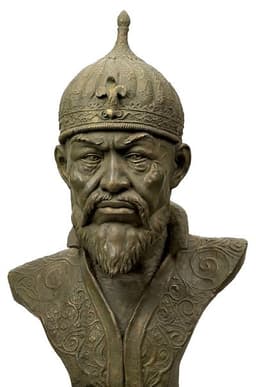
Tamerlane
Emperor · Medieval
64.7Total
Basic Information
Born
1337
1336
Died
1348
1405
Era
Medieval
Medieval
Nationality
Korea
Timurid Empire
Occupation
Emperor
Emperor
Civilization
Eastern
Middle Eastern
Score Comparison
Military (10%)
52.1
93.3
Political (20%)
68.0
57.3
Influence (20%)
68.0
55.0
Legacy (20%)
55.0
58.0
Leadership (15%)
73.5
65.0
Strategy (15%)
71.9
88.0
TOTAL
64.4
64.7
King Chungmok of Goryeo — Complete Timeline
1344 AD
Ascended Throne as Child KingPolitical Action◆ Major
King Chungmok became king at age 7 after his father King Chunghye was deposed. His youth meant that real power was exercised by Yuan-appointed officials and Goryeo nobles, making him a figurehead ruler.
Child KingSuccessionFigurehead
Impact: national
1348 AD
Died at Age 11Other◆ Major
King Chungmok died suddenly at the age of 11, possibly from illness or foul play. His death triggered another succession crisis, as the Yuan court and Goryeo factions vied to place their preferred candidate on the throne.
DeathSuccession CrisisMystery
Impact: nationaltragic
Tamerlane — Complete Timeline
1380 AD
Conquest of KhorasanWar◆ Major
Tamerlane conquered Khorasan from the Kartids, capturing Herat and establishing his base of power. This victory marked the beginning of his rise as a major military leader in Central Asia.
ConquestCentral AsiaKhorasan
Impact: regional
1387 AD
Sack of IsfahanWar◆ Major
After a rebellion in Isfahan, Tamerlane ordered a massacre of the city's inhabitants, reportedly building towers of skulls. The sack was part of his campaign to subdue Persia and served as a brutal warning to other cities.
MassacrePersiaTerror
Impact: regionaldestructive
1398 AD
Invasion of India and Sack of DelhiWar◆ Major
Tamerlane invaded the Delhi Sultanate, defeating Sultan Nasir-ud-Din Mahmud Shah Tughluq at the Battle of Delhi. His army sacked Delhi, massacring tens of thousands of civilians and looting the city's wealth, including the Peacock Throne.
InvasionIndiaDelhi
Impact: globaldestructive
1401 AD
Destruction of DamascusWar◆ Major
Tamerlane besieged and sacked Damascus, burning the Umayyad Mosque and deporting artisans to Samarkand. The destruction was part of his campaign against the Mamluk Sultanate, which had refused to submit to his authority.
SackSyriaMamluk Sultanate
Impact: regionaldestructive
1402 AD
Battle of AnkaraWar
Tamerlane defeated the Ottoman Sultan Bayezid I at the Battle of Ankara, capturing him. The victory shattered Ottoman power and led to a civil war in the Ottoman Empire, delaying their conquest of Constantinople by 50 years.
BattleOttoman EmpireAnatolia
Impact: global
1405 AD
Death during Campaign against Ming ChinaWar
Tamerlane died of illness while leading a massive army towards the Ming dynasty of China. His death ended the campaign and led to the fragmentation of his empire among his sons and grandsons.
DeathMing ChinaCampaign
Impact: globaltragic
Expert Analysis
Origins
King Chungmok of Goryeo was born in 1337 as the son of King Chunghye and a concubine. He became king at age 7 after his father was deposed by the Yuan dynasty in 1344. His early life was dominated by the Mongol Yuan court, which exerted control over Goryeo politics. Tamerlane, born Timur ibn Taraghai in 1336 near Samarkand, came from a minor noble family of the Barlas tribe. His early career involved raiding and building a power base among the Chagatai Mongols. Unlike Chungmok, Tamerlane's formative years were marked by military training and strategic alliances.
Rise to Power
Chungmok's rise was passive: he was placed on the throne by Yuan officials after his father's deposition. His reign lasted from 1344 to 1348, during which real power lay with the Yuan-appointed officials and his mother. Tamerlane's rise was active and violent. He began as a minor chieftain, allied with his brother-in-law Husayn, and conquered Transoxiana in the 1360s. By 1370, he defeated Husayn and declared himself sovereign, founding the Timurid Empire. His turning point came with the conquest of Khorasan in 1381, capturing Herat.
Leadership & Governance
Chungmok, as a child, had no leadership role. Governance was handled by Yuan officials and Goryeo aristocrats, leading to factional strife. Tamerlane, in contrast, was a hands-on ruler who led campaigns personally. He governed through a combination of military force and administrative centralization, appointing loyalists to key posts. His leadership style was autocratic and ruthless, as seen in the sack of Isfahan in 1387, where he ordered a massacre and built towers of skulls. Chungmok's leadership score of 73.5 reflects his symbolic role, while Tamerlane's 65.0 reflects his effective but brutal command.
Triumph & Tragedy
Chungmok's greatest success was maintaining the Goryeo throne despite his youth and Yuan interference. His tragedy was his sudden death at age 11, possibly from illness or poisoning, which triggered a succession crisis. Tamerlane's triumphs include the Battle of Ankara in 1402, where he captured Ottoman Sultan Bayezid I, shattering Ottoman power and leading to a civil war. His invasion of India in 1398 resulted in the sack of Delhi and massive plunder. His greatest failure was his death in 1405 while campaigning against the Ming dynasty, which ended his expansion and led to the fragmentation of his empire. Tamerlane's military score of 93.3 reflects his unmatched conquests, but his legacy score of 58.0 is lower due to his empire's short duration.
Character & Destiny
Chungmok was a pawn in larger geopolitical struggles, his fate determined by Yuan and Goryeo politics. His death ended his line temporarily. Tamerlane was a strategic genius with a ruthless streak, known for his use of terror and meticulous planning. His character shaped his destiny: he built a vast empire but failed to establish a durable succession system. Historians note that Tamerlane's brutality, while effective in conquest, alienated potential allies and left his empire vulnerable after his death. Chungmok's total score of 64.4 vs Tamerlane's 64.7 shows a near tie in overall composite, but with vastly different contributions.
Legacy
Chungmok's legacy is minimal: he is remembered as a child king whose reign was a footnote in Goryeo history. His death contributed to the eventual weakening of Goryeo, leading to the rise of the Joseon dynasty in 1392. Tamerlane's legacy is monumental: he revitalized the Silk Road, patronized arts and architecture (e.g., the Bibi-Khanym Mosque), and influenced the rise of the Mughal Empire in India through his descendant Babur. His conquests reshaped the political map of Central Asia and the Middle East. Despite his brutality, his influence scored 55.0, reflecting his lasting impact on culture and politics.
Conclusion
While Tamerlane outscored Chungmok by only 0.3 points overall, the nature of their impacts is incomparable. Chungmok's reign was passive and brief, with no agency or lasting influence. Tamerlane, despite his empire's fragmentation, fundamentally altered the course of history from Delhi to the Mediterranean. His military innovations, cultural patronage, and geopolitical shifts far outweigh the symbolic reign of a child king. Tamerlane had greater impact, with a legacy that echoes through the Mughal Empire and Central Asian history.
Rankings
🥇
TamerlaneLeader
Mil: 93.3Pol: 57.3Inf: 55.0
64.7
🥈
King Chungmok of Goryeo
Mil: 52.1Pol: 68.0Inf: 68.0
64.4
+0.3 behind
How This Comparison Works
Algorithm
Each figure is scored on 6 dimensions (0—100 scale) based on structured historical data: Military (10%), Political (20%), Influence (20%), Legacy (20%), Leadership (15%), Strategy (15%). The weighted total produces the final ranking.
Data Sources
Scores are computed from structured sub-indicators in the database. Scale factors adjust for era (Ancient ×0.85, Modern ×1.0) and civilization size (Eastern ×1.05, Other ×0.80) to account for differences in population and military scale.
Maximum 3 Figures
Comparisons are limited to 2—3 figures to ensure readability and statistical meaningfulness.
Error Margins
±5 points per dimension — Sub-scores are derived from historical records with inherent uncertainty. Two figures within 5 points on a dimension should be considered roughly equivalent in that area.
Total Score Accuracy
±3 points overall — The weighted combination of 6 dimensions produces a total score with approximately ±3 points of uncertainty. Differences of less than 3 points are not statistically significant— the figures are effectively tied.
Known Limitations
- Historical records are incomplete and uneven across civilizations
- Figures from oral-tradition societies may be underrepresented
- Occupation labels can misclassify multi-role figures
- Scores measure capability and impact, not moral character
- Quantitative scoring is a comparison tool, not absolute truth
Capability Radar
Military (10%) — Battles & Warfare
Battles
46
95
Win Rate
47
92
Expansion
49
97
Political (20%) — Governance & Reform
Reform
50
75
Diplomacy
53
70
Economy
57
72
Influence (20%) — Cultural & Global Reach
Cultural
66
75
Global
76
80
Legacy (20%) — Historical Impact
Historical
68
85
Longevity
73
70
Leadership (15%) — Power & Stability
Tenure
47
80
Stability
64
60
Strategy (15%) — Tactics & Innovation
Strategy
54
94
Tactics
57
96
Reform
59
85
Similar Comparisons
Comments & Discussion
No comments yet. Be the first to share your thoughts!