Loading...
This comparison has not been analyzed yet.
One-time AI generation (~1 minute). Scores and timeline are already available below.
King Dongmyeong of Goguryeo vs Sekhemkhet
King Dongmyeong of Goguryeo leads by 10.2 pts · 2 figures compared
…

King Dongmyeong of Goguryeo
Emperor · Ancient
50.6Total
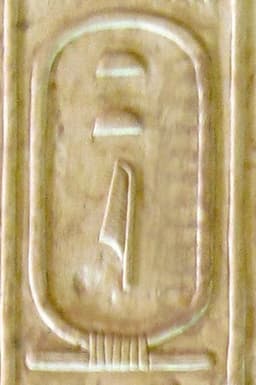
Sekhemkhet
Emperor · Ancient
40.4Total
Basic Information
Born
-58
-2640
Died
-19
-2630
Era
Ancient
Ancient
Nationality
Korea
Old Kingdom Egypt
Occupation
Emperor
Emperor
Civilization
Eastern
Middle Eastern
Score Comparison
Military (10%)
45.0
42.6
Political (20%)
35.1
32.1
Influence (20%)
59.0
43.2
Legacy (20%)
54.0
33.3
Leadership (15%)
55.3
44.5
Strategy (15%)
43.3
55.2
TOTAL
50.6
40.4
King Dongmyeong of Goguryeo — Complete Timeline
37 BC
Foundation of GoguryeoPolitical Action
Jumong, later known as King Dongmyeong, founded the kingdom of Goguryeo in the region of present-day North Korea and Manchuria. He established the capital at Jolbon and united various tribal groups, creating one of the Three Kingdoms of Korea.
FoundationKorean HistoryThree Kingdoms
Impact: regionalconstructive
Construction of Jolbon FortressOther
King Dongmyeong built the first Goguryeo fortress at Jolbon, which served as the kingdom's capital and defensive stronghold. The fortress protected the nascent kingdom from external threats and symbolized its sovereignty.
FortificationCapitalArchitecture
constructive
36 BC
Defeat of the Malgal TribesWar◆ Major
King Dongmyeong led military campaigns against the Malgal (Mohe) tribes in the northern frontier, securing Goguryeo's borders. These victories expanded the kingdom's territory and established its dominance over neighboring nomadic groups.
Military CampaignTerritorial ExpansionTribal Conflicts
Impact: regional
35 BC
Establishment of the Five Tribes SystemReform◆ Major
King Dongmyeong organized Goguryeo's society into five major tribes (Sunobu, Jeollobu, Sunnobu, Gwannobu, and Gaerubu), creating a centralized administrative structure. This system formed the basis for Goguryeo's governance and military organization.
Administrative ReformSocial OrganizationGovernance
Impact: nationalconstructive
Sekhemkhet — Complete Timeline
2640 BC
Initiation of the Buried Pyramid constructionOther◆ Major
Sekhemkhet began construction of a step pyramid at Saqqara, now known as the Buried Pyramid. The pyramid was planned to be larger than Djoser's step pyramid but was left unfinished, with only the base and lower courses completed. The site includes a surrounding enclosure wall and subsidiary tombs.
Pyramid ConstructionSaqqaraUnfinished
Impact: national
2630 BC
Discovery of the Buried Pyramid's burial chamberOther
The burial chamber of Sekhemkhet's pyramid was found empty, with an alabaster sarcophagus still sealed but containing no remains. This suggests the pharaoh may not have been buried there, or the tomb was robbed in antiquity. The discovery provided insights into early pyramid building techniques.
ArchaeologyBurial ChamberSarcophagus
This comparison has not been analyzed yet.
One-time AI generation (~1 minute). Scores and timeline are already available below.
Rankings
🥇
King Dongmyeong of GoguryeoLeader
Mil: 45.0Pol: 35.1Inf: 59.0
50.6
🥈
Sekhemkhet
Mil: 42.6Pol: 32.1Inf: 43.2
40.4
+10.2 behind
How This Comparison Works
Algorithm
Each figure is scored on 6 dimensions (0—100 scale) based on structured historical data: Military (10%), Political (20%), Influence (20%), Legacy (20%), Leadership (15%), Strategy (15%). The weighted total produces the final ranking.
Data Sources
Scores are computed from structured sub-indicators in the database. Scale factors adjust for era (Ancient ×0.85, Modern ×1.0) and civilization size (Eastern ×1.05, Other ×0.80) to account for differences in population and military scale.
Maximum 3 Figures
Comparisons are limited to 2—3 figures to ensure readability and statistical meaningfulness.
Error Margins
±5 points per dimension — Sub-scores are derived from historical records with inherent uncertainty. Two figures within 5 points on a dimension should be considered roughly equivalent in that area.
Total Score Accuracy
±3 points overall — The weighted combination of 6 dimensions produces a total score with approximately ±3 points of uncertainty. Differences of less than 3 points are not statistically significant— the figures are effectively tied.
Known Limitations
- Historical records are incomplete and uneven across civilizations
- Figures from oral-tradition societies may be underrepresented
- Occupation labels can misclassify multi-role figures
- Scores measure capability and impact, not moral character
- Quantitative scoring is a comparison tool, not absolute truth
Capability Radar
Military (10%) — Battles & Warfare
Battles
45
39
Win Rate
40
41
Expansion
55
46
Political (20%) — Governance & Reform
Reform
35
10
Diplomacy
30
10
Economy
25
10
Influence (20%) — Cultural & Global Reach
Cultural
55
10
Global
40
5
Legacy (20%) — Historical Impact
Historical
60
10
Longevity
65
10
Leadership (15%) — Power & Stability
Tenure
40
10
Stability
30
10
Strategy (15%) — Tactics & Innovation
Strategy
40
50
Tactics
35
50
Reform
30
50
Similar Comparisons
Comments & Discussion
No comments yet. Be the first to share your thoughts!