Loading...
King Jinheung vs Ramesses II
Ramesses II leads by 12.1 pts · 2 figures compared
…
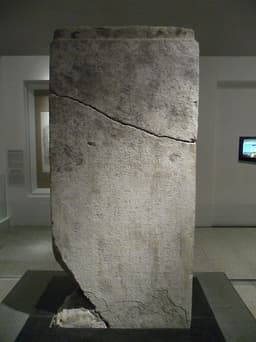
King Jinheung
Emperor · Ancient
57.9Total

Ramesses II
Emperor · Ancient
70.0Total
Basic Information
Born
-526
-1303
Died
—
-1213
Era
Ancient
Ancient
Nationality
Korea
Egypt
Occupation
Emperor
Emperor
Civilization
Eastern
Middle Eastern
Score Comparison
Military (10%)
63.3
76.0
Political (20%)
45.0
72.0
Influence (20%)
57.2
65.0
Legacy (20%)
52.0
70.0
Leadership (15%)
79.8
78.0
Strategy (15%)
55.0
61.2
TOTAL
57.9
70.0
King Jinheung — Complete Timeline
540 AD
Created the HwarangReform
Jinheung formally organized the Hwarang, an elite youth corps that combined military training with cultural and spiritual education. The Hwarang became a key institution in Silla's unification of Korea.
HwarangMilitarySilla
Impact: regionalconstructive
Ascended to the Throne of SillaPolitical Action◆ Major
Jinheung became king of Silla, one of the Three Kingdoms of Korea. His reign marked a period of significant territorial expansion and cultural development.
AccessionSillaKorea
Impact: regional
550 AD
Promoted BuddhismCultural◆ Major
Jinheung actively promoted Buddhism as a state religion, building temples and supporting monks. This helped unify the kingdom and fostered cultural exchange with China.
BuddhismReligionSilla
Impact: regionalconstructive
553 AD
Expanded into the Han River ValleyWar◆ Major
Jinheung captured the Han River valley from Baekje, gaining control of a strategic region with access to China. This victory significantly strengthened Silla's position.
ExpansionHan RiverSilla
Impact: regional
562 AD
Conquered the Gaya ConfederacyWar◆ Major
Jinheung's forces conquered the Gaya Confederacy, a group of city-states in southern Korea. This annexation expanded Silla's territory and resources.
ConquestGayaSilla
Impact: regional
Ramesses II — Complete Timeline
1274 BC
Battle of KadeshWar◆ Major
Ramesses II led Egyptian forces against the Hittite Empire at Kadesh in Syria. The battle ended in a tactical stalemate, but Ramesses claimed a great victory. Both sides suffered heavy losses, and the conflict eventually led to the first recorded peace treaty in history.
BattleHittitesSyria
Impact: regional
1270 BC
Campaigns in Nubia and LibyaWar◆ Major
Ramesses II conducted military campaigns to secure Egypt's southern border in Nubia and its western frontier against Libyan incursions. He established fortresses and garrisons, extended Egyptian control over gold-rich Nubia, and built temples to assert Egyptian dominance in these regions.
NubiaLibyaMilitary Campaign
Impact: regional
1264 BC
Construction of the Abu Simbel TemplesCultural◆ Major
Ramesses II commissioned the construction of two rock-cut temples at Abu Simbel in Nubia. The Great Temple features four colossal seated statues of the pharaoh, while the smaller temple is dedicated to his queen Nefertari. The temples demonstrate Egyptian engineering and religious devotion.
MonumentArchitectureNubia
Impact: regionalconstructive
1258 BC
Signing of the Egyptian-Hittite Peace TreatyPolitical Action
Ramesses II and Hittite king Hattusili III signed a peace treaty ending decades of conflict. The treaty established mutual defense, extradition of refugees, and a marriage alliance. A copy of the treaty is displayed at the United Nations Headquarters as a symbol of diplomacy.
Peace TreatyDiplomacyHittites
Impact: regionalconstructive
1250 BC
Construction of the RamesseumCultural
Ramesses II built his mortuary temple, the Ramesseum, on the west bank of the Nile at Thebes. The temple complex included a massive statue of the pharaoh, a library, and storage facilities. It served as a center for the cult of the deified king.
TempleThebesMortuary
constructive
Expert Analysis
Origins
King Jinheung (526–576 CE) was born into the royal Kim clan of Silla, one of the Three Kingdoms of Korea. His father, King Beopheung, had already established Buddhism as the state religion and laid the groundwork for centralization. Jinheung ascended the throne at age 7 under a regency, but by his early twenties he took full control. His upbringing in a court that valued both martial prowess and Buddhist piety shaped his later policies.
Ramesses II (1303–1213 BCE) was born to Pharaoh Seti I and Queen Tuya. As a prince, he accompanied his father on military campaigns in Libya and the Levant, gaining firsthand experience in warfare and administration. He became co-regent with Seti I in his late teens and assumed sole rule around 1279 BCE. Ramesses was groomed from childhood to be a warrior-king, and he embraced that identity fully.
Rise to Power
Jinheung became king of Silla at age 7 (540 CE) after his father's death. The regency was managed by his mother, Queen Jiso, until he came of age. His first major independent action was formalizing the Hwarang ("Flower Youth") corps around 540–550 CE. This elite group of young aristocrats underwent rigorous training in martial arts, ethics, and culture, and became a key instrument in Silla's military expansion. By the 550s, Jinheung launched campaigns against neighboring Baekje and the Gaya Confederacy.
Ramesses II became co-regent with his father Seti I at about age 15, likely around 1288 BCE. He conducted campaigns in Nubia during this period. Upon Seti's death (1279 BCE), Ramesses assumed full power. His first major challenge was the Hittite threat in Syria. In his fifth year (1274 BCE), he led an army to Kadesh, where he nearly lost the battle but turned it into a propaganda victory. This event solidified his reputation as a warrior pharaoh.
Leadership & Governance
Jinheung ruled Silla for about 36 years. He centralized power by promoting Buddhism as a unifying ideology, building temples like Hwangnyongsa, and integrating conquered territories into Silla's administrative system. The Hwarang served as both a military elite and a means to indoctrinate young nobles with loyalty to the crown. He also established local administrative units in conquered lands, such as the Han River valley, and appointed Silla officials to govern them. His governance score of 45.0 reflects moderate success in institutional building, but his reign lacked the monumental bureaucratic reforms seen in other ancient states.
Ramesses II ruled for 66 years, one of the longest reigns in history. He was a prolific builder, commissioning temples at Abu Simbel, the Ramesseum, and additions to Karnak and Luxor. These projects served both religious and propagandistic purposes, reinforcing his divine status. Politically, he signed the first recorded peace treaty with the Hittites (1258 BCE), which established mutual defense and extradition clauses. He also conducted census-like surveys and redistributed land. His political score of 72.0 indicates effective administration and diplomacy.
Triumph & Tragedy
Jinheung's greatest triumph was the conquest of the Gaya Confederacy (circa 562 CE), which added significant territory and resources to Silla. He also captured the Han River valley from Baekje, giving Silla direct access to China and its trade routes. These expansions laid the foundation for Silla's later unification of Korea. However, his reign saw no major cultural or technological innovations, and his military campaigns sometimes overstretched resources. The Hwarang, while effective, also created an elite class that later caused internal strife.
Ramesses II's triumph is the Kadesh campaign, which he turned into a personal victory despite a tactical stalemate. The subsequent peace treaty with the Hittites was a diplomatic masterstroke that secured Egypt's northern border for decades. His building projects, especially Abu Simbel, are masterpieces of ancient engineering. Yet his reign also saw economic strain from constant building and military campaigns. Near the end, Egypt faced increasing pressure from the Sea Peoples and economic decline. The treaty with the Hittites, while successful, did not prevent later instability.
Character & Destiny
Jinheung was pragmatic and visionary. He recognized the need for a unified Korean identity and used Buddhism and the Hwarang to forge it. His decision to expand Silla's borders aggressively showed strategic ambition, but his reliance on elite corps may have limited broader participation. Historical assessments note that his reign was a turning point for Silla, but his personal charisma is less documented than that of Ramesses.
Ramesses II was supremely self-confident and skilled in propaganda. He had a penchant for self-glorification, as seen in his monuments and inscriptions. He is often described as a master of spin, turning the Kadesh stalemate into a narrative of divine favor. His long life allowed him to outlive many successors, but his focus on personal legacy sometimes overshadowed institutional stability. Historians like Kenneth Kitchen note his energy and administrative competence, but also his vanity.
Legacy
Jinheung's legacy is foundational for Silla. His territorial gains and the Hwarang system directly enabled Silla to unify the Korean peninsula under King Munmu in the 7th century. Buddhism became deeply rooted in Korean culture partly due to his patronage. However, his scores (Influence 57.2, Legacy 52.0) reflect a more regional impact compared to Ramesses.
Ramesses II left an indelible mark on Egypt and the world. The Abu Simbel temples are UNESCO World Heritage sites. The peace treaty with the Hittites is a milestone in diplomatic history. His reign epitomizes the New Kingdom's grandeur. His legacy score of 70.0 and influence of 65.0 indicate global recognition.
Conclusion
While both were empire builders, Ramesses II had greater overall impact. His military score (76.0 vs. 63.3), political score (72.0 vs. 45.0), and total score (70.0 vs. 57.9) are significantly higher. Ramesses shaped the ancient Near East through diplomacy and architecture, while Jinheung's influence was confined to Korea. The data supports Ramesses as the more impactful figure, though Jinheung's role in Korean unification is crucial for East Asian history.
Rankings
🥇
Ramesses IILeader
Mil: 76.0Pol: 72.0Inf: 65.0
70.0
🥈
King Jinheung
Mil: 63.3Pol: 45.0Inf: 57.2
57.9
+12.1 behind
How This Comparison Works
Algorithm
Each figure is scored on 6 dimensions (0—100 scale) based on structured historical data: Military (10%), Political (20%), Influence (20%), Legacy (20%), Leadership (15%), Strategy (15%). The weighted total produces the final ranking.
Data Sources
Scores are computed from structured sub-indicators in the database. Scale factors adjust for era (Ancient ×0.85, Modern ×1.0) and civilization size (Eastern ×1.05, Other ×0.80) to account for differences in population and military scale.
Maximum 3 Figures
Comparisons are limited to 2—3 figures to ensure readability and statistical meaningfulness.
Error Margins
±5 points per dimension — Sub-scores are derived from historical records with inherent uncertainty. Two figures within 5 points on a dimension should be considered roughly equivalent in that area.
Total Score Accuracy
±3 points overall — The weighted combination of 6 dimensions produces a total score with approximately ±3 points of uncertainty. Differences of less than 3 points are not statistically significant— the figures are effectively tied.
Known Limitations
- Historical records are incomplete and uneven across civilizations
- Figures from oral-tradition societies may be underrepresented
- Occupation labels can misclassify multi-role figures
- Scores measure capability and impact, not moral character
- Quantitative scoring is a comparison tool, not absolute truth
Capability Radar
Military (10%) — Battles & Warfare
Battles
55
75
Win Rate
60
70
Expansion
75
85
Political (20%) — Governance & Reform
Reform
70
70
Diplomacy
65
90
Economy
60
80
Influence (20%) — Cultural & Global Reach
Cultural
65
90
Global
40
85
Legacy (20%) — Historical Impact
Historical
70
95
Longevity
60
95
Leadership (15%) — Power & Stability
Tenure
80
95
Stability
70
85
Strategy (15%) — Tactics & Innovation
Strategy
65
80
Tactics
50
65
Reform
70
60
Similar Comparisons
Comments & Discussion
No comments yet. Be the first to share your thoughts!