Loading...
This comparison has not been analyzed yet.
One-time AI generation (~1 minute). Scores and timeline are already available below.
King Seongjong of Joseon vs Vikramaditya VI
Vikramaditya VI leads by 7.3 pts · 2 figures compared
…

King Seongjong of Joseon
Emperor · Medieval
53.8Total
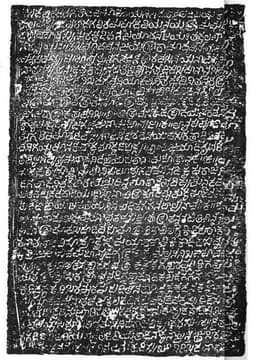
Vikramaditya VI
Emperor · Medieval
61.1Total
Basic Information
Born
1457
1076
Died
1494
1126
Era
Medieval
Medieval
Nationality
Korea
India
Occupation
Emperor
Emperor
Civilization
Eastern
Indian
Score Comparison
Military (10%)
21.2
65.0
Political (20%)
60.0
60.0
Influence (20%)
57.2
60.0
Legacy (20%)
54.0
50.0
Leadership (15%)
72.0
80.0
Strategy (15%)
41.0
60.7
TOTAL
53.8
61.1
King Seongjong of Joseon — Complete Timeline
1470 AD
Promotion of Confucian educationCultural◆ Major
Seongjong expanded the national Confucian academy (Seonggyungwan) and local schools, increasing access to education based on Confucian classics. This fostered a generation of scholar-officials who shaped Joseon's bureaucracy.
EducationConfucianismCultural Policy
Impact: nationalconstructive
1475 AD
Establishment of the Office of Special CounselorsReform
Seongjong strengthened the Office of Special Counselors (Hongmungwan), which served as a royal library and advisory body. This institution promoted Confucian scholarship and played a key role in policy debates.
Institutional ReformConfucianism
Impact: nationalconstructive
1485 AD
Compilation of the Grand Code for State AdministrationReform
Under King Seongjong's direction, scholars completed the Grand Code for State Administration (Gyeongguk Daejeon), a comprehensive legal code that systematized Joseon's government structure and laws. It remained the basis of Joseon law for centuries.
Legal ReformGovernanceJoseon Dynasty
Impact: nationalconstructive
Vikramaditya VI — Complete Timeline
1076 AD
Introduction of the Vikrama EraPolitical Action◆ Major
Vikramaditya VI introduced a new calendar era, the Vikrama Era, starting from his coronation. This era was used in inscriptions and administrative records, marking a new chronological system in the Deccan.
CalendarEraAdministration
Impact: regionalconstructive
1085 AD
Patronage of BilhanaCultural◆ Major
Vikramaditya VI patronized the Kashmiri poet Bilhana, who composed the Vikramankadevacharita, a Sanskrit epic poem celebrating the king's life and reign. This work became a key source for Western Chalukya history.
LiteraturePatronageSanskrit
Impact: regionalconstructive
1090 AD
Military Campaigns against the CholasWar◆ Major
Vikramaditya VI led successful campaigns against the Chola king Kulottunga I, capturing territories in the Vengi region. These victories expanded Western Chalukya influence into the eastern Deccan.
CholaVengiExpansion
Impact: regional
1100 AD
Reforms in Land Revenue SystemReform
Vikramaditya VI implemented land revenue reforms, standardizing tax rates and improving record-keeping. These reforms increased state revenue and reduced corruption among local officials.
RevenueAdministrationReform
Impact: regionalconstructive
This comparison has not been analyzed yet.
One-time AI generation (~1 minute). Scores and timeline are already available below.
Rankings
🥇
Vikramaditya VILeader
Mil: 65.0Pol: 60.0Inf: 60.0
61.1
🥈
King Seongjong of Joseon
Mil: 21.2Pol: 60.0Inf: 57.2
53.8
+7.3 behind
How This Comparison Works
Algorithm
Each figure is scored on 6 dimensions (0—100 scale) based on structured historical data: Military (10%), Political (20%), Influence (20%), Legacy (20%), Leadership (15%), Strategy (15%). The weighted total produces the final ranking.
Data Sources
Scores are computed from structured sub-indicators in the database. Scale factors adjust for era (Ancient ×0.85, Modern ×1.0) and civilization size (Eastern ×1.05, Other ×0.80) to account for differences in population and military scale.
Maximum 3 Figures
Comparisons are limited to 2—3 figures to ensure readability and statistical meaningfulness.
Error Margins
±5 points per dimension — Sub-scores are derived from historical records with inherent uncertainty. Two figures within 5 points on a dimension should be considered roughly equivalent in that area.
Total Score Accuracy
±3 points overall — The weighted combination of 6 dimensions produces a total score with approximately ±3 points of uncertainty. Differences of less than 3 points are not statistically significant— the figures are effectively tied.
Known Limitations
- Historical records are incomplete and uneven across civilizations
- Figures from oral-tradition societies may be underrepresented
- Occupation labels can misclassify multi-role figures
- Scores measure capability and impact, not moral character
- Quantitative scoring is a comparison tool, not absolute truth
Capability Radar
Military (10%) — Battles & Warfare
Battles
10
65
Win Rate
10
70
Expansion
10
60
Political (20%) — Governance & Reform
Reform
85
70
Diplomacy
60
65
Economy
65
75
Influence (20%) — Cultural & Global Reach
Cultural
55
60
Global
30
40
Legacy (20%) — Historical Impact
Historical
60
55
Longevity
55
50
Leadership (15%) — Power & Stability
Tenure
70
85
Stability
75
70
Strategy (15%) — Tactics & Innovation
Strategy
10
65
Tactics
10
60
Reform
30
55
Similar Comparisons
Comments & Discussion
No comments yet. Be the first to share your thoughts!