Loading...
This comparison has not been analyzed yet.
One-time AI generation (~1 minute). Scores and timeline are already available below.
King Yi of Zhou II vs Nebuchadnezzar I
Nebuchadnezzar I leads by 21.0 pts · 2 figures compared
…

King Yi of Zhou II
Emperor · Ancient
35.3Total
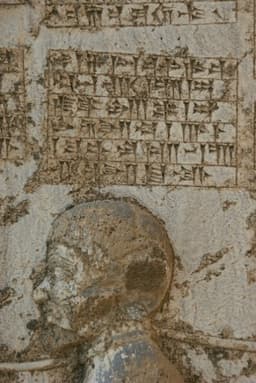
Nebuchadnezzar I
Emperor · Ancient
56.3Total
Basic Information
Born
-870
-1125
Died
-858
-1104
Era
Ancient
Ancient
Nationality
Zhou China
Babylon
Occupation
Emperor
Emperor
Civilization
Eastern
Middle Eastern
Score Comparison
Military (10%)
10.2
70.0
Political (20%)
32.1
68.0
Influence (20%)
42.4
52.5
Legacy (20%)
32.5
42.5
Leadership (15%)
41.5
64.0
Strategy (15%)
45.0
57.5
TOTAL
35.3
56.3
King Yi of Zhou II — Complete Timeline
870 BC
Restoration of the Main Royal LinePolitical Action◆ Major
King Yi II, a son of King Yi I, reclaimed the throne from his uncle King Xiao, restoring the main line of succession. This event stabilized the royal succession but did not reverse the decline in Zhou authority.
SuccessionRestorationZhou Dynasty
Impact: national
860 BC
Weak Reign and Loss of PrestigePolitical Action
King Yi II's reign was marked by weakness and inability to control the feudal lords. His lack of effective leadership further diminished the Zhou king's authority and prestige among the states.
Weak RuleDeclineZhou Dynasty
Impact: nationaldestructive
Nebuchadnezzar I — Complete Timeline
1115 BC
Recovery of the Marduk Statue from ElamWar
Nebuchadnezzar I led a military campaign into Elam and successfully retrieved the statue of the god Marduk, which had been taken by the Elamites centuries earlier. This act restored the central religious symbol of Babylon and legitimized his rule.
Religious RestorationMilitary CampaignElam
Impact: regionalconstructive
1110 BC
Restoration of Babylonian PowerPolitical Action◆ Major
Following the recovery of the Marduk statue, Nebuchadnezzar I consolidated Babylonian control over Mesopotamia. He reasserted Babylonian dominance over rival states and re-established the kingdom as a major regional power after a period of weakness.
Political ConsolidationRegional PowerMesopotamia
Impact: regionalconstructive
This comparison has not been analyzed yet.
One-time AI generation (~1 minute). Scores and timeline are already available below.
Rankings
🥇
Nebuchadnezzar ILeader
Mil: 70.0Pol: 68.0Inf: 52.5
56.3
🥈
King Yi of Zhou II
Mil: 10.2Pol: 32.1Inf: 42.4
35.3
+21.0 behind
How This Comparison Works
Algorithm
Each figure is scored on 6 dimensions (0—100 scale) based on structured historical data: Military (10%), Political (20%), Influence (20%), Legacy (20%), Leadership (15%), Strategy (15%). The weighted total produces the final ranking.
Data Sources
Scores are computed from structured sub-indicators in the database. Scale factors adjust for era (Ancient ×0.85, Modern ×1.0) and civilization size (Eastern ×1.05, Other ×0.80) to account for differences in population and military scale.
Maximum 3 Figures
Comparisons are limited to 2—3 figures to ensure readability and statistical meaningfulness.
Error Margins
±5 points per dimension — Sub-scores are derived from historical records with inherent uncertainty. Two figures within 5 points on a dimension should be considered roughly equivalent in that area.
Total Score Accuracy
±3 points overall — The weighted combination of 6 dimensions produces a total score with approximately ±3 points of uncertainty. Differences of less than 3 points are not statistically significant— the figures are effectively tied.
Known Limitations
- Historical records are incomplete and uneven across civilizations
- Figures from oral-tradition societies may be underrepresented
- Occupation labels can misclassify multi-role figures
- Scores measure capability and impact, not moral character
- Quantitative scoring is a comparison tool, not absolute truth
Capability Radar
Military (10%) — Battles & Warfare
Battles
5
55
Win Rate
5
60
Expansion
5
50
Political (20%) — Governance & Reform
Reform
10
50
Diplomacy
10
55
Economy
10
45
Influence (20%) — Cultural & Global Reach
Cultural
5
40
Global
5
35
Legacy (20%) — Historical Impact
Historical
10
45
Longevity
5
30
Leadership (15%) — Power & Stability
Tenure
30
45
Stability
20
50
Strategy (15%) — Tactics & Innovation
Strategy
5
55
Tactics
5
50
Reform
5
40
Similar Comparisons
Comments & Discussion
No comments yet. Be the first to share your thoughts!