Loading...
Kliment Voroshilov vs Takenaka Hanbei
Kliment Voroshilov leads by 5.0 pts · 2 figures compared
…

Kliment Voroshilov
General · Modern
48.6Total
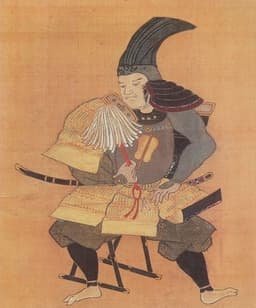
Takenaka Hanbei
General · Modern
43.6Total
Basic Information
Born
1881
1544
Died
1969
1579
Era
Modern
Modern
Nationality
USSR
Japan
Occupation
General
General
Civilization
Western
Eastern
Score Comparison
Military (10%)
50.0
25.0
Political (20%)
32.2
30.8
Influence (20%)
56.4
53.3
Legacy (20%)
46.7
47.5
Leadership (15%)
62.0
36.9
Strategy (15%)
36.8
57.5
TOTAL
48.6
43.6
Kliment Voroshilov — Complete Timeline
1939 AD
Commanded the Winter War - Soviet FailureWar
Voroshilov commanded the Soviet forces during the Winter War against Finland. The Red Army suffered heavy casualties and failed to achieve a quick victory. The poor performance exposed the weaknesses of the Soviet military and led to Voroshilov's dismissal as Defense Commissar.
Winter WarSoviet UnionDefeat
Impact: regionaltragic
Commanded the Leningrad Military DistrictPolitical Action◆ Major
Voroshilov was appointed commander of the Leningrad Military District in 1939. He was responsible for preparing the Soviet forces for the Winter War against Finland. His leadership was marked by poor planning and underestimation of Finnish resistance.
Winter WarSoviet UnionLeningrad
Impact: regional
1940 AD
Dismissed as People's Commissar for DefensePolitical Action◆ Major
After the disastrous Winter War, Voroshilov was dismissed as People's Commissar for Defense in May 1940. He was replaced by Semyon Timoshenko. Voroshilov retained his political positions but lost direct military command, marking the end of his active military career.
Winter WarSoviet UnionDismissal
Impact: nationaldestructive
1941 AD
Appointed Chairman of the State Defense CommitteePolitical Action
Voroshilov was appointed a member of the State Defense Committee in 1941, the supreme wartime authority. He was also given command of the Northwestern Direction but failed to stop the German advance. He was removed from frontline command and given ceremonial roles for the remainder of the war.
World War IISoviet UnionState Defense Committee
Impact: national
Takenaka Hanbei — Complete Timeline
1567 AD
Capture of Inabayama CastleWar◆ Major
Takenaka Hanbei devised a plan for Toyotomi Hideyoshi to capture Inabayama Castle from the Saito clan. Using a night attack and infiltration, the castle fell, marking a key step in Oda Nobunaga's unification of Japan.
InabayamaSiegeHideyoshi
Impact: regionalconstructive
Service as Strategist to HideyoshiOther
Takenaka Hanbei became a chief strategist for Toyotomi Hideyoshi after the capture of Inabayama Castle. He advised on military campaigns and administrative reforms until his death from illness in 1579.
StrategyHideyoshiAdvisor
Impact: regionalconstructive
Expert Analysis
Origins
Kliment Voroshilov was born on February 4, 1881, in Verkhnee, Russian Empire, into a poor working-class family. He had little formal education, working as a miner and metalworker before joining the Russian Social Democratic Labour Party in 1903. His early activism included participation in the 1905 Revolution and multiple arrests.
Takenaka Hanbei (also known as Takenaka Shigeharu) was born in 1544 in Mino Province, Japan, into a samurai family serving the Saito clan. He was educated in military and literary arts, and early on displayed strategic acumen. He served as a retainer to Saito Yoshitatsu and later Saito Tatsuoki.
Rise to Power
Voroshilov rose through Bolshevik ranks during the Russian Civil War (1918-1921). He commanded the 1st Cavalry Army alongside Semyon Budyonny, gaining fame for victories in Ukraine and against White forces. By 1925, he was appointed People's Commissar for Military and Naval Affairs, becoming a close ally of Joseph Stalin.
Takenaka Hanbei gained prominence in 1567 when he devised the plan to capture Inabayama Castle for Toyotomi Hideyoshi (then Hashiba Hideyoshi). Using a night attack with a small force, they infiltrated the castle, leading to the fall of the Saito clan. This victory elevated Hideyoshi and made Takenaka his chief strategist.
Leadership & Governance
Voroshilov's leadership style was characterized by political loyalty over military competence. As People's Commissar for Defense from 1934 to 1940, he focused on mechanization and expansion of the Red Army but failed to purge ineffective commanders or modernize tactics. His score in Military is 50.0, reflecting his poor performance in the Winter War. He scored 36.8 in Strategy, indicating a lack of innovative thinking.
Takenaka Hanbei was a strategist who excelled in planning and deception. His capture of Inabayama Castle demonstrated his ability to use surprise and infiltration. He scored 57.5 in Strategy, higher than Voroshilov, but his overall Leadership score is 36.9, as he never held top command. He influenced Hideyoshi's campaigns but did not govern independently.
Triumph & Tragedy
Voroshilov's greatest triumph was his role in the Russian Civil War, where he helped consolidate Bolshevik control. However, his greatest tragedy was commanding the Winter War (1939-1940) against Finland. The Red Army suffered over 300,000 casualties and failed to achieve a quick victory, exposing Soviet weaknesses. He was dismissed as People's Commissar for Defense in May 1940. Later, during World War II, he commanded the Northwestern Front but was relieved after poor performance.
Takenaka Hanbei's triumph was the capture of Inabayama Castle, which paved the way for Hideyoshi's unification of Japan. He served as a trusted advisor until his death from illness in 1579 at age 35. His tragedy was his early death, which limited his direct impact. He remains known more as a brilliant strategist than a leader.
Character & Destiny
Voroshilov was a loyal Stalinist, often supporting Stalin's purges and policies. His character was marked by obedience and lack of independent thinking, which led to his downfall when military competence was needed. He survived politically but was sidelined after Stalin's death, retiring in 1960. His total score of 48.6 reflects a mediocre legacy.
Takenaka Hanbei was known for his cunning and humility. He reportedly refused high titles and preferred to serve behind the scenes. His early death cut short his potential, but his strategies influenced Hideyoshi's later campaigns. His total score of 43.6 is lower due to limited scope, but his strategic impact is notable.
Legacy
Voroshilov's legacy is mixed: he was a symbol of the Soviet military establishment but also of its failures. The city of Voroshilovgrad (now Luhansk) was named after him, and he was awarded the title of Marshal of the Soviet Union. However, his military reputation is poor, with historians noting his incompetence. He scored 46.7 in Legacy.
Takenaka Hanbei is remembered as a master strategist in Japanese history. His tactics are studied in military schools, and he appears in popular culture. He scored 47.5 in Legacy, slightly higher than Voroshilov, despite his shorter career.
Conclusion
Comparing the two, Voroshilov had a higher total score (48.6 vs 43.6) due to his longer career and higher political position, but Takenaka Hanbei had a more significant impact relative to his era. Voroshilov's failures in the Winter War and his role in Stalin's purges diminish his legacy. Takenaka's strategic brilliance, though limited in scale, was crucial to Hideyoshi's rise. Therefore, Takenaka Hanbei had a greater positive impact on history, as his actions directly contributed to the unification of Japan, while Voroshilov's contributions were marred by incompetence and political subservience.
Rankings
🥇
Kliment VoroshilovLeader
Mil: 50.0Pol: 32.2Inf: 56.4
48.6
🥈
Takenaka Hanbei
Mil: 25.0Pol: 30.8Inf: 53.3
43.6
+5.0 behind
How This Comparison Works
Algorithm
Each figure is scored on 6 dimensions (0—100 scale) based on structured historical data: Military (10%), Political (20%), Influence (20%), Legacy (20%), Leadership (15%), Strategy (15%). The weighted total produces the final ranking.
Data Sources
Scores are computed from structured sub-indicators in the database. Scale factors adjust for era (Ancient ×0.85, Modern ×1.0) and civilization size (Eastern ×1.05, Other ×0.80) to account for differences in population and military scale.
Maximum 3 Figures
Comparisons are limited to 2—3 figures to ensure readability and statistical meaningfulness.
Error Margins
±5 points per dimension — Sub-scores are derived from historical records with inherent uncertainty. Two figures within 5 points on a dimension should be considered roughly equivalent in that area.
Total Score Accuracy
±3 points overall — The weighted combination of 6 dimensions produces a total score with approximately ±3 points of uncertainty. Differences of less than 3 points are not statistically significant— the figures are effectively tied.
Known Limitations
- Historical records are incomplete and uneven across civilizations
- Figures from oral-tradition societies may be underrepresented
- Occupation labels can misclassify multi-role figures
- Scores measure capability and impact, not moral character
- Quantitative scoring is a comparison tool, not absolute truth
Capability Radar
Military (10%) — Battles & Warfare
Battles
20
35
Win Rate
15
40
Expansion
10
30
Political (20%) — Governance & Reform
Reform
10
10
Diplomacy
30
25
Economy
10
10
Influence (20%) — Cultural & Global Reach
Cultural
30
30
Global
20
20
Legacy (20%) — Historical Impact
Historical
40
40
Longevity
30
35
Leadership (15%) — Power & Stability
Tenure
70
15
Stability
40
15
Strategy (15%) — Tactics & Innovation
Strategy
15
60
Tactics
10
65
Reform
5
20
Similar Comparisons
Comments & Discussion
No comments yet. Be the first to share your thoughts!