Loading...
Konstantinos Karamanlis vs Shimon Peres
Shimon Peres leads by 0.3 pts · 2 figures compared
…
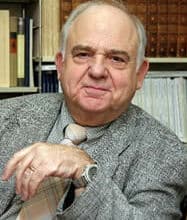
Konstantinos Karamanlis
Politician · Modern
62.8Total

Shimon Peres
Politician · Modern
63.1Total
Basic Information
Born
1907
1923
Died
1998
—
Era
Modern
Modern
Nationality
Greece
Israel
Occupation
Politician
Politician
Civilization
Western
Middle Eastern
Score Comparison
Military (10%)
49.2
40.4
Political (20%)
88.0
78.0
Influence (20%)
55.0
72.0
Legacy (20%)
55.0
52.0
Leadership (15%)
85.0
80.0
Strategy (15%)
44.7
43.4
TOTAL
62.8
63.1
Konstantinos Karamanlis — Complete Timeline
1955 AD
Founded the National Radical UnionPolitical Action◆ Major
Karamanlis founded the National Radical Union (ERE), a conservative political party. The party dominated Greek politics for the next decade, implementing economic development programs and pursuing NATO integration.
Political PartyConservatismPost-War
Impact: nationalconstructive
1959 AD
Signed the London and Zurich AgreementsPolitical Action◆ Major
Karamanlis signed the London and Zurich Agreements, which established the independence of Cyprus as a bi-communal republic. The agreements were controversial but ended the Cyprus Emergency and created the modern Cypriot state.
DiplomacyCyprusIndependence
Impact: regional
1963 AD
Self-Exile in ParisPolitical Action◆ Major
After losing the 1963 elections, Karamanlis went into self-imposed exile in Paris. He remained there for 11 years, refusing to participate in Greek politics during the military junta, maintaining his distance from the dictatorship.
ExileProtestDictatorship
Impact: national
1974 AD
Returned to Restore DemocracyPolitical Action
After the fall of the junta, Karamanlis returned from exile to lead the transition to democracy. He formed a national unity government, legalized political parties, and called elections, restoring democratic institutions in Greece.
DemocracyTransitionRestoration
Impact: nationalconstructive
Abolished the MonarchyPolitical Action◆ Major
Karamanlis held a referendum on the monarchy, which resulted in its abolition and the establishment of the Third Hellenic Republic. He then became the first President of the new republic, serving from 1980 to 1985.
ReferendumRepublicConstitutional Change
Impact: nationalconstructive
1981 AD
Negotiated Greece's Entry into the EECPolitical Action◆ Major
Karamanlis successfully negotiated Greece's accession to the European Economic Community (EEC), which was finalized in 1981. This integration anchored Greece in Western Europe and provided economic and political benefits.
European IntegrationDiplomacyEconomic Policy
Impact: regionalconstructive
Shimon Peres — Complete Timeline
1993 AD
Architected the Oslo Accords as Foreign MinisterPolitical Action
As Foreign Minister under Prime Minister Yitzhak Rabin, Peres led the secret negotiations with the PLO that resulted in the Oslo Accords. The agreement established the Palestinian Authority and set a timetable for Israeli withdrawal from parts of the West Bank and Gaza.
Oslo AccordsPeace ProcessDiplomacy
Impact: globalconstructive
1994 AD
Won Nobel Peace Prize for Oslo AccordsPolitical Action◆ Major
Peres, along with Yitzhak Rabin and Yasser Arafat, was awarded the Nobel Peace Prize for his role in negotiating the Oslo Accords. The prize recognized their efforts to create a framework for Israeli-Palestinian peace.
Nobel Peace PrizeOslo AccordsPeace
Impact: globalconstructive
1995 AD
Served as Prime Minister of IsraelPolitical Action◆ Major
After Yitzhak Rabin's assassination, Peres became Prime Minister. His term was brief, lasting until the 1996 election which he lost to Benjamin Netanyahu. He continued Rabin's peace policies but faced security challenges from Hamas suicide bombings.
Israeli PoliticsSuccessionPeace Process
Impact: regional
1996 AD
Founded the Peres Center for Peace and InnovationCultural
After leaving office, Peres founded the Peres Center for Peace and Innovation in Jaffa. The center promotes peace-building, economic cooperation, and technological innovation between Israelis and Palestinians, as well as across the Middle East.
Peace CenterInnovationCivil Society
Impact: regionalconstructive
2007 AD
Elected President of IsraelPolitical Action◆ Major
Peres was elected President of Israel by the Knesset. The largely ceremonial role allowed him to focus on national unity and international diplomacy. He served a seven-year term, using the position to promote peace and innovation.
Israeli PresidencyNational UnityDiplomacy
Impact: nationalconstructive
Expert Analysis
Origins
Konstantinos Karamanlis was born on March 8, 1907, in Proti, Serres, then part of the Ottoman Empire. His father, a schoolteacher, instilled in him a passion for education. Karamanlis studied law at the University of Athens and practiced as a lawyer before entering politics. He was elected to parliament in 1935 at age 28.
Shimon Peres was born on August 2, 1923, in Wiszniew, Poland (now Belarus). His family immigrated to Palestine in 1934. Peres attended the Ben Shemen agricultural school and later joined the Haganah, the pre-state Jewish defense force. He was a protégé of David Ben-Gurion, which shaped his political career.
Rise to Power
Karamanlis rose rapidly in Greek politics. He served as Minister of Labor (1947) and Minister of Transport (1950) before becoming Prime Minister in 1955 at age 48. He founded the National Radical Union (ERE) in 1956, which won the 1956 and 1958 elections. His early tenure focused on economic reconstruction and NATO integration.
Peres held key defense positions early in Israel's history. He was Director-General of the Ministry of Defense from 1953 to 1959, where he oversaw the development of Israel's nuclear program and arms deals with France. He entered the Knesset in 1959 and held various ministerial posts, including Defense Minister during the 1974-1977 government. He became Prime Minister in 1984 after a power-sharing agreement.
Leadership & Governance
Karamanlis governed with a firm hand, prioritizing stability. After the 1967-1974 military junta, he returned from exile in July 1974 to lead the transition to democracy. He legalized the Communist Party, held free elections, and abolished the monarchy via a referendum in 1974. His governance was authoritative but democratic, earning him the title "The Restorer of Democracy." He scored 88.0 in political leadership.
Peres was a visionary but often struggled with public perception. As Foreign Minister under Yitzhak Rabin, he secretly negotiated the Oslo Accords with the PLO, leading to the 1993 Declaration of Principles. He won the Nobel Peace Prize in 1994. However, as Prime Minister after Rabin's assassination, he lost the 1996 election to Benjamin Netanyahu due to security concerns. His political score is 78.0.
Triumph & Tragedy
Karamanlis's greatest triumph was restoring democracy in 1974 and integrating Greece into the European Economic Community (EEC) in 1981. His failure includes the 1959 London-Zurich Agreements on Cyprus, which led to the island's division and eventual conflict. He also faced criticism for his authoritarian style.
Peres's triumph is the Oslo Accords, which set a framework for Israeli-Palestinian peace. He scored 72.0 in influence. His tragedy includes the failure to implement Oslo fully and the outbreak of the Second Intifada in 2000. He also lost several elections, never winning a clear mandate as Prime Minister.
Character & Destiny
Karamanlis was pragmatic, reserved, and determined. His self-exile in Paris from 1963 to 1974 demonstrated his principled stance against the junta. His character shaped his destiny as the father of modern Greek democracy. He was known for his integrity but also his aloofness.
Peres was optimistic, intellectual, and persistent. He believed in peace and innovation, founding the Peres Center for Peace. His character led him to pursue bold diplomatic initiatives, but his inability to connect with the Israeli public cost him politically. He was often seen as out of touch.
Legacy
Karamanlis's legacy is the stable democratic system of the Third Hellenic Republic and Greece's membership in the EEC. He is remembered as "The Restorer of Democracy." His total score is 62.8.
Peres's legacy is the Oslo Accords and his vision of a Middle East at peace. He is remembered as a Nobel laureate and statesman. His total score is 63.1, slightly higher.
Conclusion
Shimon Peres had greater global impact due to the Oslo Accords and his Nobel Peace Prize. While Karamanlis restored democracy in Greece, Peres's efforts addressed a century-long conflict. Peres's influence score of 72.0 versus Karamanlis's 55.0 reflects this. Despite a narrow total score gap (0.3 points), Peres's legacy transcends national borders.
Rankings
🥇
Shimon PeresLeader
Mil: 40.4Pol: 78.0Inf: 72.0
63.1
🥈
Konstantinos Karamanlis
Mil: 49.2Pol: 88.0Inf: 55.0
62.8
+0.3 behind
How This Comparison Works
Algorithm
Each figure is scored on 6 dimensions (0—100 scale) based on structured historical data: Military (10%), Political (20%), Influence (20%), Legacy (20%), Leadership (15%), Strategy (15%). The weighted total produces the final ranking.
Data Sources
Scores are computed from structured sub-indicators in the database. Scale factors adjust for era (Ancient ×0.85, Modern ×1.0) and civilization size (Eastern ×1.05, Other ×0.80) to account for differences in population and military scale.
Maximum 3 Figures
Comparisons are limited to 2—3 figures to ensure readability and statistical meaningfulness.
Error Margins
±5 points per dimension — Sub-scores are derived from historical records with inherent uncertainty. Two figures within 5 points on a dimension should be considered roughly equivalent in that area.
Total Score Accuracy
±3 points overall — The weighted combination of 6 dimensions produces a total score with approximately ±3 points of uncertainty. Differences of less than 3 points are not statistically significant— the figures are effectively tied.
Known Limitations
- Historical records are incomplete and uneven across civilizations
- Figures from oral-tradition societies may be underrepresented
- Occupation labels can misclassify multi-role figures
- Scores measure capability and impact, not moral character
- Quantitative scoring is a comparison tool, not absolute truth
Capability Radar
Military (10%) — Battles & Warfare
Battles
28
24
Win Rate
32
22
Expansion
37
26
Political (20%) — Governance & Reform
Reform
90
75
Diplomacy
85
90
Economy
70
80
Influence (20%) — Cultural & Global Reach
Cultural
60
60
Global
60
75
Legacy (20%) — Historical Impact
Historical
75
70
Longevity
65
65
Leadership (15%) — Power & Stability
Tenure
85
85
Stability
80
70
Strategy (15%) — Tactics & Innovation
Strategy
40
33
Tactics
43
32
Reform
46
35
Similar Comparisons
Comments & Discussion
No comments yet. Be the first to share your thoughts!