Loading...
This comparison has not been analyzed yet.
One-time AI generation (~1 minute). Scores and timeline are already available below.
Krishnaraja Wadiyar IV vs Wladyslaw IV Vasa
Krishnaraja Wadiyar IV leads by 11.7 pts · 2 figures compared
…
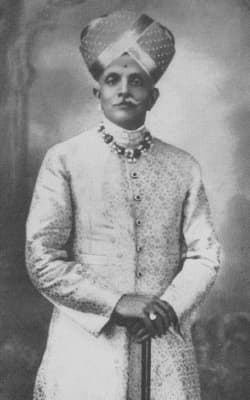
Krishnaraja Wadiyar IV
Emperor · Modern
66.0Total
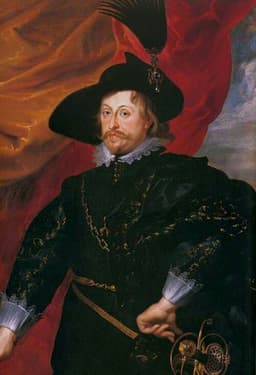
Wladyslaw IV Vasa
Emperor · Modern
54.3Total
Basic Information
Born
1884
1595
Died
1940
1648
Era
Modern
Modern
Nationality
India
Poland
Occupation
Emperor
Emperor
Civilization
Indian
Western
Score Comparison
Military (10%)
41.2
20.0
Political (20%)
78.0
68.0
Influence (20%)
72.0
54.9
Legacy (20%)
58.0
45.0
Leadership (15%)
81.7
74.0
Strategy (15%)
54.7
60.0
TOTAL
66.0
54.3
Krishnaraja Wadiyar IV — Complete Timeline
1881 AD
Introduced Representative Assembly in MysoreReform
Krishnaraja Wadiyar IV established the Mysore Representative Assembly, one of the first legislative bodies in a princely state. It allowed elected members to discuss policies and budgets, giving the people a voice in governance.
Political ReformDemocracyRepresentative Government
Impact: regionalprogressive
1900 AD
Promoted Women's Education and Social ReformReform◆ Major
Krishnaraja supported women's education by establishing schools and colleges for girls. He also enacted laws to raise the age of marriage and improve the status of women, contributing to social progress in Mysore.
Women's RightsSocial ReformEducation
Impact: regionalprogressive
1910 AD
Implemented the Mysore Economic Development PlanReform◆ Major
Krishnaraja launched a comprehensive economic development plan that included industrialization, irrigation projects, and hydroelectric power. The Krishnarajasagara Dam and the Mysore Iron and Steel Works were key projects that boosted the state's economy.
Economic DevelopmentIndustrializationInfrastructure
Impact: regionalconstructive
1916 AD
Founded the University of MysoreReform◆ Major
Krishnaraja founded the University of Mysore, the first university in the state and one of the earliest in India. It promoted higher education and research, and became a model for other princely states.
EducationUniversityHigher Education
Impact: regionalconstructive
1927 AD
Received Praise from Mahatma GandhiCultural
Mahatma Gandhi praised Krishnaraja Wadiyar IV as a 'Rajarshi' (royal sage) for his enlightened rule and social reforms. Gandhi's endorsement enhanced the Maharaja's reputation as a progressive and benevolent ruler.
GandhiPraiseReputation
Impact: nationalconstructive
Wladyslaw IV Vasa — Complete Timeline
1610 AD
Election as Tsar of RussiaPolitical Action◆ Major
Władysław IV Vasa was elected Tsar of Russia by a faction of boyars during the Time of Troubles. He was never crowned due to opposition from his father Sigismund III, who sought the throne for himself, leading to the failure of the Polish-Russian union.
RussiaTime of TroublesDynastic Ambition
Impact: regional
1621 AD
Battle of Chocim (1621)War◆ Major
Władysław IV Vasa, as a prince, commanded Polish forces at the Battle of Chocim against the Ottoman Empire. The Polish-Lithuanian army held off the Ottoman siege, leading to a peace treaty that secured the Commonwealth's southern border.
Ottoman EmpireMilitary VictoryDefense
Impact: regionalconstructive
1632 AD
Smolensk WarWar◆ Major
Władysław IV Vasa led a campaign to recapture Smolensk from Muscovy during the Smolensk War. The Polish victory resulted in the Treaty of Polyanovka, which confirmed Polish control over Smolensk and secured a 20-year truce.
MuscovyTerritorial GainMilitary Campaign
Impact: regionalconstructive
1640 AD
Attempt to Establish Hereditary MonarchyPolitical Action◆ Major
Władysław IV Vasa attempted to strengthen royal power by proposing reforms to make the monarchy hereditary and reduce noble privileges. The plan failed due to opposition from the szlachta, who feared absolutism, and the king's lack of funds.
Political ReformNobilityRoyal Power
Impact: national
1646 AD
Planned War with the Ottoman EmpireWar
Władysław IV Vasa secretly planned a large-scale war against the Ottoman Empire, seeking to unite the Cossacks and European allies. The plan was exposed and opposed by the nobility and the Sejm, forcing the king to abandon it and weakening his authority.
Ottoman EmpireCossacksFailed Ambition
Impact: regional
This comparison has not been analyzed yet.
One-time AI generation (~1 minute). Scores and timeline are already available below.
Rankings
🥇
Krishnaraja Wadiyar IVLeader
Mil: 41.2Pol: 78.0Inf: 72.0
66.0
🥈
Wladyslaw IV Vasa
Mil: 20.0Pol: 68.0Inf: 54.9
54.3
+11.7 behind
How This Comparison Works
Algorithm
Each figure is scored on 6 dimensions (0—100 scale) based on structured historical data: Military (10%), Political (20%), Influence (20%), Legacy (20%), Leadership (15%), Strategy (15%). The weighted total produces the final ranking.
Data Sources
Scores are computed from structured sub-indicators in the database. Scale factors adjust for era (Ancient ×0.85, Modern ×1.0) and civilization size (Eastern ×1.05, Other ×0.80) to account for differences in population and military scale.
Maximum 3 Figures
Comparisons are limited to 2—3 figures to ensure readability and statistical meaningfulness.
Error Margins
±5 points per dimension — Sub-scores are derived from historical records with inherent uncertainty. Two figures within 5 points on a dimension should be considered roughly equivalent in that area.
Total Score Accuracy
±3 points overall — The weighted combination of 6 dimensions produces a total score with approximately ±3 points of uncertainty. Differences of less than 3 points are not statistically significant— the figures are effectively tied.
Known Limitations
- Historical records are incomplete and uneven across civilizations
- Figures from oral-tradition societies may be underrepresented
- Occupation labels can misclassify multi-role figures
- Scores measure capability and impact, not moral character
- Quantitative scoring is a comparison tool, not absolute truth
Capability Radar
Military (10%) — Battles & Warfare
Battles
31
45
Win Rate
33
40
Expansion
34
40
Political (20%) — Governance & Reform
Reform
90
40
Diplomacy
85
60
Economy
90
45
Influence (20%) — Cultural & Global Reach
Cultural
75
35
Global
60
25
Legacy (20%) — Historical Impact
Historical
70
40
Longevity
65
30
Leadership (15%) — Power & Stability
Tenure
85
55
Stability
90
30
Strategy (15%) — Tactics & Innovation
Strategy
39
55
Tactics
42
50
Reform
47
35
Similar Comparisons
Comments & Discussion
No comments yet. Be the first to share your thoughts!