Loading...
Kudirat Abiola vs Margaret Thatcher
Margaret Thatcher leads by 26.5 pts · 2 figures compared
…

Kudirat Abiola
Politician · Modern
47.7Total
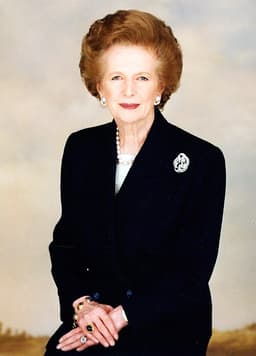
Margaret Thatcher
Politician · Modern
74.2Total
Basic Information
Born
1951
1925
Died
—
—
Era
Modern
Modern
Nationality
Nigeria
United Kingdom
Occupation
Politician
Politician
Civilization
Other
Western
Score Comparison
Military (10%)
35.5
55.0
Political (20%)
46.6
88.0
Influence (20%)
54.1
88.0
Legacy (20%)
44.2
68.0
Leadership (15%)
55.3
80.0
Strategy (15%)
42.4
45.0
TOTAL
47.7
74.2
Kudirat Abiola — Complete Timeline
1994 AD
Pro-democracy activism during Abacha regimePolitical Action◆ Major
Kudirat Abiola became a leading voice in the pro-democracy movement after her husband's imprisonment. She organized protests, coordinated with international human rights groups, and campaigned for the release of political prisoners, including her husband, despite severe government repression.
ActivismHuman RightsNigeria
Impact: nationalconstructive
1996 AD
Assassination of Kudirat AbiolaPolitical Action◆ Major
Kudirat Abiola was shot dead in Lagos by gunmen while traveling in her car. She was a prominent pro-democracy activist and wife of Moshood Abiola, the presumed winner of the annulled 1993 presidential election. Her murder was widely attributed to the military regime of General Sani Abacha.
AssassinationPro-democracyNigeria
Impact: nationaltragic
Margaret Thatcher — Complete Timeline
1979 AD
Became the first female Prime Minister of the United KingdomPolitical Action◆ Major
Thatcher led the Conservative Party to victory in the general election, becoming Britain's first female prime minister. Her government pursued a radical agenda of economic liberalization, privatization, and reduction of trade union power.
ElectionFirst Female PMConservatism
Impact: nationalconstructive
1982 AD
Waged the Falklands WarWar◆ Major
Thatcher ordered a military task force to retake the Falkland Islands after Argentina invaded. The British forces succeeded after a 10-week conflict. The victory boosted Thatcher's popularity and her government's standing, leading to her re-election in 1983.
Falklands WarMilitary ConflictSovereignty
Impact: regional
1984 AD
Privatized state-owned industriesReform◆ Major
Thatcher's government sold off major state-owned enterprises, including British Telecom, British Gas, and British Airways, to private investors. This program of privatization was a central part of her economic policy, aimed at increasing efficiency and reducing public debt.
PrivatizationEconomic ReformFree Market
Impact: nationalconstructive
1985 AD
Defeated the miners' strikePolitical Action◆ Major
Thatcher's government faced a year-long strike by the National Union of Mineworkers led by Arthur Scargill. The government stockpiled coal and used police to prevent picketing. The strike collapsed, weakening trade union power and enabling further pit closures.
Trade UnionsStrikeCoal Mining
Impact: nationaldestructive
1986 AD
Signed the Single European ActPolitical Action◆ Major
Thatcher signed the Single European Act, which reformed the European Economic Community and set the goal of a single market by 1992. Despite her Eurosceptic views, she supported this act, which expanded qualified majority voting and European integration.
European UnionSingle MarketIntegration
Impact: regionalconstructive
Expert Analysis
Origins
Kudirat Abiola (born 1951) was the wife of Moshood Abiola, a wealthy Nigerian businessman and politician. She grew up in a polygamous family and received limited formal education, but became a vocal advocate for democracy after her husband's imprisonment. Her background was rooted in the Yoruba elite of southwestern Nigeria, and she used her position to mobilize support for the pro-democracy movement.
Margaret Thatcher (born 1925) was the daughter of a grocer in Grantham, England. She studied chemistry at Oxford University and later qualified as a barrister. Her father's conservative values and her own ambition drove her into politics. She was elected to Parliament in 1959 and rose through the Conservative Party ranks, becoming party leader in 1975.
Rise to Power
Kudirat Abiola rose to prominence after the June 12, 1993 presidential election, which her husband Moshood Abiola won but was annulled by the military government. When General Sani Abacha seized power in 1993 and imprisoned her husband, she became a leading figure in the pro-democracy movement. She organized protests, coordinated with international human rights groups, and funded underground media. Her assassination on June 4, 1996, made her a martyr for democracy.
Margaret Thatcher became Prime Minister on May 4, 1979, after leading the Conservatives to a landslide victory. Her rise was marked by her confrontational style and commitment to free-market policies. She defeated Edward Heath for the party leadership in 1975, then won three general elections (1979, 1983, 1987). Her political score of 88.0 reflects her electoral success and dominance.
Leadership & Governance
Kudirat Abiola's leadership was informal but effective. She used her social network and international connections to sustain the pro-democracy movement. She coordinated with groups like the National Democratic Coalition (NADECO) and the Campaign for Democracy. Her leadership score of 55.3 reflects her ability to inspire loyalty, but her lack of formal authority limited her impact.
Margaret Thatcher's governance was transformative. She privatized state-owned industries (British Telecom, British Gas, British Airways), curbed union power (defeating the miners' strike in 1984-85), and reduced taxes. She also waged the Falklands War in 1982, which boosted her popularity. Her leadership score of 80.0 and political score of 88.0 underscore her decisive, often polarizing, style.
Triumph & Tragedy
Kudirat Abiola's triumph was her role in keeping the pro-democracy movement alive during the Abacha regime. She successfully coordinated international pressure on Nigeria. Her tragedy was her assassination before achieving her goal; her husband died in prison in 1998, and democracy was restored only after Abacha's death. Her legacy score of 44.2 reflects her incomplete mission.
Margaret Thatcher's triumphs include winning the Falklands War (military score 55.0) and transforming the British economy. Her tragedy was her downfall: she was ousted by her own party in 1990 over her opposition to European integration and unpopular poll tax. She left a deeply divided nation, but her policies endured.
Character & Destiny
Kudirat Abiola was courageous and determined, but her lack of political experience and institutional backing made her vulnerable. She was a symbol of resistance, but her fate was tied to the brutal Abacha regime. Her strategy score of 42.4 suggests limited tactical planning.
Margaret Thatcher was uncompromising and ideological (her strategy score is 45.0, reflecting rigid adherence to her views). Her personality shaped her destiny: she was admired for her strength but criticized for divisiveness. She retired as a controversial figure, but her influence on British politics remains profound.
Legacy
Kudirat Abiola is remembered as a martyr for Nigerian democracy. The Kudirat Abiola Way in Lagos and annual commemorations honor her. However, her impact is largely symbolic; her total score of 47.7 reflects limited tangible achievements.
Margaret Thatcher's legacy is vast: she reshaped British politics, economics, and society. Thatcherism—privatization, deregulation, and individualism—influenced leaders worldwide. Her total score of 74.2 reflects her enduring impact.
Conclusion
Margaret Thatcher had greater impact by any measure. Her political score of 88.0 versus Kudirat Abiola's 46.6, and her total score of 74.2 versus 47.7, demonstrate this. Thatcher transformed a major nation and inspired global movements, while Abiola's influence was confined to a brief, tragic period. Although Abiola's sacrifice was significant, Thatcher's concrete achievements in governance, economics, and international affairs are far more substantial.
Rankings
🥇
Margaret ThatcherLeader
Mil: 55.0Pol: 88.0Inf: 88.0
74.2
🥈
Kudirat Abiola
Mil: 35.5Pol: 46.6Inf: 54.1
47.7
+26.5 behind
How This Comparison Works
Algorithm
Each figure is scored on 6 dimensions (0—100 scale) based on structured historical data: Military (10%), Political (20%), Influence (20%), Legacy (20%), Leadership (15%), Strategy (15%). The weighted total produces the final ranking.
Data Sources
Scores are computed from structured sub-indicators in the database. Scale factors adjust for era (Ancient ×0.85, Modern ×1.0) and civilization size (Eastern ×1.05, Other ×0.80) to account for differences in population and military scale.
Maximum 3 Figures
Comparisons are limited to 2—3 figures to ensure readability and statistical meaningfulness.
Error Margins
±5 points per dimension — Sub-scores are derived from historical records with inherent uncertainty. Two figures within 5 points on a dimension should be considered roughly equivalent in that area.
Total Score Accuracy
±3 points overall — The weighted combination of 6 dimensions produces a total score with approximately ±3 points of uncertainty. Differences of less than 3 points are not statistically significant— the figures are effectively tied.
Known Limitations
- Historical records are incomplete and uneven across civilizations
- Figures from oral-tradition societies may be underrepresented
- Occupation labels can misclassify multi-role figures
- Scores measure capability and impact, not moral character
- Quantitative scoring is a comparison tool, not absolute truth
Capability Radar
Military (10%) — Battles & Warfare
Battles
21
0
Win Rate
25
0
Expansion
26
20
Political (20%) — Governance & Reform
Reform
40
90
Diplomacy
35
80
Economy
10
90
Influence (20%) — Cultural & Global Reach
Cultural
30
75
Global
35
80
Legacy (20%) — Historical Impact
Historical
40
80
Longevity
25
70
Leadership (15%) — Power & Stability
Tenure
20
85
Stability
10
70
Strategy (15%) — Tactics & Innovation
Strategy
32
0
Tactics
34
0
Reform
35
30
Similar Comparisons
Comments & Discussion
No comments yet. Be the first to share your thoughts!