Loading...
Lajos Kossuth vs Muhammad ibn Abd al-Karim al-Khattabi
Lajos Kossuth leads by 10.9 pts · 2 figures compared
…

Lajos Kossuth
Revolutionary · Modern
52.6Total
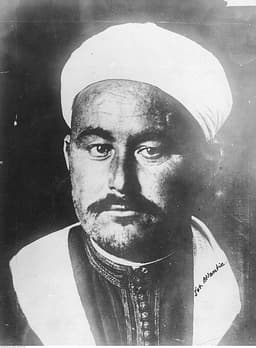
Muhammad ibn Abd al-Karim al-Khattabi
Revolutionary · Modern
41.7Total
Basic Information
Born
1802
1854
Died
1894
1927
Era
Modern
Modern
Nationality
Hungary
Sudan
Occupation
Revolutionary
Revolutionary
Civilization
Western
Other
Score Comparison
Military (10%)
50.0
47.5
Political (20%)
68.0
25.0
Influence (20%)
58.0
52.5
Legacy (20%)
49.2
40.0
Leadership (15%)
47.3
41.5
Strategy (15%)
35.0
38.3
TOTAL
52.6
41.7
Lajos Kossuth — Complete Timeline
1848 AD
Hungarian Revolution of 1848Political Action◆ Major
Lajos Kossuth emerged as a leader of the Hungarian Revolution against Habsburg rule. He gave a famous speech demanding constitutional reforms and national independence.
RevolutionIndependenceHabsburg
Impact: regional
1849 AD
Defeat and ExileWar◆ Major
The Hungarian revolutionary army was defeated by the combined forces of Austria and Russia. Kossuth fled into exile, first to the Ottoman Empire and later to the United States and Europe.
DefeatExile
Impact: regionaltragic
Declaration of Hungarian IndependencePolitical Action◆ Major
Lajos Kossuth declared Hungary's independence from the Habsburg Empire and was appointed Governor-President. The declaration was a key moment in the revolution.
IndependenceDeclaration
Impact: regionalconstructive
1851 AD
Exile in the United StatesPolitical Action
Lajos Kossuth toured the United States, giving speeches to raise support for Hungarian independence. He was received as a hero by many Americans but failed to secure official intervention.
ExileDiplomacyUnited States
Impact: global
Muhammad ibn Abd al-Karim al-Khattabi — Complete Timeline
1884 AD
Command at the Battle of El TebWar◆ Major
Muhammad ibn Abd al-Karim al-Khattabi led Mahdist forces at the Battle of El Teb against a British relief column. Although the Mahdists were defeated, the battle demonstrated their ability to challenge British military power in Sudan.
Mahdist WarBattle of El TebBritish Relief
Impact: regional
Participation in the Siege of KhartoumWar◆ Major
Al-Khattabi commanded Mahdist forces during the siege of Khartoum. His troops played a key role in the final assault that captured the city and killed General Gordon, contributing to the Mahdist victory.
Siege of KhartoumMahdist WarGordon's Death
Impact: regional
1899 AD
Capture by British ForcesWar◆ Major
Following the fall of the Mahdist state, al-Khattabi was captured by British forces. He was taken prisoner and later exiled, ending his military career and role in the Mahdist movement.
CaptureExileMahdist Defeat
Impact: regionaltragic
Expert Analysis
Origins
Lajos Kossuth was born on September 19, 1802, in Monok, Hungary, into a lesser noble family. His father was a lawyer, and his mother was of Slovak origin. Kossuth studied law at the University of Pest and became a lawyer and journalist. He was influenced by liberal ideas from Western Europe and the desire for Hungarian national autonomy within the Habsburg Empire. His early career focused on legal and political writing, which brought him into conflict with the imperial authorities.
Muhammad ibn Abd al-Karim al-Khattabi was born in 1850 in the Sudan, into a religious family. He was a follower of the Mahdist movement, which emerged in the 1880s as a revolt against Egyptian and British rule. Al-Khattabi rose through the ranks of the Mahdist army due to his military skills and devotion to the Mahdi. His early life was shaped by the religious and anti-colonial fervor of the time, with little formal education but strong tribal connections.
Rise to Power
Kossuth's rise began in the 1830s when he became a prominent journalist, editing the newspaper "Pesti Hírlap." He advocated for constitutional reforms, abolition of serfdom, and Hungarian self-government. In 1847, he was elected to the Hungarian Diet. The European revolutions of 1848 provided the catalyst: on March 3, 1848, Kossuth delivered a speech demanding parliamentary government and reforms. This made him the leader of the Hungarian Revolution. By April 1849, he declared Hungary's independence and became Governor-President. His political score of 68.0 reflects his ability to mobilize support and articulate nationalist aspirations.
Al-Khattabi's rise was tied to the Mahdist war. He commanded forces at the Battle of El Teb on February 4, 1884, where his 10,000 men attacked a British-Egyptian relief column but were defeated. Despite the loss, he remained a key commander. His major achievement was participation in the Siege of Khartoum (March 1884 – January 1885), where his troops helped breach the city walls, leading to the death of General Gordon. Al-Khattabi's military score of 47.5 reflects his role in these campaigns, though his overall influence was limited by the eventual collapse of the Mahdist state.
Leadership & Governance
Kossuth's leadership was characterized by charismatic oratory and a commitment to constitutional governance. As Governor-President, he established a government that issued its own currency, created an army, and attempted land reforms. However, his administration faced internal divisions and lacked effective military coordination. His leadership score of 47.3 reflects his inability to maintain unity among Hungarian factions and secure foreign support. He famously failed to win recognition from European powers, and his reliance on volunteers rather than a disciplined army proved problematic.
Al-Khattabi's leadership was more military than political. He commanded troops through personal bravery and religious authority, but his governance experience was minimal. After the Mahdi's death in 1885, the state was led by the Khalifa, and al-Khattabi remained a subordinate commander. His political score of 25.0 indicates his lack of administrative role. His leadership style was based on strict adherence to Mahdist doctrines, which limited his ability to adapt to changing circumstances.
Triumph & Tragedy
Kossuth's greatest success was igniting the Hungarian national movement and temporarily establishing an independent state. His speeches and writings inspired generations of Hungarians. His tragedy came with the military defeat in August 1849, when the Hungarian army surrendered to Austrian and Russian forces. Kossuth fled into exile, spending the rest of his life in Turkey, the United States, and Italy, never returning to Hungary. He died in Turin in 1894, a symbol of lost revolution.
Al-Khattabi's triumph was his role in the Siege of Khartoum, a major victory for the Mahdist movement. However, his tragedy was his capture by British forces after the Battle of Omdurman in 1898. He was imprisoned in Sudan and later exiled to Egypt, where he died in 1900. His legacy is overshadowed by the Mahdi and the Khalifa, and his contributions are less remembered.
Character & Destiny
Kossuth was a passionate idealist, skilled in rhetoric but less adept at practical politics. His unwavering commitment to independence made him a hero but also a liability, as he refused compromises that might have preserved some autonomy. His character shaped his destiny: a life of exile, celebrated in memory but not in power. Historians often note his eloquence and vision, but criticize his strategic failures.
Al-Khattabi was a loyal soldier, dedicated to the Mahdist cause. His character was defined by religious fervor and military discipline. His destiny was to be a footnote in the larger story of the Mahdist state. He lacked the political acumen to rise higher, and his capture ended his career without significant impact beyond his immediate campaigns.
Legacy
Kossuth's legacy is profound in Hungary. He is considered a national hero, with statues, streets, and even a county named after him. His ideas influenced later Hungarian independence movements. His political score of 68.0 and legacy score of 49.2 reflect his enduring symbolic importance, though his practical achievements were limited. The 1848 revolution is commemorated annually on March 15.
Al-Khattabi's legacy is more obscure. He is remembered in Sudan as a minor figure in the Mahdist war, but his contributions are overshadowed by the Mahdi and the Khalifa. His legacy score of 40.0 indicates limited remembrance. No major monuments or holidays honor him.
Conclusion
Lajos Kossuth had greater impact than Muhammad ibn Abd al-Karim al-Khattabi. Kossuth's total score of 52.6 exceeds al-Khattabi's 41.7 by 10.9 points, a significant margin. Kossuth's influence on Hungarian national identity and his role in the 1848 revolutions across Europe outweigh al-Khattabi's localized military contributions. While al-Khattabi fought bravely, his actions did not alter the course of history beyond the Mahdist state's brief existence. Kossuth's political and influence scores (68.0 and 58.0) demonstrate his broader reach. Therefore, Kossuth is the more consequential historical figure.
Rankings
🥇
Lajos KossuthLeader
Mil: 50.0Pol: 68.0Inf: 58.0
52.6
🥈
Muhammad ibn Abd al-Karim al-Khattabi
Mil: 47.5Pol: 25.0Inf: 52.5
41.7
+10.9 behind
How This Comparison Works
Algorithm
Each figure is scored on 6 dimensions (0—100 scale) based on structured historical data: Military (10%), Political (20%), Influence (20%), Legacy (20%), Leadership (15%), Strategy (15%). The weighted total produces the final ranking.
Data Sources
Scores are computed from structured sub-indicators in the database. Scale factors adjust for era (Ancient ×0.85, Modern ×1.0) and civilization size (Eastern ×1.05, Other ×0.80) to account for differences in population and military scale.
Maximum 3 Figures
Comparisons are limited to 2—3 figures to ensure readability and statistical meaningfulness.
Error Margins
±5 points per dimension — Sub-scores are derived from historical records with inherent uncertainty. Two figures within 5 points on a dimension should be considered roughly equivalent in that area.
Total Score Accuracy
±3 points overall — The weighted combination of 6 dimensions produces a total score with approximately ±3 points of uncertainty. Differences of less than 3 points are not statistically significant— the figures are effectively tied.
Known Limitations
- Historical records are incomplete and uneven across civilizations
- Figures from oral-tradition societies may be underrepresented
- Occupation labels can misclassify multi-role figures
- Scores measure capability and impact, not moral character
- Quantitative scoring is a comparison tool, not absolute truth
Capability Radar
Military (10%) — Battles & Warfare
Battles
30
35
Win Rate
25
30
Expansion
20
25
Political (20%) — Governance & Reform
Reform
70
15
Diplomacy
60
15
Economy
40
10
Influence (20%) — Cultural & Global Reach
Cultural
65
15
Global
55
10
Legacy (20%) — Historical Impact
Historical
70
20
Longevity
55
10
Leadership (15%) — Power & Stability
Tenure
45
20
Stability
20
10
Strategy (15%) — Tactics & Innovation
Strategy
40
35
Tactics
35
40
Reform
55
20
Similar Comparisons
Muhammad ibn Abd al-Karim al-Khattabi vs Abd el-KrimMuhammad ibn Abd al-Karim al-Khattabi vs Bal Gangadhar TilakMuhammad ibn Abd al-Karim al-Khattabi vs Theobald Wolfe ToneMuhammad ibn Abd al-Karim al-Khattabi vs Bhagat SinghMuhammad ibn Abd al-Karim al-Khattabi vs Li ZichengMuhammad ibn Abd al-Karim al-Khattabi vs Miguel Hidalgo
Comments & Discussion
No comments yet. Be the first to share your thoughts!