Loading...
Laoshang Chanyu vs Tai Wu of Shang
Laoshang Chanyu leads by 5.0 pts · 2 figures compared
…

Laoshang Chanyu
Emperor · Ancient
63.5Total
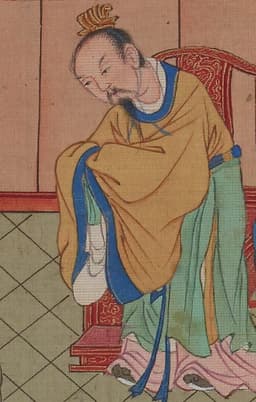
Tai Wu of Shang
Emperor · Ancient
58.5Total
Basic Information
Born
-174
-1480
Died
-161
-1400
Era
Ancient
Ancient
Nationality
Xiongnu
Shang China
Occupation
Emperor
Emperor
Civilization
Eastern
Eastern
Score Comparison
Military (10%)
78.5
55.0
Political (20%)
72.0
68.0
Influence (20%)
56.7
54.1
Legacy (20%)
52.0
49.2
Leadership (15%)
72.0
80.0
Strategy (15%)
69.1
50.0
TOTAL
63.5
58.5
Laoshang Chanyu — Complete Timeline
174 BC
Inheritance of the Xiongnu EmpirePolitical Action◆ Major
Laoshang Chanyu succeeded his father Modu Chanyu as ruler of the Xiongnu Empire in 174 BC. He inherited a powerful confederation that dominated the steppe and maintained the tribute system with Han China established by his father.
SuccessionXiongnu EmpireLeadership
Impact: regional
165 BC
Defeat of the YuezhiWar◆ Major
Laoshang Chanyu launched a major campaign against the Yuezhi, a powerful nomadic group in the west. He defeated them decisively, forcing the Yuezhi to migrate westward into Central Asia, which reshaped the balance of power on the steppe.
WarYuezhiMigration
Impact: regional
162 BC
Renewal of the Heqin TreatyPolitical Action
Laoshang Chanyu renewed the Heqin treaty with the Han Dynasty, securing continued tribute payments and marriage alliances. This maintained peace between the Xiongnu and Han, allowing Laoshang to focus on expanding Xiongnu influence in other directions.
TreatyHeqinDiplomacy
Impact: regional
160 BC
Expansion into the Tarim BasinWar◆ Major
Laoshang Chanyu extended Xiongnu control over the Tarim Basin city-states, securing tribute and controlling the Silk Road trade routes. This expansion increased Xiongnu wealth and influence, making them the dominant power in Central Asia.
ExpansionTarim BasinSilk Road
Impact: regional
Tai Wu of Shang — Complete Timeline
1460 BC
Appointment of Wu Xian as MinisterPolitical Action◆ Major
Tai Wu appointed the virtuous minister Wu Xian, who helped restore moral governance. This appointment is credited with reviving the dynasty's fortunes after a period of decline, emphasizing meritocratic appointments.
Ministerial AppointmentMoral Revival
Impact: regionalconstructive
1450 BC
Moral Revival and Ritual RectificationReform◆ Major
Under Tai Wu's direction, the Shang court reinstituted proper ancestral rituals and moral codes. This reform reversed perceived decadence, restored divine favor, and led to a period of prosperity and stability lasting decades.
Moral ReformRitualProsperity
Impact: regionalconstructive
1400 BC
Long Reign of 75 YearsPolitical Action
Tai Wu reigned for approximately 75 years, the longest of any Shang king. This extended period of stable rule allowed for the consolidation of Shang institutions and the peaceful transmission of power to his successors.
Long ReignStability
Impact: regionalconstructive
Expert Analysis
Origins
**Laoshang Chanyu** (born c. 200 BC) was the son of Modu Chanyu, the founder of the Xiongnu Empire. Raised in the nomadic steppe tradition, he learned warfare and statecraft from his father, who had unified the Xiongnu tribes and defeated the Han. Laoshang inherited a vast confederation that stretched from Manchuria to the Altai Mountains. His early life was marked by constant training in archery and cavalry tactics, essential for survival in the harsh Central Asian environment.
**Tai Wu of Shang** (born c. 1400 BC) was a king of the Shang dynasty, which ruled over the Yellow River valley. He ascended the throne during a period of decline, when the dynasty faced internal corruption and loss of divine favor. Little is known of his early life, but he was educated in court rituals and ancestral worship. His reign of 75 years (traditionally 1400-1325 BC) was marked by a focus on restoring moral order through proper rites.
Rise to Power
Laoshang Chanyu inherited the Xiongnu throne in 174 BC upon his father's death. He did not need to conquer rivals; the Xiongnu succession was stable under Modu's system. His rise was seamless, and he immediately faced the challenge of maintaining the empire's momentum. He continued his father's expansionist policies, particularly against the Yuezhi in the west.
Tai Wu became king after his predecessor's short reign. He was not the eldest son but was chosen by court officials seeking reform. His rise was marked by the appointment of Wu Xian as minister, a sage who helped reestablish ancestral rituals. Tai Wu's legitimacy was reinforced by his long reign, which allowed him to outlast rivals and consolidate power.
Leadership & Governance
Laoshang Chanyu ruled as a nomadic chieftain, relying on tribal alliances and tribute. He expanded Xiongnu control over the Tarim Basin city-states, securing tribute from oasis settlements like Kashgar and Turpan. He maintained the Heqin treaty with Han China, receiving annual gifts of silk, grain, and women. His governance was decentralized: local tribes remained autonomous as long as they paid tribute and provided troops. He scored 72.0 in political score, reflecting his ability to manage a multi-ethnic empire.
Tai Wu governed through ritual rectification. He believed that moral decay caused natural disasters and military defeats. He reinstituted proper ancestral sacrifices, reorganized the calendar, and promoted virtue among nobles. His leadership style was bureaucratic and sacerdotal, emphasizing order over conquest. His political score of 68.0 is slightly lower than Laoshang's, as his reforms were inward-looking and did not expand Shang territory.
Triumph & Tragedy
Laoshang's greatest triumph was the defeat of the Yuezhi around 165 BC. He drove them from the Gansu corridor, forcing a migration that eventually reached Bactria. This victory secured Xiongnu control over the Silk Road and eliminated a major rival. However, his greatest failure was the inability to conquer Han China. Despite military superiority, he could not breach the Great Wall defenses; his raids yielded plunder but no territorial gains. His military score of 78.5 reflects his success against nomads but limited impact on settled states.
Tai Wu's triumph was the moral revival of the Shang dynasty. By restoring rituals, he reversed a decline that had led to loss of tributary states. His long reign provided stability, allowing the dynasty to survive until the Zhou conquest. His tragedy was that his reforms did not prevent eventual collapse; the Shang fell less than a century after his death. His military score of 55.0 shows he was not a conqueror, but his leadership score of 80.0 reflects his ability to inspire loyalty.
Character & Destiny
Laoshang was pragmatic and ruthless. He broke treaties when convenient, raiding Han borders for resources. His character was shaped by the steppe ethos of constant warfare; he saw peace as weakness. His destiny was to expand the Xiongnu empire to its greatest extent, but he could not create institutions to sustain it. After his death, internal divisions weakened the confederation.
Tai Wu was pious and reformist. He believed that virtue, not force, secured the kingdom. His character was shaped by Shang religious traditions; he saw himself as the intermediary between heaven and earth. His destiny was to revive a declining dynasty, but his focus on ritual over military left Shang vulnerable. Historians note that his reign delayed collapse but did not prevent it.
Legacy
Laoshang Chanyu's legacy is the consolidation of Xiongnu power in Central Asia. His defeat of the Yuezhi set in motion the chain of events that led to the Kushan Empire. The Xiongnu model of nomadic empire influenced later steppe confederations like the Mongols. However, his empire fragmented after his death, and his personal legacy is overshadowed by his father Modu. He scores 52.0 in legacy, reflecting a moderate but not enduring impact.
Tai Wu's legacy is the preservation of Shang ritual and moral philosophy. His reign is cited in later Chinese texts as a model of virtuous kingship. The Shang bronze inscriptions record his reforms. However, his influence was limited to the Shang court; the Zhou dynasty that followed rewrote history to emphasize their own mandate. He scores 49.2 in legacy, lower than Laoshang, as his achievements were more ephemeral.
Conclusion
Laoshang Chanyu had greater impact than Tai Wu of Shang. His military conquests reshaped Central Asia, while Tai Wu's reforms only maintained the status quo. Laoshang's total score of 63.5 exceeds Tai Wu's 58.5 by 5 points, and his military and strategy scores are significantly higher (78.5 vs 55.0 and 69.1 vs 50.0). While Tai Wu's leadership was commendable, his influence was confined to a single dynasty in decline. Laoshang's actions had continental consequences, affecting the Han, the Yuezhi, and the Silk Road. The steppe warrior, not the ritual king, changed history.
Rankings
🥇
Laoshang ChanyuLeader
Mil: 78.5Pol: 72.0Inf: 56.7
63.5
🥈
Tai Wu of Shang
Mil: 55.0Pol: 68.0Inf: 54.1
58.5
+5.0 behind
How This Comparison Works
Algorithm
Each figure is scored on 6 dimensions (0—100 scale) based on structured historical data: Military (10%), Political (20%), Influence (20%), Legacy (20%), Leadership (15%), Strategy (15%). The weighted total produces the final ranking.
Data Sources
Scores are computed from structured sub-indicators in the database. Scale factors adjust for era (Ancient ×0.85, Modern ×1.0) and civilization size (Eastern ×1.05, Other ×0.80) to account for differences in population and military scale.
Maximum 3 Figures
Comparisons are limited to 2—3 figures to ensure readability and statistical meaningfulness.
Error Margins
±5 points per dimension — Sub-scores are derived from historical records with inherent uncertainty. Two figures within 5 points on a dimension should be considered roughly equivalent in that area.
Total Score Accuracy
±3 points overall — The weighted combination of 6 dimensions produces a total score with approximately ±3 points of uncertainty. Differences of less than 3 points are not statistically significant— the figures are effectively tied.
Known Limitations
- Historical records are incomplete and uneven across civilizations
- Figures from oral-tradition societies may be underrepresented
- Occupation labels can misclassify multi-role figures
- Scores measure capability and impact, not moral character
- Quantitative scoring is a comparison tool, not absolute truth
Capability Radar
Military (10%) — Battles & Warfare
Battles
85
30
Win Rate
80
30
Expansion
90
20
Political (20%) — Governance & Reform
Reform
65
60
Diplomacy
80
50
Economy
60
50
Influence (20%) — Cultural & Global Reach
Cultural
60
55
Global
65
30
Legacy (20%) — Historical Impact
Historical
75
55
Longevity
70
60
Leadership (15%) — Power & Stability
Tenure
75
85
Stability
70
70
Strategy (15%) — Tactics & Innovation
Strategy
85
25
Tactics
75
25
Reform
70
20
Similar Comparisons
Comments & Discussion
No comments yet. Be the first to share your thoughts!