Loading...
This comparison has not been analyzed yet.
One-time AI generation (~1 minute). Scores and timeline are already available below.
Lautaro vs Li Zongren
Lautaro leads by 6.0 pts · 2 figures compared
…

Lautaro
General · Modern
64.5Total
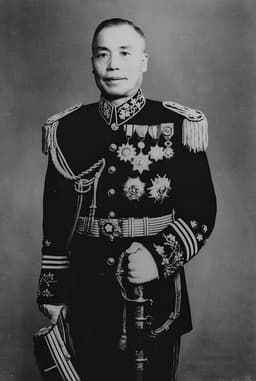
Li Zongren
General · Modern
58.5Total
Basic Information
Born
1534
1890
Died
1557
1969
Era
Modern
Modern
Nationality
Mapuche
China
Occupation
General
General
Civilization
Other
Eastern
Score Comparison
Military (10%)
70.0
65.0
Political (20%)
68.0
53.8
Influence (20%)
72.0
58.0
Legacy (20%)
52.0
52.0
Leadership (15%)
65.0
72.0
Strategy (15%)
65.4
56.8
TOTAL
64.5
58.5
Lautaro — Complete Timeline
1550 AD
Capture by Spanish and Service as a YanaconaPolitical Action◆ Major
Lautaro was captured by Spanish conquistadors as a youth and served as a yanacona (indigenous servant) under Pedro de Valdivia. He learned Spanish military tactics, horsemanship, and the use of firearms, which he later used against them.
CaptureSpanishMapuche
Impact: regional
1553 AD
Battle of TucapelWar◆ Major
Lautaro led Mapuche forces to a decisive victory at the Battle of Tucapel, where they ambushed and killed Spanish governor Pedro de Valdivia. The victory marked a major setback for Spanish colonization in Chile and inspired further Mapuche resistance.
BattleVictoryMapuche
Impact: regionaldestructive
Escape and Leadership of Mapuche UprisingPolitical Action◆ Major
Lautaro escaped Spanish service and returned to the Mapuche, where he became a military leader. He organized a major uprising against Spanish settlements in Chile, using tactics learned from the Spanish, such as cavalry charges and coordinated attacks.
UprisingMapucheSpanish
Impact: regionaldestructive
1554 AD
Battle of MarihueñuWar◆ Major
Lautaro defeated a Spanish force at the Battle of Marihue
BattleVictoryMapuche
Impact: regionaldestructive
1557 AD
Death at the Battle of MataquitoWar◆ Major
Lautaro was killed in a surprise Spanish attack at the Battle of Mataquito. His death was a significant blow to the Mapuche resistance, but his tactics and leadership inspired future generations of Mapuche warriors.
DeathBattleMapuche
Impact: regionaltragic
Li Zongren — Complete Timeline
1921 AD
Command of the Guangxi ArmyPolitical Action◆ Major
Li Zongren became a commander in the Guangxi Army and helped unify Guangxi province under the New Guangxi Clique. He established a powerful regional base that rivaled other warlords.
Guangxi CliqueMilitary CommandWarlord Era
Impact: regional
1926 AD
Alliance with the Nationalist GovernmentPolitical Action◆ Major
Li Zongren allied the Guangxi Clique with Chiang Kai-shek's Nationalist government during the Northern Expedition. His forces played a key role in defeating warlords and unifying China under KMT rule.
Northern ExpeditionAllianceKMT
Impact: nationalconstructive
1938 AD
Battle of TaierzhuangWar
Li Zongren commanded Chinese forces to a major victory over the Japanese at the Battle of Taierzhuang during the Second Sino-Japanese War. This was the first significant Chinese victory of the war and boosted national morale.
Second Sino-Japanese WarBattleVictory
Impact: nationalconstructive
1949 AD
Acting Presidency of the Republic of ChinaPolitical Action◆ Major
Li Zongren served as Acting President of the Republic of China after Chiang Kai-shek's resignation during the Chinese Civil War. He attempted to negotiate peace with the Communists but failed, leading to the KMT's retreat to Taiwan.
Chinese Civil WarPresidencyKMT
Impact: nationaltragic
Exile to the United StatesPolitical Action
After the Communist victory, Li Zongren fled to the United States, where he lived in exile. He criticized Chiang Kai-shek's leadership and advocated for a reformed KMT, but remained politically marginalized.
ExileChinese Civil WarPolitics
Impact: nationaltragic
This comparison has not been analyzed yet.
One-time AI generation (~1 minute). Scores and timeline are already available below.
Rankings
🥇
LautaroLeader
Mil: 70.0Pol: 68.0Inf: 72.0
64.5
🥈
Li Zongren
Mil: 65.0Pol: 53.8Inf: 58.0
58.5
+6.0 behind
How This Comparison Works
Algorithm
Each figure is scored on 6 dimensions (0—100 scale) based on structured historical data: Military (10%), Political (20%), Influence (20%), Legacy (20%), Leadership (15%), Strategy (15%). The weighted total produces the final ranking.
Data Sources
Scores are computed from structured sub-indicators in the database. Scale factors adjust for era (Ancient ×0.85, Modern ×1.0) and civilization size (Eastern ×1.05, Other ×0.80) to account for differences in population and military scale.
Maximum 3 Figures
Comparisons are limited to 2—3 figures to ensure readability and statistical meaningfulness.
Error Margins
±5 points per dimension — Sub-scores are derived from historical records with inherent uncertainty. Two figures within 5 points on a dimension should be considered roughly equivalent in that area.
Total Score Accuracy
±3 points overall — The weighted combination of 6 dimensions produces a total score with approximately ±3 points of uncertainty. Differences of less than 3 points are not statistically significant— the figures are effectively tied.
Known Limitations
- Historical records are incomplete and uneven across civilizations
- Figures from oral-tradition societies may be underrepresented
- Occupation labels can misclassify multi-role figures
- Scores measure capability and impact, not moral character
- Quantitative scoring is a comparison tool, not absolute truth
Capability Radar
Military (10%) — Battles & Warfare
Battles
55
65
Win Rate
60
60
Expansion
50
60
Political (20%) — Governance & Reform
Reform
40
45
Diplomacy
50
60
Economy
30
40
Influence (20%) — Cultural & Global Reach
Cultural
60
40
Global
45
40
Legacy (20%) — Historical Impact
Historical
65
55
Longevity
55
45
Leadership (15%) — Power & Stability
Tenure
45
55
Stability
35
35
Strategy (15%) — Tactics & Innovation
Strategy
65
68
Tactics
70
70
Reform
75
55
Similar Comparisons
Comments & Discussion
No comments yet. Be the first to share your thoughts!