Loading...
This comparison has not been analyzed yet.
One-time AI generation (~1 minute). Scores and timeline are already available below.
Le Kha Phieu vs Pak Yong-sik
Le Kha Phieu leads by 4.7 pts · 2 figures compared
…

Le Kha Phieu
General · Modern
42.2Total
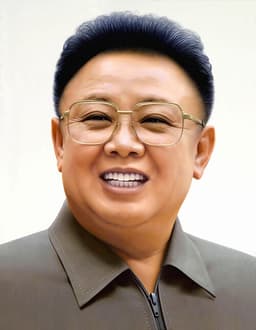
Pak Yong-sik
General · Modern
37.5Total
Basic Information
Born
1931
1950
Died
—
—
Era
Modern
Modern
Nationality
Vietnam
North Korea
Occupation
General
General
Civilization
Eastern
Eastern
Score Comparison
Military (10%)
22.6
22.6
Political (20%)
37.9
26.4
Influence (20%)
49.4
50.2
Legacy (20%)
38.3
37.5
Leadership (15%)
57.6
38.1
Strategy (15%)
36.8
36.8
TOTAL
42.2
37.5
Le Kha Phieu — Complete Timeline
1996 AD
Oversaw the 8th National Party CongressPolitical Action◆ Major
Le Kha Phieu played a key role in organizing the 8th National Party Congress, which set the direction for Vietnam's economic reforms (Doi Moi) and foreign policy. The congress reaffirmed the party's commitment to market-oriented reforms.
Doi MoiParty CongressEconomic Reform
Impact: nationalconstructive
1997 AD
Elected as General Secretary of the Communist Party of VietnamPolitical Action◆ Major
Le Kha Phieu was elected as General Secretary of the Communist Party of Vietnam, succeeding Do Muoi. His election marked a shift in leadership during a period of economic reform and normalization of relations with the US.
Communist PartyLeadershipVietnam
Impact: national
2001 AD
Removed from Party LeadershipPolitical Action◆ Major
Le Kha Phieu was removed as General Secretary at the 9th National Party Congress, replaced by Nong Duc Manh. His removal was attributed to internal party disputes and perceived failures in economic management.
Political PurgeLeadership ChangeParty Dispute
Impact: nationaltragic
2006 AD
Expelled from the Communist PartyPolitical Action◆ Major
Le Kha Phieu was expelled from the Communist Party of Vietnam for alleged violations of party discipline. The expulsion marked a dramatic fall from grace for the former top leader, though he remained a controversial figure.
ExpulsionParty DisciplineDisgrace
Impact: nationaltragic
Pak Yong-sik — Complete Timeline
2015 AD
Appointed Minister of People's Armed ForcesPolitical Action◆ Major
Pak Yong-sik was appointed as North Korea's Minister of People's Armed Forces, making him the top military official responsible for the Korean People's Army. This appointment placed him in a key position during a period of heightened tensions with South Korea and the United States.
North KoreaMilitary LeadershipKim Jong-un
Impact: national
2018 AD
Purged and executedPolitical Action◆ Major
Pak Yong-sik was reportedly purged and executed by the Kim Jong-un regime. His removal was part of a broader crackdown on military officials, reflecting ongoing power struggles within the North Korean leadership.
North KoreaPurgeExecution
Impact: nationaltragic
This comparison has not been analyzed yet.
One-time AI generation (~1 minute). Scores and timeline are already available below.
Rankings
🥇
Le Kha PhieuLeader
Mil: 22.6Pol: 37.9Inf: 49.4
42.2
🥈
Pak Yong-sik
Mil: 22.6Pol: 26.4Inf: 50.2
37.5
+4.7 behind
How This Comparison Works
Algorithm
Each figure is scored on 6 dimensions (0—100 scale) based on structured historical data: Military (10%), Political (20%), Influence (20%), Legacy (20%), Leadership (15%), Strategy (15%). The weighted total produces the final ranking.
Data Sources
Scores are computed from structured sub-indicators in the database. Scale factors adjust for era (Ancient ×0.85, Modern ×1.0) and civilization size (Eastern ×1.05, Other ×0.80) to account for differences in population and military scale.
Maximum 3 Figures
Comparisons are limited to 2—3 figures to ensure readability and statistical meaningfulness.
Error Margins
±5 points per dimension — Sub-scores are derived from historical records with inherent uncertainty. Two figures within 5 points on a dimension should be considered roughly equivalent in that area.
Total Score Accuracy
±3 points overall — The weighted combination of 6 dimensions produces a total score with approximately ±3 points of uncertainty. Differences of less than 3 points are not statistically significant— the figures are effectively tied.
Known Limitations
- Historical records are incomplete and uneven across civilizations
- Figures from oral-tradition societies may be underrepresented
- Occupation labels can misclassify multi-role figures
- Scores measure capability and impact, not moral character
- Quantitative scoring is a comparison tool, not absolute truth
Capability Radar
Military (10%) — Battles & Warfare
Battles
10
10
Win Rate
10
10
Expansion
5
5
Political (20%) — Governance & Reform
Reform
20
10
Diplomacy
30
10
Economy
20
10
Influence (20%) — Cultural & Global Reach
Cultural
15
5
Global
10
5
Legacy (20%) — Historical Impact
Historical
20
10
Longevity
10
5
Leadership (15%) — Power & Stability
Tenure
40
20
Stability
20
5
Strategy (15%) — Tactics & Innovation
Strategy
10
10
Tactics
10
10
Reform
10
10
Similar Comparisons
Comments & Discussion
No comments yet. Be the first to share your thoughts!