Loading...
Lech Walesa vs Mangal Pandey
Lech Walesa leads by 3.8 pts · 2 figures compared
…

Lech Walesa
Revolutionary · Modern
52.4Total
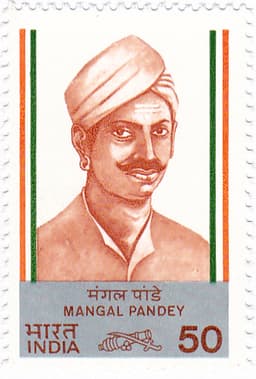
Mangal Pandey
Revolutionary · Modern
48.6Total
Basic Information
Born
1943
1827
Died
—
1857
Era
Modern
Modern
Nationality
Poland
India
Occupation
Revolutionary
Revolutionary
Civilization
Western
Indian
Score Comparison
Military (10%)
14.2
39.9
Political (20%)
72.0
35.0
Influence (20%)
62.0
51.8
Legacy (20%)
56.0
46.7
Leadership (15%)
48.8
62.6
Strategy (15%)
33.6
53.8
TOTAL
52.4
48.6
Lech Walesa — Complete Timeline
1980 AD
Founding of SolidarityPolitical Action
Walesa co-founded the Solidarity trade union in August 1980 after leading the Gda
SolidarityLabor Movement
Impact: globalprogressive
1981 AD
Martial Law and ImprisonmentPolitical Action◆ Major
Walesa was arrested and interned on December 13, 1981, when General Jaruzelski imposed martial law in Poland. He was held for 11 months, while Solidarity was banned and its leaders suppressed.
Martial LawRepression
Impact: nationaltragic
1983 AD
Nobel Peace PrizeCultural◆ Major
Walesa was awarded the Nobel Peace Prize on December 10, 1983, for his nonviolent struggle for workers' rights and democracy. He was unable to collect it in person due to travel restrictions.
Nobel PrizePeace
Impact: globalconstructive
1989 AD
Round Table TalksPolitical Action
Walesa led Solidarity in the Round Table Talks with the communist government from February to April 1989. The agreements led to partially free elections, which Solidarity won, ending communist rule in Poland.
TransitionDemocracy
Impact: globalconstructive
1990 AD
President of PolandPolitical Action◆ Major
Walesa was elected President of Poland on December 22, 1990, in the first direct presidential election. His presidency focused on economic reform and NATO integration, but was marked by political conflicts and declining popularity.
PresidencyDemocracy
Impact: national
Mangal Pandey — Complete Timeline
1857 AD
Attack on British officers at BarrackporePolitical Action◆ Major
Mangal Pandey attacked two British officers at the Barrackpore military cantonment. He was arrested after the attack, and his actions sparked widespread unrest among Indian sepoys, leading to the 1857 rebellion.
Indian Rebellion of 1857Trigger Event
Impact: regional
Execution by hangingPolitical Action◆ Major
Mangal Pandey was tried by a British military court and executed by hanging at Barrackpore. His execution made him a martyr and a symbol of resistance against British rule in India.
Indian Rebellion of 1857ExecutionMartyr
Impact: regionaltragic
Expert Analysis
Mangal Pandey vs Lech Walesa
# The Spark That Ignites a Nation
On a freezing December morning in 1983, Lech Walesa stood in Oslo’s Grand Hotel, his calloused hands gripping the Nobel Peace Prize medal, a gift from a carpenter’s son to a shipyard electrician who had dared to say no. Half a world away and 126 years earlier, Mangal Pandey had faced a very different end: the hemp rope of a British hangman, his body swinging from a gallows at Barrackpore, his last words lost to the wind. Both men were revolutionaries who struck at empires. Both failed, in the short term, to overthrow their oppressors. Yet one became a president, the other a martyr. Why did their paths diverge so radically? The answer lies not merely in their courage, but in the currents of history they rode.
Origins
Mangal Pandey was born in 1827 into a high-caste Brahmin family in the village of Nagwa, in what is now Uttar Pradesh. India was then a mosaic of princely states under the suffocating umbrella of the British East India Company. Pandey joined the Company’s army as a sepoy, a soldier whose loyalty was bought with a pittance and enforced with a whip. His world was one of rigid hierarchy, where the British sahibs lived in bungalows while Indian troops simmered in barracks, their religious sensibilities increasingly trampled by the new Enfield rifle cartridges greased with cow and pig fat—an abomination to both Hindus and Muslims.
Lech Walesa was born in 1943 in Popowo, Poland, a village that had been swallowed by Nazi Germany and then spat into the Soviet sphere. His father died from war injuries when Walesa was a toddler. He left school at sixteen to become an electrician at the Gdańsk Shipyard, a grim steel cathedral of communism where workers were told they had no rights—only duties. Where Pandey lived under a colonial empire that ruled by force, Walesa lived under a communist empire that ruled by ideology. Both were men of the working class, but Walesa’s Poland, though oppressed, had a flickering memory of independence and a Catholic Church that whispered of dignity.
Rise to Power
Pandey’s rise was not a rise at all—it was a single, furious act. On March 29, 1857, at the Barrackpore cantonment, he seized a musket and charged at two British officers, Lieutenant Baugh and Sergeant-Major Hewson. He wounded them before being subdued, his rebellion a solitary flame. He was tried, and on April 8, 1857, hanged. His death was meant to be a warning; instead, it became a spark. Within weeks, the Indian Rebellion of 1857—the Sepoy Mutiny—erupted across northern India, a chaotic, bloody uprising that nearly toppled British rule. Pandey’s name became a rallying cry, but he never led an army, never negotiated a treaty, never held a meeting.
Walesa’s path was the opposite: a slow, patient, collective climb. In August 1980, he climbed over the fence of the Gdańsk Shipyard to join striking workers. Within days, he was their leader, a wiry man with a walrus mustache who spoke in plain, electric words. The strike gave birth to Solidarity, the first independent trade union in the Soviet bloc. Walesa did not charge at his oppressors with a musket; he sat across from them at a table, demanding the right to assemble. When General Jaruzelski imposed martial law on December 13, 1981, Walesa was arrested and interned for eleven months. But unlike Pandey, he was not executed. The communist regime, fearing a martyr worse than a live troublemaker, let him live. From his prison cell, he became a symbol of resistance.
Leadership & Governance
Pandey’s military score of 28.2 reflects his role as a soldier, not a general. He was a sepoy who attacked officers—a tactical act of defiance, not a strategic campaign. His rebellion, though it shook the Raj, lacked organization, leadership, and a unified goal. The mutineers fought for many things: restoring the Mughal emperor, defending religion, or simply looting. Pandey left no political philosophy, no blueprint for governance. He was a hammer, not an architect.
Walesa, with a political score of 72.0 and a leadership score of 72.0, was a master of the slow game. He understood that the Soviet empire could not be broken by force—Poland’s army was no match for the Red Army. Instead, he built a movement of ten million members, a “society against the state.” He negotiated the Round Table Talks in 1989, which led to semi-free elections. When Solidarity won, he became President of Poland in 1990, the first freely elected president in the Eastern bloc. His governance was imperfect—his presidency was marked by infighting and economic pain—but he had achieved what Pandey never could: a peaceful transfer of power.
Triumph & Tragedy
Pandey’s triumph was his death. He became a martyr, his name etched into Indian nationalist lore. His tragedy was that his rebellion failed; the British crushed the uprising with savage reprisals, hanging rebels from cannons and burning villages. India remained a colony for another ninety years. Pandey was remembered as a hero, but his sacrifice did not free his country.
Walesa’s triumph was the fall of the Berlin Wall in 1989, a direct consequence of the Polish domino. His Nobel Peace Prize in 1983 gave him global legitimacy. Yet his tragedy came later: as president, he struggled with the transition from revolutionary to administrator. He was seen as a relic, a man of the shipyard, not the parliament. He lost the 1995 election, a bitter end for a man who had changed the world.
Character & Destiny
Pandey was a man of impulse and faith. He acted when the greased cartridges violated his caste and his religion. His character was that of a soldier who could not bear humiliation. That impulsiveness made him a martyr but not a leader. He could not see beyond the act of rebellion.
Walesa was a man of patience and calculation. He knew when to strike (the 1980 strike) and when to wait (the years of martial law). He was a natural politician, with a common touch that made workers trust him but an ego that made allies resent him. His character was forged in the crucible of Soviet oppression, where survival required cunning, not just courage.
Legacy
Mangal Pandey’s legacy score of 62.7 is that of a symbol. In independent India, he is celebrated as a freedom fighter, his image on stamps and in schoolbooks. But his rebellion was a failure, and his name is known more for its spark than its flame. He inspired later leaders like Gandhi, but his own path was one of blood, not nonviolence.
Lech Walesa’s legacy score of 66.4 is that of a victor. He is remembered as the man who brought down communism in Poland, a key figure in the collapse of the Soviet Union. His Solidarity movement inspired dissidents across Eastern Europe. Yet his legacy is complicated: he is a hero of democracy but also a flawed president, a man who could not adapt to the peace he had won.
Conclusion
Standing at the grave of Mangal Pandey in Barrackpore, one feels the weight of a sacrifice that did not succeed. Standing at the presidential palace in Warsaw, one feels the weight of a success that did not satisfy. Both men were sparks, but they burned in different fires. Pandey’s fire was the old one—of rebellion, martyrdom, and hope for a distant future. Walesa’s fire was the new one—of negotiation, organization, and the slow dismantling of an empire. The difference between them is not courage, which they both had in abundance. It is the difference between a man who fights alone and a man who builds a movement. History remembers both, but it follows the builder.
Rankings
🥇
Lech WalesaLeader
Mil: 14.2Pol: 72.0Inf: 62.0
52.4
🥈
Mangal Pandey
Mil: 39.9Pol: 35.0Inf: 51.8
48.6
+3.8 behind
How This Comparison Works
Algorithm
Each figure is scored on 6 dimensions (0—100 scale) based on structured historical data: Military (10%), Political (20%), Influence (20%), Legacy (20%), Leadership (15%), Strategy (15%). The weighted total produces the final ranking.
Data Sources
Scores are computed from structured sub-indicators in the database. Scale factors adjust for era (Ancient ×0.85, Modern ×1.0) and civilization size (Eastern ×1.05, Other ×0.80) to account for differences in population and military scale.
Maximum 3 Figures
Comparisons are limited to 2—3 figures to ensure readability and statistical meaningfulness.
Error Margins
±5 points per dimension — Sub-scores are derived from historical records with inherent uncertainty. Two figures within 5 points on a dimension should be considered roughly equivalent in that area.
Total Score Accuracy
±3 points overall — The weighted combination of 6 dimensions produces a total score with approximately ±3 points of uncertainty. Differences of less than 3 points are not statistically significant— the figures are effectively tied.
Known Limitations
- Historical records are incomplete and uneven across civilizations
- Figures from oral-tradition societies may be underrepresented
- Occupation labels can misclassify multi-role figures
- Scores measure capability and impact, not moral character
- Quantitative scoring is a comparison tool, not absolute truth
Capability Radar
Military (10%) — Battles & Warfare
Battles
9
5
Win Rate
14
5
Expansion
17
5
Political (20%) — Governance & Reform
Reform
85
5
Diplomacy
80
5
Economy
55
5
Influence (20%) — Cultural & Global Reach
Cultural
70
40
Global
70
40
Legacy (20%) — Historical Impact
Historical
75
60
Longevity
65
50
Leadership (15%) — Power & Stability
Tenure
65
5
Stability
60
5
Strategy (15%) — Tactics & Innovation
Strategy
21
5
Tactics
24
10
Reform
27
5
Similar Comparisons
Comments & Discussion
FIRESTARTER SOLDIER6/16/2026
Mangal Pandey was a martyr, but let’s not romanticize him into some grand strategist. His mutiny was an impulsive, religiously charged outburst over greased cartridges—he never had a blueprint for a free India. Walesa, by contrast, organized an entire movement, negotiated with a superpower, and won. Pandey’s death was tragic, but it was Walesa’s tactical patience that toppled a regime. One swung from a rope; the other swung a gavel as president. That’s the difference between a symbol and a leade
瓦文萨之锤6/16/2026
把潘迪和瓦文萨并列简直是侮辱历史。潘迪是个因牛油子弹失控的鲁莽士兵,他的反抗源于恐惧而非远见,最后落得被绞死的下场。瓦文萨却用罢工、谈判和团结工会杀死了冷战中的巨兽。一个徒留悲情,一个改写地图。别拿烈士光环掩盖真相:潘迪起事是纵火,瓦文萨革命才是点燃灯塔的火种。
GREASED CARTRIDGE CRITIC6/16/2026
The analysis oversells the parallel. Walesa’s Nobel Prize came after years of building a civic network, winning international allies, and exploiting Soviet weakness. Pandey’s whole rebellion hinged on a bullet cartridge and lasted weeks. Sure, both “failed” short term, but one failure led to a presidency, the other to a footnote until 1947. If you want a real analogue to Pandey, look at the 1846 Kraków Uprising—local, doomed, religiously framed. Walesa was a modern political operator. Pandey was
欧陆纠错师6/16/2026
这对比偷换概念,瓦文萨是冷战棋局中的精算师,他用港口罢工联盟撬动克里姆林宫,靠八轮谈判才拆掉铁幕一角;潘迪呢?他根本没活过自己的起义,死后一百年印度独立还要靠甘地的非暴力不合作。说瓦文萨和潘迪同属革命者,等于说泥火枪和核弹头是一类武器。历史的河床不同,怎能用同一尺子量深浅?
CLASSICS CLASH6/16/2026
From a classical perspective, both men exemplify the tragic hero archetype—but with a twist. Pandey fits Sophocles’ Ajax, a noble warrior undone by his own rage against perceived sacrilege, his death a cleansing necessary for future victory. Walesa is more Odysseus, cunning and patient, maneuvering between powers until he reclaims his throne. The analysis ignores this: Pandey’s martyrdom was a ritual sacrifice to Hinduism’s martial dharma; Walesa’s triumph was a civic epic. Two different ethics,