Loading...
Lee Hsien Loong vs William Pitt the Elder
William Pitt the Elder leads by 14.8 pts · 2 figures compared
…
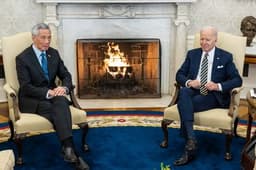
Lee Hsien Loong
Politician · Modern
55.4Total
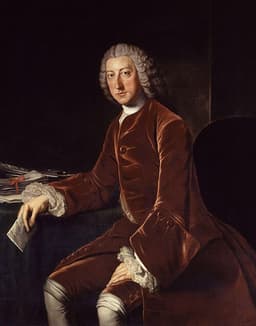
William Pitt the Elder
Politician · Modern
70.2Total
Basic Information
Born
1952
1708
Died
—
1778
Era
Modern
Modern
Nationality
Singapore
United Kingdom
Occupation
Politician
Politician
Civilization
Eastern
Western
Score Comparison
Military (10%)
14.8
67.3
Political (20%)
75.0
72.0
Influence (20%)
55.0
68.0
Legacy (20%)
58.0
68.0
Leadership (15%)
72.0
80.0
Strategy (15%)
36.4
67.2
TOTAL
55.4
70.2
Lee Hsien Loong — Complete Timeline
2004 AD
Became Prime Minister of SingaporePolitical Action◆ Major
Lee Hsien Loong succeeded Goh Chok Tong as Prime Minister of Singapore. As the eldest son of founding leader Lee Kuan Yew, his appointment continued the People's Action Party's dominance and was seen as a continuation of the country's development model.
LeadershipSingaporeTransition
Impact: national
2015 AD
Introduced the 'SG50' CelebrationsCultural
Lee's government organized the SG50 celebrations to mark Singapore's 50th anniversary of independence. The year-long events fostered national pride and unity, highlighting the country's economic success and social harmony.
CelebrationSingaporeNational Identity
Impact: nationalconstructive
2020 AD
Navigated COVID-19 PandemicPolitical Action◆ Major
Lee's government implemented a series of measures to combat the COVID-19 pandemic, including circuit breaker lockdowns, contact tracing, and a massive vaccination drive. Singapore's response was praised for its effectiveness, though migrant worker dormitories saw major outbreaks.
PandemicSingaporePublic Health
Impact: nationalconstructive
2023 AD
Announced Intention to Step DownPolitical Action◆ Major
Lee Hsien Loong announced his intention to step down as Prime Minister by 2024, paving the way for Deputy Prime Minister Lawrence Wong to succeed him. The announcement marked a planned leadership transition in Singapore's long-ruling People's Action Party.
LeadershipSingaporeTransition
Impact: national
William Pitt the Elder — Complete Timeline
1756 AD
Led Britain in Seven Years' WarWar
William Pitt the Elder served as Secretary of State from 1756 to 1761, directing British strategy in the Seven Years' War. His policies focused on naval supremacy and colonial campaigns, leading to victories in Canada, India, and the Caribbean.
Seven Years' WarColonial EmpireMilitary Strategy
Impact: global
1759 AD
Conquest of QuebecWar◆ Major
Under Pitt's direction, British forces under General James Wolfe captured Quebec City on September 13, 1759, after the Battle of the Plains of Abraham. This victory secured British control over Canada and marked a turning point in the Seven Years' War.
Seven Years' WarCanadaMilitary Victory
Impact: global
1766 AD
Became Prime MinisterPolitical Action
Pitt was appointed Prime Minister on July 30, 1766, forming a government. However, his health declined and he was elevated to the House of Lords as Earl of Chatham, which weakened his political base. His second ministry was less effective than his wartime leadership.
Prime MinisterGovernment18th Century
Impact: national
Opposed American TaxationPolitical Action◆ Major
Pitt argued for the repeal of the Stamp Act in 1766, asserting that Parliament had no right to tax the American colonies without representation. His speech in the Commons helped secure repeal, though he maintained Parliament's authority to legislate for the colonies.
American ColoniesTaxationParliamentary Debate
Impact: global
Expert Analysis
Origins
Lee Hsien Loong was born on February 10, 1952, in Singapore, the eldest son of Lee Kuan Yew, the founding Prime Minister of Singapore, and Kwa Geok Choo. He grew up in a politically active household, witnessing Singapore's separation from Malaysia in 1965. He attended the Chinese High School and later the National Junior College before receiving a President's Scholarship to read mathematics at Trinity College, Cambridge, where he graduated with first-class honors. He also earned a Master's degree in Public Administration from Harvard Kennedy School. His early career included a stint in the Singapore Armed Forces, where he rose to Brigadier-General.
William Pitt the Elder was born on November 15, 1708, in Westminster, London, into a political family; his grandfather, Thomas Pitt, was a governor of Madras. He was educated at Eton College and Trinity College, Oxford, though he left without a degree due to poor health. He entered Parliament in 1735 as a member for the pocket borough of Old Sarum. His early political career was marked by opposition to the government of Robert Walpole, earning a reputation as a fiery orator.
Rise to Power
Lee Hsien Loong's rise was shaped by his military career and subsequent political appointment. He joined the Singapore Armed Forces in 1971, rising to Chief of Staff of the General Staff by 1982. He left the military in 1984 to enter politics, winning a seat in Parliament. He quickly ascended under the mentorship of his father and Prime Minister Goh Chok Tong, serving as Minister for Trade and Industry, then Deputy Prime Minister. In 2004, he succeeded Goh as Prime Minister, a transition that ensured continuity in Singapore's ruling People's Action Party.
William Pitt the Elder's rise was meteoric during the Seven Years' War. He became Secretary of State in 1756, effectively leading Britain's war effort despite not being Prime Minister. His leadership focused on naval supremacy and colonial expansion, exemplified by the capture of Quebec in 1759. He was appointed Prime Minister in 1766, but his tenure was short-lived due to illness and political infighting.
Leadership & Governance
Lee Hsien Loong's leadership style is pragmatic and technocratic. He continued Singapore's model of meritocracy, efficient governance, and economic openness. Under his watch, Singapore's GDP per capita grew from $28,000 in 2004 to over $65,000 by 2019. He introduced national initiatives like SG50 in 2015 to foster national identity. His government's response to COVID-19 in 2020 included early border controls and a circuit breaker lockdown, resulting in a relatively low death toll of 35 per million population. However, his tenure also saw a decline in political opposition space and concerns over media freedom.
William Pitt the Elder's leadership was characterized by bold strategic vision. He prioritized the Royal Navy and colonial forces over continental commitments, a strategy that secured British dominance in North America and India. His political score is 72.0, reflecting his ability to galvanize Parliament and the public. However, his governance was less effective domestically; his brief premiership was marred by health issues and inability to manage the American colonies' growing discontent. His opposition to taxing the colonies without representation showed principled stance but came too late to avert revolution.
Triumph & Tragedy
Lee Hsien Loong's greatest triumph is Singapore's continued economic prosperity and stability. He navigated the 2008 global financial crisis with stimulus measures that kept unemployment low. His handling of COVID-19 earned international praise. However, his legacy includes the 2011 general election where the PAP's vote share fell to 60.1%, its lowest since independence, reflecting public discontent over immigration and cost of living. His failure to address wealth inequality and housing affordability remains a criticism.
William Pitt the Elder's triumph was the Seven Years' War victory, which established Britain as the world's dominant colonial power. He is celebrated as the 'Great Commoner' for his popularity. His tragedy was his inability to adapt to peacetime governance; his health declined, and his opposition to American taxation was inconsistent with his earlier imperial policies. He died in 1778 while the American Revolutionary War raged, his earlier victories overshadowed.
Character & Destiny
Lee Hsien Loong is analytical and reserved, reflecting his mathematical background. His decisions are data-driven, but his close association with his father has led to accusations of nepotism. He scored 72.0 in leadership, demonstrating steady management. His destiny was shaped by his birth into Singapore's ruling elite, yet he maintained the system's stability.
William Pitt the Elder was charismatic and impulsive, a brilliant war leader but less adept at peacetime politics. His leadership score of 80.0 reflects his wartime drive. His destiny was tied to the Seven Years' War; without it, he might have remained a backbench MP. His early death prevented him from shaping the post-war empire.
Legacy
Lee Hsien Loong's legacy is Singapore's continued success as a global hub. His score of 58.0 in legacy reflects the ongoing debate about the country's political openness. He will be remembered for maintaining stability in a volatile region, but his impact is overshadowed by his father's founding role.
William Pitt the Elder's legacy is immense: he laid the foundation for the British Empire. His strategic blueprint influenced British foreign policy for decades. He scored 68.0 in legacy, higher than Lee, reflecting his transformative impact on global history. However, his legacy is mixed due to the American Revolution.
Conclusion
William Pitt the Elder had greater impact, scoring 70.2 total vs. Lee's 55.4. While Lee managed a stable, prosperous city-state, Pitt reshaped the global order. Pitt's leadership score of 80.0 and military score of 67.3 dwarf Lee's 72.0 and 14.8. Lee's influence is largely confined to Southeast Asia, whereas Pitt's decisions affected continents. Thus, Pitt the Elder is the more consequential figure.
Rankings
🥇
William Pitt the ElderLeader
Mil: 67.3Pol: 72.0Inf: 68.0
70.2
🥈
Lee Hsien Loong
Mil: 14.8Pol: 75.0Inf: 55.0
55.4
+14.8 behind
How This Comparison Works
Algorithm
Each figure is scored on 6 dimensions (0—100 scale) based on structured historical data: Military (10%), Political (20%), Influence (20%), Legacy (20%), Leadership (15%), Strategy (15%). The weighted total produces the final ranking.
Data Sources
Scores are computed from structured sub-indicators in the database. Scale factors adjust for era (Ancient ×0.85, Modern ×1.0) and civilization size (Eastern ×1.05, Other ×0.80) to account for differences in population and military scale.
Maximum 3 Figures
Comparisons are limited to 2—3 figures to ensure readability and statistical meaningfulness.
Error Margins
±5 points per dimension — Sub-scores are derived from historical records with inherent uncertainty. Two figures within 5 points on a dimension should be considered roughly equivalent in that area.
Total Score Accuracy
±3 points overall — The weighted combination of 6 dimensions produces a total score with approximately ±3 points of uncertainty. Differences of less than 3 points are not statistically significant— the figures are effectively tied.
Known Limitations
- Historical records are incomplete and uneven across civilizations
- Figures from oral-tradition societies may be underrepresented
- Occupation labels can misclassify multi-role figures
- Scores measure capability and impact, not moral character
- Quantitative scoring is a comparison tool, not absolute truth
Capability Radar
Military (10%) — Battles & Warfare
Battles
12
60
Win Rate
17
75
Expansion
21
80
Political (20%) — Governance & Reform
Reform
80
75
Diplomacy
85
80
Economy
90
70
Influence (20%) — Cultural & Global Reach
Cultural
60
60
Global
70
75
Legacy (20%) — Historical Impact
Historical
65
80
Longevity
60
70
Leadership (15%) — Power & Stability
Tenure
85
70
Stability
95
65
Strategy (15%) — Tactics & Innovation
Strategy
25
85
Tactics
24
65
Reform
27
70
Similar Comparisons
Comments & Discussion
No comments yet. Be the first to share your thoughts!