Loading...
Lee Myung-bak vs Malcolm Fraser
Malcolm Fraser leads by 5.9 pts · 2 figures compared
…

Lee Myung-bak
Politician · Modern
51.5Total
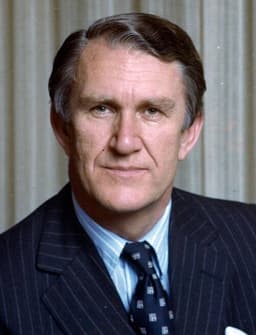
Malcolm Fraser
Politician · Modern
57.4Total
Basic Information
Born
1941
1930
Died
—
—
Era
Modern
Modern
Nationality
Korea
Australia
Occupation
Politician
Politician
Civilization
Eastern
Western
Score Comparison
Military (10%)
18.5
48.2
Political (20%)
72.0
72.0
Influence (20%)
56.4
59.0
Legacy (20%)
45.0
48.3
Leadership (15%)
66.0
72.0
Strategy (15%)
36.1
41.3
TOTAL
51.5
57.4
Lee Myung-bak — Complete Timeline
2008 AD
Elected President of South KoreaPolitical Action◆ Major
Lee Myung-bak won the presidential election as the Grand National Party candidate, ending a decade of progressive rule. His background as a former Hyundai CEO shaped his business-friendly policies.
ElectionConservative Politics
Impact: nationalconstructive
2009 AD
Four Major Rivers ProjectPolitical Action◆ Major
Lee launched a large-scale infrastructure project to dredge and restore South Korea's four major rivers. The project aimed to prevent floods and improve water quality but faced criticism for environmental damage and cost overruns.
InfrastructureEnvironment
Impact: nationalconstructive
2011 AD
Free trade agreement with the USPolitical Action◆ Major
Lee's government signed the Korea-US Free Trade Agreement (KORUS FTA), which was ratified by both countries. The deal aimed to boost trade but was controversial in South Korea due to concerns about domestic industries.
Trade AgreementUS Relations
Impact: regionalconstructive
2018 AD
Conviction for corruptionPolitical Action◆ Major
Lee Myung-bak was convicted of bribery, embezzlement, and abuse of power, receiving a 15-year prison sentence. The case was part of a broader crackdown on corruption among former South Korean presidents.
CorruptionConviction
Impact: nationaltragic
Malcolm Fraser — Complete Timeline
1975 AD
Appointed Prime Minister After DismissalPolitical Action◆ Major
Fraser was appointed caretaker prime minister by Governor-General Sir John Kerr after the dismissal of Gough Whitlam. He led the Liberal-National coalition to a landslide victory in the subsequent election, winning 91 of 127 seats.
Constitutional CrisisElectionLiberal Party
Impact: national
1977 AD
Opposed Apartheid in South AfricaPolitical Action◆ Major
Fraser's government took a strong stance against apartheid, supporting economic sanctions against South Africa and opposing sporting contacts. He played a key role in the Commonwealth's Gleneagles Agreement, which discouraged sporting ties with South Africa.
ApartheidForeign PolicyCommonwealth
Impact: globalprogressive
1978 AD
Introduced Multiculturalism PolicyReform◆ Major
Fraser's government formally adopted a policy of multiculturalism, establishing the Australian Institute of Multicultural Affairs and funding ethnic community organizations. This marked a shift from the previous assimilationist approach to immigration.
MulticulturalismImmigrationSocial Policy
Impact: nationalprogressive
1979 AD
Accepted Vietnamese RefugeesPolitical Action◆ Major
Fraser's government significantly increased the intake of Vietnamese boat people, resettling over 70,000 refugees. This humanitarian response set a precedent for Australia's refugee program and diversified the nation's cultural makeup.
RefugeesHumanitarianVietnam
Impact: nationalprogressive
1983 AD
Defeated in 1983 ElectionPolitical Action◆ Major
Fraser called a snap election in March 1983, but was defeated by Bob Hawke's Labor Party. The election ended Fraser's seven-year tenure as prime minister and marked the beginning of a long period of Labor government.
ElectionDefeatLabor Party
Impact: national
Expert Analysis
Origins
Lee Myung-bak was born on December 19, 1941, in Osaka, Japan, to Korean parents. His family returned to Korea after World War II, settling in Pohang. Lee grew up in poverty, selling goods on the street to support his family. He worked his way through Korea University, graduating with a degree in business administration in 1965. His early career began at Hyundai Engineering and Construction, where he rose rapidly due to his work ethic and managerial skills.
Malcolm Fraser was born on May 21, 1930, in Toorak, Victoria, Australia, into a wealthy pastoralist family. He was educated at Melbourne Grammar and later at Oxford University, where he studied philosophy, politics, and economics. Fraser's background was one of privilege and rural conservatism, shaping his worldview on free enterprise and social order.
Rise to Power
Lee Myung-bak's rise was through the corporate ladder. He joined Hyundai in 1965 and became CEO at age 35, turning the company into a global construction giant. He entered politics in 1992, winning a seat in the National Assembly. He served as mayor of Seoul from 2002 to 2006, where his "Clean Seoul" project improved the city's environment. In 2007, he won the presidential election as the Grand National Party candidate, ending a decade of progressive rule. His business background appealed to voters seeking economic growth.
Malcolm Fraser entered parliament in 1955, representing the Liberal Party. He held various ministerial positions, including Minister for the Army and Minister for Education and Science. His defining moment came in 1975 when, as Opposition Leader, he used his Senate majority to block the Whitlam government's supply bills, triggering a constitutional crisis. Governor-General Sir John Kerr dismissed Whitlam and appointed Fraser as caretaker prime minister. Fraser subsequently won the 1975 election in a landslide, securing his mandate.
Leadership & Governance
Lee Myung-bak governed with a business-oriented approach, emphasizing economic growth and deregulation. He launched the "747 Initiative" targeting 7% annual growth, $40,000 GDP per capita, and making Korea the world's seventh-largest economy. He pursued the Four Major Rivers Project, a $20 billion infrastructure scheme to mitigate flooding and create jobs. However, the project faced criticism for environmental damage and corruption. Lee also signed the Korea-US Free Trade Agreement (KORUS FTA) in 2007, which boosted trade but faced opposition from farmers and labor unions.
Malcolm Fraser led with a pragmatic conservatism, but his government expanded social welfare and multiculturalism. He formally adopted a policy of multiculturalism, establishing the Australian Institute of Multicultural Affairs and funding ethnic schools. His government accepted over 70,000 Vietnamese refugees, a humanitarian response that reshaped Australia's demographics. Fraser also opposed apartheid, imposing sanctions on South Africa and boycotting sporting ties. Economically, his government faced stagflation, and his fiscal policies were less successful, with high unemployment persisting.
Triumph & Tragedy
Lee Myung-bak's greatest triumph was the KORUS FTA, which strengthened the US alliance and boosted trade. His leadership during the 2008 financial crisis saw Korea recover quickly, with GDP growth of 6.3% in 2010. However, his legacy was tarnished by corruption. In 2018, Lee was convicted of bribery and embezzlement, receiving a 15-year prison sentence. The Four Major Rivers Project also became a symbol of environmental degradation and cronyism, with audits revealing cost overruns and poor planning.
Malcolm Fraser's triumph was his principled stance on human rights, particularly against apartheid. His government's refugee policy saved thousands of lives and set a precedent for humanitarian response. He also advanced reconciliation with Indigenous Australians, supporting land rights. However, his political tragedy was his downfall: he called a snap election in 1983, hoping to catch Labor off guard, but lost to Bob Hawke. Fraser retired from politics, and his party later drifted to the right, distancing from his moderate legacy.
Character & Destiny
Lee Myung-bak was known as the "Bulldozer" for his aggressive, results-driven style. His corporate background made him focus on efficiency and growth, but also led to authoritarian tendencies and disregard for due process. His corruption conviction suggests a willingness to bend rules for personal gain. Historically, he is seen as a competent but flawed leader, with his achievements overshadowed by his legal troubles.
Malcolm Fraser was introspective and principled, often described as a "conviction politician." He was willing to take unpopular stands, such as opposing apartheid and welcoming refugees, even within his own party. His character combined aristocratic reserve with a strong moral compass. However, his aloofness and poor political timing led to his electoral defeat. Historians view him as a respected statesman whose legacy grew after his time in office.
Legacy
Lee Myung-bak's legacy is mixed. His economic policies contributed to Korea's growth, but his corruption conviction damaged the presidency's reputation. The Four Major Rivers Project remains controversial. His score of 45.0 in Legacy reflects this divided assessment. In contrast, Malcolm Fraser's legacy has risen posthumously. His multiculturalism and refugee policies are celebrated, and his anti-apartheid stance is remembered. He scored 48.3 in Legacy, slightly higher. However, Lee's political score (72.0) equals Fraser's, but Fraser's leadership score (72.0) surpasses Lee's (66.0).
Conclusion
Malcolm Fraser had greater impact due to his principled stands on human rights and multiculturalism, which shaped modern Australia and received international recognition. Lee Myung-bak's achievements in economic growth and trade were significant but overshadowed by corruption and environmental harm. Fraser's score of 57.4 total versus Lee's 51.5 reflects his stronger overall performance, especially in leadership (72.0 vs 66.0) and influence (59.0 vs 56.4). While Lee's economic reforms had tangible effects, Fraser's moral legacy endures more positively. Thus, Malcolm Fraser emerges as the more impactful leader.
Rankings
🥇
Malcolm FraserLeader
Mil: 48.2Pol: 72.0Inf: 59.0
57.4
🥈
Lee Myung-bak
Mil: 18.5Pol: 72.0Inf: 56.4
51.5
+5.9 behind
How This Comparison Works
Algorithm
Each figure is scored on 6 dimensions (0—100 scale) based on structured historical data: Military (10%), Political (20%), Influence (20%), Legacy (20%), Leadership (15%), Strategy (15%). The weighted total produces the final ranking.
Data Sources
Scores are computed from structured sub-indicators in the database. Scale factors adjust for era (Ancient ×0.85, Modern ×1.0) and civilization size (Eastern ×1.05, Other ×0.80) to account for differences in population and military scale.
Maximum 3 Figures
Comparisons are limited to 2—3 figures to ensure readability and statistical meaningfulness.
Error Margins
±5 points per dimension — Sub-scores are derived from historical records with inherent uncertainty. Two figures within 5 points on a dimension should be considered roughly equivalent in that area.
Total Score Accuracy
±3 points overall — The weighted combination of 6 dimensions produces a total score with approximately ±3 points of uncertainty. Differences of less than 3 points are not statistically significant— the figures are effectively tied.
Known Limitations
- Historical records are incomplete and uneven across civilizations
- Figures from oral-tradition societies may be underrepresented
- Occupation labels can misclassify multi-role figures
- Scores measure capability and impact, not moral character
- Quantitative scoring is a comparison tool, not absolute truth
Capability Radar
Military (10%) — Battles & Warfare
Battles
13
32
Win Rate
15
32
Expansion
19
35
Political (20%) — Governance & Reform
Reform
60
60
Diplomacy
55
70
Economy
70
55
Influence (20%) — Cultural & Global Reach
Cultural
30
40
Global
40
55
Legacy (20%) — Historical Impact
Historical
40
50
Longevity
20
40
Leadership (15%) — Power & Stability
Tenure
65
65
Stability
50
60
Strategy (15%) — Tactics & Innovation
Strategy
22
36
Tactics
23
40
Reform
31
44
Similar Comparisons
Comments & Discussion
No comments yet. Be the first to share your thoughts!