Loading...
Leon Blum vs Norodom Sihanouk
Norodom Sihanouk leads by 5.7 pts · 2 figures compared
…
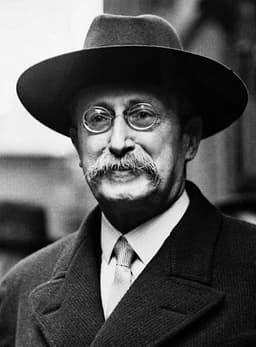
Leon Blum
Politician · Modern
54.4Total

Norodom Sihanouk
Politician · Modern
60.1Total
Basic Information
Born
1872
1922
Died
1950
—
Era
Modern
Modern
Nationality
France
Cambodia
Occupation
Politician
Politician
Civilization
Western
Eastern
Score Comparison
Military (10%)
50.0
39.9
Political (20%)
70.0
72.0
Influence (20%)
55.0
68.0
Legacy (20%)
52.0
52.0
Leadership (15%)
53.2
66.0
Strategy (15%)
41.8
54.1
TOTAL
54.4
60.1
Leon Blum — Complete Timeline
1936 AD
Matignon AgreementsReform◆ Major
Blum's government mediated the Matignon Agreements between employers and unions, ending a wave of strikes. The agreements mandated paid vacations, a 40-hour work week, and wage increases, transforming French labor relations and establishing key welfare state elements.
Labor ReformStrikesSocial Policy
Impact: nationalprogressive
Formation of the Popular Front GovernmentPolitical Action
Blum became Prime Minister of France leading the Popular Front coalition, a left-wing alliance of Socialists, Radicals, and Communists. His government enacted the Matignon Agreements, granting workers paid leave, a 40-hour work week, and collective bargaining rights, significantly advancing labor rights.
Popular FrontLabor RightsSocial Reform
Impact: nationalprogressive
1938 AD
Second Popular Front GovernmentPolitical Action
Blum formed a short-lived second government in March 1938, lasting only one month. He sought to broaden the coalition to address the growing threat of Nazi Germany but failed to secure support for his economic and defense policies, leading to his resignation.
Popular FrontGovernment FormationThird Republic
Impact: national
1942 AD
Arrest and Trial at RiomPolitical Action◆ Major
The Vichy regime arrested Blum and put him on trial at Riom for allegedly causing France's defeat in 1940. Blum used the trial to defend the Third Republic and criticize the Vichy government. The trial was suspended in 1943, and Blum was deported to Buchenwald concentration camp.
Vichy FranceTrialWorld War II
Impact: nationaltragic
1946 AD
Interim Presidency of the Provisional GovernmentPolitical Action
After World War II, Blum served as interim President of the Provisional Government of the French Republic from December 1946 to January 1947. He oversaw the transition to the Fourth Republic and worked to stabilize the post-war economy and political system.
Fourth RepublicPost-WarProvisional Government
Impact: nationalconstructive
Norodom Sihanouk — Complete Timeline
1955 AD
Abdication and return to politicsPolitical Action◆ Major
Sihanouk abdicated the throne in favor of his father to pursue a political career as prime minister. This allowed him to lead Cambodia's independence movement and later become head of state, shaping the country's neutralist foreign policy.
Cambodian independencePolitical transition
Impact: national
1970 AD
Overthrow by Lon NolPolitical Action
While abroad, Sihanouk was deposed by a coup led by General Lon Nol, backed by the United States. This ended his neutralist regime and forced him into exile in China, where he formed a coalition with the Khmer Rouge.
CoupExileCambodian Civil War
Impact: nationaltragic
Alliance with the Khmer RougePolitical Action◆ Major
Sihanouk allied with the communist Khmer Rouge to oppose Lon Nol's government. He served as a figurehead for the insurgency, lending it legitimacy and support from China, which contributed to the Khmer Rouge's eventual victory in 1975.
Khmer RougeCivil WarAlliance
Impact: nationaldestructive
1976 AD
House arrest under the Khmer RougePolitical Action◆ Major
After the Khmer Rouge took power, Sihanouk was placed under house arrest in the Royal Palace. He was held as a symbolic figure but had no real power, witnessing the regime's atrocities until his release in 1979.
Khmer RougeHouse arrestAtrocities
Impact: nationaltragic
1993 AD
Return as King and abdicationPolitical Action◆ Major
Sihanouk returned from exile to become King of Cambodia under the UN-sponsored peace settlement. He reigned as a constitutional monarch until his abdication in 2004, overseeing the country's transition to peace after decades of war.
Peace processMonarchyUN
Impact: nationalconstructive
Expert Analysis
Origins
**Leon Blum** (1872-1950) was born into an Alsatian Jewish family in Paris. His father, Abraham Blum, was a successful ribbon manufacturer. Blum studied law at the Lycée Henri-IV and the École Normale Supérieure, earning a degree in literature before turning to law. He began his career as a literary critic and lawyer, but his involvement in the Dreyfus Affair drew him into politics, where he became a protégé of socialist leader Jean Jaurès.
**Norodom Sihanouk** (1922-2012) was born in Phnom Penh, Cambodia, to King Norodom Suramarit and Queen Kossamak. He was educated at the Lycée Chasseloup-Laubat in Saigon and later at a military school in France. Sihanouk was chosen by the French colonial administration to become king in 1941, at age 18, due to his perceived pliability. However, he quickly asserted his independence and became a central figure in Cambodia's independence movement.
Rise to Power
Blum entered politics as a socialist, serving as a deputy in the French Chamber of Deputies from 1919. He became the leader of the French Section of the Workers' International (SFIO) after Jaurès' assassination in 1914. His rise culminated in 1936 when the Popular Front, a coalition of left-wing parties, won the legislative elections. Blum became Prime Minister of France on June 4, 1936, at the age of 64.
Sihanouk ascended the throne in 1941, but his real power began after World War II. He campaigned for independence from France, using diplomacy and nationalist pressure. In 1955, he abdicated in favor of his father to become prime minister, winning a landslide victory in a referendum. He then ruled as head of government until 1960, when his father died, and Sihanouk became head of state without reclaiming the throne.
Leadership & Governance
Blum's leadership was defined by the Popular Front's social reforms. His government mediated the Matignon Agreements in June 1936, which ended a wave of strikes and introduced the 40-hour workweek, paid vacations, and collective bargaining. However, his economic policies, including the devaluation of the franc and price controls, faced criticism for worsening inflation. In foreign policy, Blum pursued a policy of non-intervention in the Spanish Civil War, which alienated many leftists and weakened his coalition.
Sihanouk adopted a policy of neutrality during the Cold War, balancing relations with the United States, China, and the Soviet Union. He pursued a form of 'Buddhist socialism' that combined state control of key industries with traditional monarchy. His domestic policies included the nationalization of banks and foreign trade, but his authoritarian tendencies suppressed political dissent. He also used his position to promote Cambodian culture and nationalism, though his rule was marked by corruption and inefficiency.
Triumph & Tragedy
Blum's greatest success was the Matignon Agreements, which established fundamental labor rights in France. He also successfully defended the Third Republic during his trial at Riom in 1942, where he turned the tables on the Vichy regime by arguing that the defeat was due to the incompetence of the military establishment. However, his failure to address the economic crisis and his non-intervention in Spain led to the collapse of the Popular Front in 1937. His second government in 1938 lasted only a month.
Sihanouk's triumph was steering Cambodia to independence in 1953 and maintaining its sovereignty through the early Cold War. His greatest tragedy was his alliance with the Khmer Rouge after his overthrow in 1970. This gave legitimacy to a regime that would later commit the Cambodian genocide. He spent years under house arrest, unable to prevent the atrocities. His later return as king in 1993 was a brief moment of restoration, but his power was largely ceremonial.
Character & Destiny
Blum was an intellectual and a principled socialist, known for his eloquence and moral clarity. His commitment to democracy and social justice shaped his decisions, but his cautious nature and legalism sometimes hindered decisive action. At Riom, his courage turned a show trial into a defense of republican values. His scores reflect this: Political 70.0, Leadership 53.2, Strategy 41.8.
Sihanouk was a shrewd and charismatic leader, adept at playing superpowers against each other. His mercurial personality and authoritarian streak led him to suppress internal opposition, which ultimately weakened his regime. His decision to ally with the Khmer Rouge was a desperate gamble that backfired catastrophically. His scores: Political 72.0, Leadership 66.0, Strategy 54.1.
Legacy
Blum's legacy is the establishment of the French welfare state and labor rights. His Popular Front reforms set a precedent for social democracy in France. However, his failure to consolidate power and the short-lived nature of his governments limit his impact. He scored 52.0 in Legacy.
Sihanouk's legacy is more complex. He is remembered as the 'father of Cambodian independence' and a symbol of national unity, but also as a leader whose policies contributed to the disaster of the Khmer Rouge era. His score in Legacy is 52.0, tied with Blum.
Conclusion
Despite Sihanouk's higher total score (60.1 vs. 54.4), Blum's impact on French society was more concrete and lasting. The Matignon Agreements transformed labor relations in France and inspired similar reforms across Europe. Sihanouk's influence was more personal and fragile, ultimately overshadowed by the tragedy that befell Cambodia. Blum's principled stand at Riom also demonstrates a moral courage that Sihanouk's pragmatic alliances lacked. Therefore, Blum had a greater positive impact on history, even if his numerical score is lower.
Rankings
🥇
Norodom SihanoukLeader
Mil: 39.9Pol: 72.0Inf: 68.0
60.1
🥈
Leon Blum
Mil: 50.0Pol: 70.0Inf: 55.0
54.4
+5.7 behind
How This Comparison Works
Algorithm
Each figure is scored on 6 dimensions (0—100 scale) based on structured historical data: Military (10%), Political (20%), Influence (20%), Legacy (20%), Leadership (15%), Strategy (15%). The weighted total produces the final ranking.
Data Sources
Scores are computed from structured sub-indicators in the database. Scale factors adjust for era (Ancient ×0.85, Modern ×1.0) and civilization size (Eastern ×1.05, Other ×0.80) to account for differences in population and military scale.
Maximum 3 Figures
Comparisons are limited to 2—3 figures to ensure readability and statistical meaningfulness.
Error Margins
±5 points per dimension — Sub-scores are derived from historical records with inherent uncertainty. Two figures within 5 points on a dimension should be considered roughly equivalent in that area.
Total Score Accuracy
±3 points overall — The weighted combination of 6 dimensions produces a total score with approximately ±3 points of uncertainty. Differences of less than 3 points are not statistically significant— the figures are effectively tied.
Known Limitations
- Historical records are incomplete and uneven across civilizations
- Figures from oral-tradition societies may be underrepresented
- Occupation labels can misclassify multi-role figures
- Scores measure capability and impact, not moral character
- Quantitative scoring is a comparison tool, not absolute truth
Capability Radar
Military (10%) — Battles & Warfare
Battles
28
5
Win Rate
29
5
Expansion
37
5
Political (20%) — Governance & Reform
Reform
75
60
Diplomacy
65
85
Economy
60
40
Influence (20%) — Cultural & Global Reach
Cultural
50
70
Global
50
65
Legacy (20%) — Historical Impact
Historical
55
65
Longevity
45
60
Leadership (15%) — Power & Stability
Tenure
60
85
Stability
40
30
Strategy (15%) — Tactics & Innovation
Strategy
37
10
Tactics
39
5
Reform
44
10
Similar Comparisons
Comments & Discussion
No comments yet. Be the first to share your thoughts!