Loading...
Leon Trotsky vs Miguel Hidalgo
Leon Trotsky leads by 16.3 pts · 2 figures compared
…

Leon Trotsky
Revolutionary · Modern
63.3Total
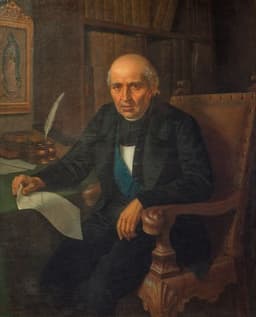
Miguel Hidalgo
Revolutionary · Modern
47.0Total
Basic Information
Born
1879
1753
Died
1940
1811
Era
Modern
Modern
Nationality
Russia
Mexico
Occupation
Revolutionary
Revolutionary
Civilization
Western
Western
Score Comparison
Military (10%)
75.0
50.0
Political (20%)
68.0
36.5
Influence (20%)
62.0
55.0
Legacy (20%)
56.0
52.0
Leadership (15%)
61.1
39.0
Strategy (15%)
69.1
39.6
TOTAL
63.3
47.0
Leon Trotsky — Complete Timeline
1917 AD
Organized the October RevolutionPolitical Action◆ Major
Trotsky, as chairman of the Petrograd Soviet's Military Revolutionary Committee, planned and executed the Bolshevik seizure of power on November 7, 1917. He coordinated the occupation of key government buildings, the Winter Palace, and the arrest of the Provisional Government, establishing Soviet rule.
Russian RevolutionBolsheviks
Impact: global
1918 AD
Created and Led the Red ArmyOther◆ Major
As People's Commissar for Military and Naval Affairs from March 1918, Trotsky built the Red Army from scratch. He recruited former Tsarist officers, instituted conscription, and imposed strict discipline, including the use of political commissars and execution of deserters, creating a force of 5 million by 1920.
Russian Civil WarMilitary Organization
Impact: national
1920 AD
Defeated the White Armies in the Russian Civil WarOther◆ Major
Trotsky personally directed Red Army campaigns against White forces across multiple fronts from 1918 to 1920. He organized the defense of Petrograd against General Yudenich, defeated Admiral Kolchak in Siberia, and crushed General Denikin's advance on Moscow, securing Bolshevik victory in the civil war.
Russian Civil WarVictory
Impact: nationalconstructive
1924 AD
Lost the Power Struggle to StalinOther◆ Major
Following Lenin's death in 1924, Trotsky lost the struggle for succession to Joseph Stalin. Stalin used his position as General Secretary to build a coalition against Trotsky, who was outmaneuvered in the Politburo, expelled from the Communist Party in 1927, and exiled to Central Asia in 1928.
Soviet PoliticsPower Struggle
Impact: nationaldestructive
1929 AD
Exiled from the Soviet UnionOther◆ Major
Trotsky was expelled from the Soviet Union in February 1929, first to Turkey, then France, Norway, and finally Mexico. From exile, he continued to write critiques of Stalin's regime, developing the theory of 'degenerated workers' state' and calling for a Fourth International to revive world revolution.
ExileOpposition
Impact: globaldestructive
1940 AD
Assassinated by Stalin's AgentPolitical Action◆ Major
Trotsky was assassinated at his home in Coyoac
AssassinationStalinism
Impact: globaldestructive
Miguel Hidalgo — Complete Timeline
1810 AD
Captured Guanajuato and massacred SpaniardsWar◆ Major
Hidalgo's army of 80,000 captured the city of Guanajuato on September 28, 1810. After taking the Alh
BattleMassacreViolence
Impact: regionaldestructive
Issued the Grito de DoloresPolitical Action
On September 16, 1810, Father Miguel Hidalgo rang the church bell in Dolores and called for rebellion against Spanish colonial rule. His speech, known as the Grito de Dolores, urged Mexicans to rise up against the Spanish and marked the beginning of the Mexican War of Independence.
IndependenceRebellionGrito de Dolores
Impact: nationalconstructive
1811 AD
Defeated at the Battle of Calderón BridgeWar◆ Major
Hidalgo's poorly trained army was decisively defeated by a smaller Spanish royalist force at the Battle of Calder
DefeatSpanish RoyalistsTurning Point
Impact: regionaltragic
Executed by Spanish authoritiesPolitical Action◆ Major
Hidalgo was captured in Acatita de Baj
ExecutionMartyrdomIndependence Movement
Impact: nationaltragic
Expert Analysis
Origins
Leon Trotsky (born Lev Davidovich Bronshtein, 1879) grew up in a Jewish farming family in Yanovka, Ukraine. His father was a prosperous farmer, and Trotsky received a secular education in Odessa, where he was exposed to revolutionary ideas. He became a Marxist in his teens and was arrested for revolutionary activities in 1898, spending years in prison and Siberian exile. Miguel Hidalgo y Costilla (born 1753) was a Creole priest in New Spain (Mexico). Educated at the Colegio de San Nicolás in Valladolid (now Morelia), he became a professor and later rector there. His reading of Enlightenment texts led him to question Spanish colonial rule. Despite his religious vocation, Hidalgo fathered children and engaged in controversial activities, which brought him to the attention of the Inquisition.
Rise to Power
Trotsky rose to prominence as a leading figure in the Russian Social Democratic Labour Party. He broke with Lenin's Bolsheviks in 1903 but returned in 1917. During the 1905 Revolution, Trotsky emerged as a key organizer of the St. Petersburg Soviet, gaining fame for his oratory and strategic thinking. In 1917, he joined the Bolsheviks and became chairman of the Petrograd Soviet's Military Revolutionary Committee, orchestrating the Bolshevik seizure of power on November 7, 1917 (October Revolution). Hidalgo's rise was more sudden. On September 16, 1810, he issued the Grito de Dolores, calling for rebellion against Spanish rule. His initial army swelled to 80,000 followers, mostly indigenous and mestizo peasants, capturing the city of Guanajuato on September 28, 1810. Hidalgo's lack of military experience was evident; his forces massacred Spanish civilians at Guanajuato, turning many Creoles against him.
Leadership & Governance
Trotsky's leadership was systematic and organizational. As People's Commissar for Military and Naval Affairs from March 1918, he built the Red Army from scratch, using former Tsarist officers under political commissars. He introduced conscription, centralized command, and used trains as mobile headquarters to direct campaigns. His political score of 68.0 reflects his role in the early Soviet state, but he failed to build a lasting power base. Hidalgo's leadership was charismatic but chaotic. He issued decrees abolishing slavery and tribute, but his governance was limited to a few months. He failed to discipline his army, leading to massacres that alienated potential allies. His military score of 50.0 and leadership of 39.0 reflect his inability to command effectively or maintain strategic focus.
Triumph & Tragedy
Trotsky's greatest triumph was creating the Red Army and leading it to victory in the Russian Civil War (1918–1920), defeating White forces across multiple fronts. He also co-founded the Comintern in 1919. His tragedy was losing the power struggle to Joseph Stalin after Lenin's death in 1924. Stalin outmaneuvered him politically, and Trotsky was expelled from the Soviet Union in 1929. He was assassinated in Mexico in 1940 by a Stalinist agent. Hidalgo's triumph was igniting the Mexican War of Independence; his Grito de Dolores is celebrated annually. His tragedy was military defeat: his army was crushed at the Battle of Calderón Bridge on January 17, 1811, by a smaller Spanish force. He was captured, defrocked, and executed on July 30, 1811. His rebellion collapsed, but it inspired subsequent leaders like José María Morelos.
Character & Destiny
Trotsky was intellectually brilliant, arrogant, and uncompromising. He believed in permanent revolution and internationalism, which made him a threat to Stalin's nationalistic approach. His character—principled but inflexible—contributed to his political downfall. He scored 61.1 in leadership, but his inability to form alliances and his abrasive style limited his influence. Hidalgo was a man of ideas rather than action. He was a scholar-priest who underestimated the military and political challenges of rebellion. His decision to attack Guanajuato and his failure to march on Mexico City early on cost him the initiative. His character was that of a catalyst, not a sustainer.
Legacy
Trotsky's legacy is complex. His ideas influenced Trotskyist movements worldwide, but his reputation was suppressed in the Soviet Union. His historical score of 56.0 reflects his diminished status in Russia. However, his military innovations and theory of permanent revolution remain studied. Hidalgo is revered as the Father of Mexican Independence. The date of his Grito is Mexico's Independence Day. His legacy score of 52.0 reflects his symbolic importance. He is remembered as a martyr, though his military and political shortcomings are acknowledged.
Conclusion
While Hidalgo sparked a movement that eventually freed Mexico, Trotsky's impact was more substantial. Trotsky scored 63.3 overall to Hidalgo's 47.0, a gap of 16.3 points. Trotsky built a functional army from nothing, won a civil war, and shaped early Soviet policy. Hidalgo's rebellion failed militarily and was only one of many factors leading to Mexican independence. Trotsky's ideas have had a global influence, while Hidalgo's legacy is largely national. Therefore, Trotsky had greater impact on history.
Rankings
🥇
Leon TrotskyLeader
Mil: 75.0Pol: 68.0Inf: 62.0
63.3
🥈
Miguel Hidalgo
Mil: 50.0Pol: 36.5Inf: 55.0
47.0
+16.3 behind
How This Comparison Works
Algorithm
Each figure is scored on 6 dimensions (0—100 scale) based on structured historical data: Military (10%), Political (20%), Influence (20%), Legacy (20%), Leadership (15%), Strategy (15%). The weighted total produces the final ranking.
Data Sources
Scores are computed from structured sub-indicators in the database. Scale factors adjust for era (Ancient ×0.85, Modern ×1.0) and civilization size (Eastern ×1.05, Other ×0.80) to account for differences in population and military scale.
Maximum 3 Figures
Comparisons are limited to 2—3 figures to ensure readability and statistical meaningfulness.
Error Margins
±5 points per dimension — Sub-scores are derived from historical records with inherent uncertainty. Two figures within 5 points on a dimension should be considered roughly equivalent in that area.
Total Score Accuracy
±3 points overall — The weighted combination of 6 dimensions produces a total score with approximately ±3 points of uncertainty. Differences of less than 3 points are not statistically significant— the figures are effectively tied.
Known Limitations
- Historical records are incomplete and uneven across civilizations
- Figures from oral-tradition societies may be underrepresented
- Occupation labels can misclassify multi-role figures
- Scores measure capability and impact, not moral character
- Quantitative scoring is a comparison tool, not absolute truth
Capability Radar
Military (10%) — Battles & Warfare
Battles
75
30
Win Rate
70
25
Expansion
60
20
Political (20%) — Governance & Reform
Reform
80
60
Diplomacy
50
30
Economy
40
20
Influence (20%) — Cultural & Global Reach
Cultural
65
70
Global
75
60
Legacy (20%) — Historical Impact
Historical
80
75
Longevity
70
70
Leadership (15%) — Power & Stability
Tenure
55
15
Stability
30
10
Strategy (15%) — Tactics & Innovation
Strategy
85
25
Tactics
80
20
Reform
95
10
Similar Comparisons
Comments & Discussion
No comments yet. Be the first to share your thoughts!