Loading...
Leonidas I vs Scipio Aemilianus
Scipio Aemilianus leads by 16.6 pts · 2 figures compared
…

Leonidas I
General · Ancient
48.1Total
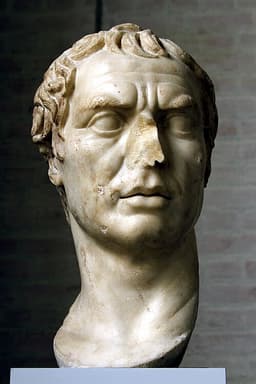
Scipio Aemilianus
General · Ancient
64.7Total
Basic Information
Born
-540
-185
Died
-480
-129
Era
Ancient
Ancient
Nationality
Greece
Roman Republic
Occupation
General
General
Civilization
Western
Western
Score Comparison
Military (10%)
40.0
90.0
Political (20%)
33.6
68.0
Influence (20%)
72.0
55.0
Legacy (20%)
40.0
55.0
Leadership (15%)
40.4
72.0
Strategy (15%)
50.0
72.0
TOTAL
48.1
64.7
Leonidas I — Complete Timeline
490 BC
Accession as King of SpartaPolitical Action◆ Major
Leonidas became one of the two kings of Sparta, likely succeeding his half-brother Cleomenes I. As a member of the Agiad dynasty, he assumed command of the Spartan army and played a key role in Spartan foreign policy during the Persian invasion.
SpartaKingshipSuccession
Impact: national
480 BC
Battle of ThermopylaeWar
Leonidas led a small Greek force, including 300 Spartans, against the invading Persian army under Xerxes I at the pass of Thermopylae. The Greeks held for three days before being outflanked. Leonidas and his contingent were killed, but the stand became a symbol of Greek resistance.
Greco-Persian WarsBattleSparta
Impact: regionaltragic
Command at the Battle of ThermopylaeWar◆ Major
Leonidas commanded the allied Greek forces at Thermopylae. He chose to remain with the rearguard after learning of the Persian flanking maneuver, leading to his death along with his 300 Spartans and other Greek volunteers. The sacrifice delayed the Persian advance.
Greco-Persian WarsBattleSparta
Impact: regionaltragic
Scipio Aemilianus — Complete Timeline
146 BC
Destroyed Carthage in the Third Punic WarWar
Scipio Aemilianus, as Roman consul, led the final assault on Carthage. After a three-year siege, his forces breached the walls, captured the city, and systematically destroyed it. The surviving population was enslaved, and the territory became the Roman province of Africa.
Third Punic WarCarthageDestruction
Impact: globaldestructive
134 BC
Elected Consul for the Second TimePolitical Action
Scipio Aemilianus was elected consul for a second time, despite legal restrictions, to command the war in Spain. His election reflected his popularity and the Senate's trust in his military abilities to end the Numantine War.
ConsulshipRoman PoliticsMilitary Command
Impact: nationalconstructive
133 BC
Captured Numantia, Ending the Numantine WarWar◆ Major
Scipio Aemilianus besieged the Celtiberian city of Numantia in Spain. After a prolonged blockade, the starving city surrendered. Scipio razed Numantia, ending the Numantine War and consolidating Roman control over Hispania.
Numantine WarSpainSiege
Impact: regionaldestructive
129 BC
Died Under Suspicious CircumstancesOther◆ Major
Scipio Aemilianus was found dead in his bed, possibly murdered by political opponents. His death occurred amid political turmoil over land reforms proposed by Tiberius Gracchus, whom Scipio had opposed. The cause of death remains disputed.
DeathRoman PoliticsGracchi
Impact: nationaltragic
Expert Analysis
Origins
Leonidas I was born around 540 BC into the Agiad dynasty, one of Sparta's two royal houses. He was the son of King Anaxandridas II and likely received the rigorous agoge training, though as a younger son he was not initially expected to rule. He became king after his half-brother Cleomenes I died without a male heir. Scipio Aemilianus, born in 185 BC, was the son of Lucius Aemilius Paullus Macedonicus, the consul who defeated Perseus of Macedon. He was adopted by the son of Scipio Africanus, thus entering the powerful Cornelii Scipiones family. His education included Greek culture and military training, preparing him for a career in Roman politics and warfare.
Rise to Power
Leonidas ascended to the Spartan throne around 490 BC, serving as one of the two kings alongside Leonidas from the Eurypontid dynasty. His early reign involved maintaining Spartan hegemony in the Peloponnese. In 480 BC, when Xerxes I invaded Greece, Leonidas was chosen to lead the allied Greek forces to Thermopylae, a narrow pass that controlled access to central Greece. Scipio Aemilianus rose to prominence through military service. He served under his natural father at the Battle of Pydna (168 BC) and later in Spain. In 149 BC, he volunteered as a military tribune in the Third Punic War, distinguishing himself. His reputation led to his election as consul in 147 BC, despite being underage, to take command in Africa.
Leadership & Governance
Leonidas's leadership was defined by Spartan discipline and the concept of 'return with your shield or on it'. At Thermopylae, he commanded a small force of 7,000 Greeks, including 300 Spartans, against a Persian army of perhaps 200,000. He chose a defensive strategy, using the narrow pass to neutralize Persian numbers. His decision to stay with the rearguard after being betrayed ensured his death but cemented his legacy. Scipio Aemilianus led with meticulous planning and discipline. At Carthage, he enforced strict siege tactics, building a mole to block the harbor and starving the city. He was known for his humane treatment of surrendered enemies, contrasting with his destruction of cities. Politically, he opposed the reforms of the Gracchi, favoring the optimates.
Triumph & Tragedy
Leonidas's greatest triumph was holding the pass at Thermopylae for three days, inflicting heavy casualties on the Persians and delaying their advance. His sacrifice allowed the Greek fleet to regroup and ultimately win at Salamis. His tragedy was the defeat and death of his entire force, as he failed to prevent the Persian invasion of Greece. Scipio Aemilianus's triumph was the complete destruction of Carthage in 146 BC, ending the Punic Wars and securing Roman dominance in the Mediterranean. He also captured Numantia in 133 BC, ending the Numantine War. His tragedy was his mysterious death in 129 BC, possibly murdered by political rivals, and his legacy tarnished by his opposition to land reforms that could have helped the poor.
Character & Destiny
Leonidas embodied Spartan ideals: courage, discipline, and loyalty to the state. His decision to remain at Thermopylae was driven by the Spartan law that forbade retreat. His character ensured his death but made him a symbol of resistance. Scipio Aemilianus was cultured, strategic, and ruthless when necessary. He admired Greek culture and was friends with the historian Polybius. His political inflexibility and alignment with the conservative faction led to his isolation and possible murder. His destiny was to be Rome's greatest general of his era, but also a controversial figure in domestic politics.
Legacy
Leonidas's legacy is immortalized in the story of the 300 Spartans, a symbol of courage against overwhelming odds. He scored 72.0 in influence, reflecting his cultural impact. His sacrifice inspired later generations and is commemorated in literature and film. Scipio Aemilianus's legacy is more concrete: he destroyed Carthage, ending a major rival of Rome. He scored 90.0 in military and 72.0 in strategy, demonstrating his tactical skill. His actions led to the Roman province of Africa. However, his legacy is also tied to the destruction of two cities, Carthage and Numantia, which was criticized by some contemporaries.
Conclusion
While Leonidas I is a cultural icon, Scipio Aemilianus had a greater tangible impact on history. His military score of 90.0 and total score of 64.7 surpass Leonidas's 48.1. Leonidas's stand at Thermopylae was a tactical defeat that bought time, but Scipio's destruction of Carthage permanently altered the balance of power in the Mediterranean. Scipio's leadership and strategy led to the end of a centuries-old conflict and expanded Roman hegemony. Therefore, Scipio Aemilianus had a greater impact on the course of history.
Rankings
🥇
Scipio AemilianusLeader
Mil: 90.0Pol: 68.0Inf: 55.0
64.7
🥈
Leonidas I
Mil: 40.0Pol: 33.6Inf: 72.0
48.1
+16.6 behind
How This Comparison Works
Algorithm
Each figure is scored on 6 dimensions (0—100 scale) based on structured historical data: Military (10%), Political (20%), Influence (20%), Legacy (20%), Leadership (15%), Strategy (15%). The weighted total produces the final ranking.
Data Sources
Scores are computed from structured sub-indicators in the database. Scale factors adjust for era (Ancient ×0.85, Modern ×1.0) and civilization size (Eastern ×1.05, Other ×0.80) to account for differences in population and military scale.
Maximum 3 Figures
Comparisons are limited to 2—3 figures to ensure readability and statistical meaningfulness.
Error Margins
±5 points per dimension — Sub-scores are derived from historical records with inherent uncertainty. Two figures within 5 points on a dimension should be considered roughly equivalent in that area.
Total Score Accuracy
±3 points overall — The weighted combination of 6 dimensions produces a total score with approximately ±3 points of uncertainty. Differences of less than 3 points are not statistically significant— the figures are effectively tied.
Known Limitations
- Historical records are incomplete and uneven across civilizations
- Figures from oral-tradition societies may be underrepresented
- Occupation labels can misclassify multi-role figures
- Scores measure capability and impact, not moral character
- Quantitative scoring is a comparison tool, not absolute truth
Capability Radar
Military (10%) — Battles & Warfare
Battles
30
85
Win Rate
20
90
Expansion
10
75
Political (20%) — Governance & Reform
Reform
20
65
Diplomacy
30
75
Economy
20
60
Influence (20%) — Cultural & Global Reach
Cultural
75
65
Global
70
75
Legacy (20%) — Historical Impact
Historical
80
80
Longevity
85
70
Leadership (15%) — Power & Stability
Tenure
40
70
Stability
35
70
Strategy (15%) — Tactics & Innovation
Strategy
55
85
Tactics
65
80
Reform
10
60
Similar Comparisons
Comments & Discussion
No comments yet. Be the first to share your thoughts!