Loading...
This comparison has not been analyzed yet.
One-time AI generation (~1 minute). Scores and timeline are already available below.
Li Baochen vs Yuchi Gong
Yuchi Gong leads by 7.1 pts · 2 figures compared
…

Li Baochen
General · Medieval
44.0Total
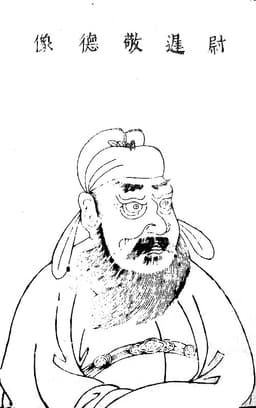
Yuchi Gong
General · Medieval
51.1Total
Basic Information
Born
718
585
Died
781
658
Era
Medieval
Medieval
Nationality
China
China
Occupation
General
General
Civilization
Eastern
Eastern
Score Comparison
Military (10%)
45.0
67.3
Political (20%)
32.2
33.6
Influence (20%)
42.4
62.0
Legacy (20%)
35.8
52.0
Leadership (15%)
61.1
36.9
Strategy (15%)
60.0
52.5
TOTAL
44.0
51.1
Li Baochen — Complete Timeline
756 AD
Participated in Suppression of An Lushan RebellionWar◆ Major
Li Baochen fought against the rebel forces of An Lushan during the An Lushan Rebellion. His military actions contributed to the eventual suppression of the rebellion, though he later became a semi-independent governor.
An Lushan RebellionTang DynastyMilitary Campaign
Impact: national
762 AD
Appointed Military Governor of ChengdePolitical Action◆ Major
Li Baochen was appointed as the military governor (jiedushi) of Chengde Circuit by the Tang court. This position gave him control over a strategically important region in northern China, establishing his power base during the post-An Lushan Rebellion period.
Tang DynastyMilitary GovernorshipChengde
Impact: regional
775 AD
Established Hereditary Governorship in ChengdePolitical Action◆ Major
Li Baochen successfully passed his governorship to his son, establishing a pattern of hereditary succession in Chengde Circuit. This act weakened central Tang authority and contributed to the fragmentation of the empire into semi-autonomous provinces.
Hereditary RuleTang DeclineProvincial Autonomy
Impact: nationaldestructive
Yuchi Gong — Complete Timeline
626 AD
Participated in the Xuanwu Gate IncidentPolitical Action
Yuchi Gong was a key supporter of Li Shimin (later Emperor Taizong) during the Xuanwu Gate Incident. He helped Li Shimin kill his brothers and seize the throne, becoming a trusted general.
CoupTang dynastyPower struggle
Impact: national
630 AD
Defeated the Eastern Turks at the Battle of YinshanWar◆ Major
Yuchi Gong commanded a Tang army that defeated the Eastern Turkic Khaganate at the Battle of Yinshan. This victory contributed to the collapse of the Eastern Turkic state and Tang dominance.
Tang-Turkic warsBattleSteppe
Impact: regional
This comparison has not been analyzed yet.
One-time AI generation (~1 minute). Scores and timeline are already available below.
Rankings
🥇
Yuchi GongLeader
Mil: 67.3Pol: 33.6Inf: 62.0
51.1
🥈
Li Baochen
Mil: 45.0Pol: 32.2Inf: 42.4
44.0
+7.1 behind
How This Comparison Works
Algorithm
Each figure is scored on 6 dimensions (0—100 scale) based on structured historical data: Military (10%), Political (20%), Influence (20%), Legacy (20%), Leadership (15%), Strategy (15%). The weighted total produces the final ranking.
Data Sources
Scores are computed from structured sub-indicators in the database. Scale factors adjust for era (Ancient ×0.85, Modern ×1.0) and civilization size (Eastern ×1.05, Other ×0.80) to account for differences in population and military scale.
Maximum 3 Figures
Comparisons are limited to 2—3 figures to ensure readability and statistical meaningfulness.
Error Margins
±5 points per dimension — Sub-scores are derived from historical records with inherent uncertainty. Two figures within 5 points on a dimension should be considered roughly equivalent in that area.
Total Score Accuracy
±3 points overall — The weighted combination of 6 dimensions produces a total score with approximately ±3 points of uncertainty. Differences of less than 3 points are not statistically significant— the figures are effectively tied.
Known Limitations
- Historical records are incomplete and uneven across civilizations
- Figures from oral-tradition societies may be underrepresented
- Occupation labels can misclassify multi-role figures
- Scores measure capability and impact, not moral character
- Quantitative scoring is a comparison tool, not absolute truth
Capability Radar
Military (10%) — Battles & Warfare
Battles
45
65
Win Rate
40
70
Expansion
35
50
Political (20%) — Governance & Reform
Reform
20
10
Diplomacy
45
20
Economy
30
10
Influence (20%) — Cultural & Global Reach
Cultural
20
80
Global
10
60
Legacy (20%) — Historical Impact
Historical
25
75
Longevity
20
85
Leadership (15%) — Power & Stability
Tenure
50
30
Stability
35
20
Strategy (15%) — Tactics & Innovation
Strategy
45
55
Tactics
40
60
Reform
20
10
Similar Comparisons
Comments & Discussion
No comments yet. Be the first to share your thoughts!