Loading...
This comparison has not been analyzed yet.
One-time AI generation (~1 minute). Scores and timeline are already available below.
Li Dingguo vs Sarath Fonseka
Li Dingguo leads by 7.1 pts · 2 figures compared
…

Li Dingguo
General · Modern
61.8Total
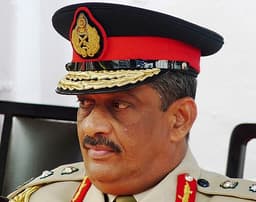
Sarath Fonseka
General · Modern
54.7Total
Basic Information
Born
1621
1950
Died
1662
—
Era
Modern
Modern
Nationality
China
Sri Lanka
Occupation
General
General
Civilization
Eastern
Indian
Score Comparison
Military (10%)
80.0
85.0
Political (20%)
68.0
33.6
Influence (20%)
58.0
59.0
Legacy (20%)
50.0
50.0
Leadership (15%)
64.5
47.3
Strategy (15%)
69.1
68.0
TOTAL
61.8
54.7
Li Dingguo — Complete Timeline
1630 AD
Joined the Xiying rebel armyPolitical Action◆ Major
Li Dingguo joined the peasant rebellion led by Zhang Xianzhong in Shaanxi. He became one of Zhang's adopted sons and a key general in the Xiying army that fought against the Ming dynasty.
RebellionXiying
Impact: regionaldestructive
1647 AD
Defected to the Southern MingPolitical Action◆ Major
After Zhang Xianzhong's death, Li Dingguo allied with the Yongli Emperor. He switched allegiance from rebel to Ming loyalist, fighting the Qing in the name of the Southern Ming.
DefectionMing Loyalist
Impact: nationalconstructive
1652 AD
Battle of GuilinWar◆ Major
Li Dingguo led a Southern Ming army that captured Guilin from the Qing. The victory temporarily revived the Southern Ming cause and forced Qing forces to retreat in Guangxi.
BattleSouthern Ming
Impact: regionalconstructive
Battle of HengzhouWar◆ Major
Li Dingguo defeated a Qing army at Hengzhou, killing Qing Prince Kong Youde. This victory was one of the greatest Southern Ming successes, but it failed to reverse the overall Qing advance.
BattleSouthern Ming
Impact: regionalconstructive
1658 AD
Defeated at the Battle of SuningWar◆ Major
Li Dingguo's army was decisively defeated by Qing forces at Suning in Yunnan. The loss shattered Southern Ming military power and forced the Yongli Emperor to flee to Burma.
BattleDefeat
Impact: regionaltragic
1662 AD
Died of illness in the wildernessOther◆ Major
After the Yongli Emperor's execution, Li Dingguo continued guerrilla resistance in the borderlands. He died of illness in the wilderness of Laos, his forces scattered and his cause lost.
DeathResistance
Impact: regionaltragic
Sarath Fonseka — Complete Timeline
2009 AD
Led the Sri Lankan Army to Defeat the LTTEWar
As Commander of the Sri Lanka Army, Fonseka led the military campaign that defeated the LTTE in May 2009, ending the 26-year civil war. He oversaw the final offensive in the Vanni region, which resulted in the death of LTTE leader Velupillai Prabhakaran and the collapse of the separatist movement.
Civil War VictoryLTTE DefeatMilitary Campaign
Impact: national
Appointed Chief of Defence StaffPolitical Action◆ Major
Following the military victory over the LTTE, Fonseka was appointed as the Chief of Defence Staff of the Sri Lankan Armed Forces. This position made him the highest-ranking military officer, but he resigned within months to enter politics.
Chief of Defence StaffMilitaryResignation
Impact: national
2010 AD
Imprisoned by the Rajapaksa GovernmentPolitical Action◆ Major
After contesting the 2010 presidential election against Mahinda Rajapaksa and losing, Fonseka was arrested by the military on charges of corruption and engaging in politics while in uniform. He was sentenced to three years in prison, sparking domestic and international criticism.
ImprisonmentPolitical RepressionRajapaksa
Impact: nationaltragic
2015 AD
Elected as a Member of ParliamentPolitical Action
After being released from prison, Fonseka was elected to Parliament in the 2015 general election as a member of the United National Party (UNP). He served as a Member of Parliament until 2020, representing the Colombo District.
Member of ParliamentUNPPolitical Comeback
Impact: nationalconstructive
This comparison has not been analyzed yet.
One-time AI generation (~1 minute). Scores and timeline are already available below.
Rankings
🥇
Li DingguoLeader
Mil: 80.0Pol: 68.0Inf: 58.0
61.8
🥈
Sarath Fonseka
Mil: 85.0Pol: 33.6Inf: 59.0
54.7
+7.1 behind
How This Comparison Works
Algorithm
Each figure is scored on 6 dimensions (0—100 scale) based on structured historical data: Military (10%), Political (20%), Influence (20%), Legacy (20%), Leadership (15%), Strategy (15%). The weighted total produces the final ranking.
Data Sources
Scores are computed from structured sub-indicators in the database. Scale factors adjust for era (Ancient ×0.85, Modern ×1.0) and civilization size (Eastern ×1.05, Other ×0.80) to account for differences in population and military scale.
Maximum 3 Figures
Comparisons are limited to 2—3 figures to ensure readability and statistical meaningfulness.
Error Margins
±5 points per dimension — Sub-scores are derived from historical records with inherent uncertainty. Two figures within 5 points on a dimension should be considered roughly equivalent in that area.
Total Score Accuracy
±3 points overall — The weighted combination of 6 dimensions produces a total score with approximately ±3 points of uncertainty. Differences of less than 3 points are not statistically significant— the figures are effectively tied.
Known Limitations
- Historical records are incomplete and uneven across civilizations
- Figures from oral-tradition societies may be underrepresented
- Occupation labels can misclassify multi-role figures
- Scores measure capability and impact, not moral character
- Quantitative scoring is a comparison tool, not absolute truth
Capability Radar
Military (10%) — Battles & Warfare
Battles
85
85
Win Rate
70
90
Expansion
65
70
Political (20%) — Governance & Reform
Reform
30
20
Diplomacy
55
25
Economy
35
10
Influence (20%) — Cultural & Global Reach
Cultural
45
40
Global
35
45
Legacy (20%) — Historical Impact
Historical
55
60
Longevity
40
35
Leadership (15%) — Power & Stability
Tenure
40
30
Stability
30
15
Strategy (15%) — Tactics & Innovation
Strategy
82
85
Tactics
88
80
Reform
60
75
Similar Comparisons
Comments & Discussion
No comments yet. Be the first to share your thoughts!