Loading...
Li Hongzhang vs Miguel de la Madrid
Li Hongzhang leads by 4.6 pts · 2 figures compared
…

Li Hongzhang
Politician · Modern
60.7Total
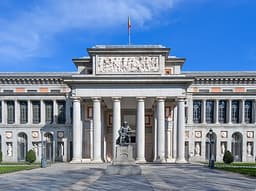
Miguel de la Madrid
Politician · Modern
56.1Total
Basic Information
Born
1823
1934
Died
1901
—
Era
Modern
Modern
Nationality
China
Mexico
Occupation
Politician
Politician
Civilization
Eastern
Western
Score Comparison
Military (10%)
50.0
49.8
Political (20%)
72.0
72.0
Influence (20%)
58.3
55.7
Legacy (20%)
54.0
48.3
Leadership (15%)
72.0
68.0
Strategy (15%)
60.0
40.9
TOTAL
60.7
56.1
Li Hongzhang — Complete Timeline
1861 AD
Leadership of the Self-Strengthening MovementReform◆ Major
Li Hongzhang became a leading figure in the Self-Strengthening Movement, promoting modernization of China's military and industry. He established arsenals, shipyards, and telegraph lines, and modernized the Beiyang Fleet to counter foreign threats.
Self-StrengtheningModernization
Impact: nationalconstructive
1864 AD
Suppression of the Taiping RebellionWar◆ Major
Li Hongzhang commanded the Huai Army in campaigns against the Taiping rebels, recapturing Suzhou and other cities. His military efforts helped crush the rebellion and restore Qing control over eastern China.
Taiping RebellionMilitary campaign
Impact: national
1888 AD
Creation of the Beiyang FleetReform◆ Major
Li Hongzhang oversaw the creation of the Beiyang Fleet, the most modern naval force in Asia at the time. The fleet was intended to defend China's coasts but was largely destroyed in the First Sino-Japanese War in 1894.
Naval modernizationSelf-Strengthening
Impact: national
1895 AD
Signing of the Treaty of ShimonosekiPolitical Action
Li Hongzhang negotiated and signed the Treaty of Shimonoseki with Japan, ending the First Sino-Japanese War. The treaty ceded Taiwan and the Pescadores to Japan, recognized Korean independence, and imposed a large indemnity on China.
TreatyDiplomacyTerritorial loss
Impact: globaltragic
1901 AD
Signing of the Boxer ProtocolPolitical Action◆ Major
Li Hongzhang was the chief Qing negotiator for the Boxer Protocol, which ended the Boxer Rebellion. The agreement imposed a massive indemnity on China, allowed foreign troops in Beijing, and further weakened Qing sovereignty.
TreatyDiplomacyForeign intervention
Impact: globaltragic
Miguel de la Madrid — Complete Timeline
1983 AD
Implementation of neoliberal economic reformsReform
President Miguel de la Madrid initiated structural adjustment policies, including trade liberalization, privatization of state enterprises, and fiscal austerity. These reforms, aligned with IMF conditions, aimed to reduce inflation and debt but led to social hardship and labor unrest.
NeoliberalismEconomic ReformPrivatization
Impact: national
1985 AD
1985 Mexico City earthquake responseOther◆ Major
A magnitude 8.0 earthquake struck Mexico City on September 19, 1985, killing thousands and destroying buildings. De la Madrid's government was criticized for a slow and inadequate response, leading to public anger and the rise of civil society organizations.
EarthquakeDisaster ResponseCriticism
Impact: nationaltragic
1986 AD
Admission to the General Agreement on Tariffs and Trade (GATT)Political Action◆ Major
De la Madrid secured Mexico's entry into GATT, committing to reduce trade barriers and integrate into the global economy. This was a key step in abandoning protectionism and paved the way for NAFTA.
TradeGlobalizationGATT
Impact: globalconstructive
Expert Analysis
Origins
Li Hongzhang was born in 1823 in Hefei, Anhui Province, China, into a gentry family with a strong Confucian education. He passed the imperial examinations and entered the civil service, becoming a protégé of the influential statesman Zeng Guofan. Li's early career was shaped by the Taiping Rebellion (1850-1864), which forced the Qing dynasty to rely on regional armies. He organized the Huai Army, a regional force that became the basis of his power.
Miguel de la Madrid Hurtado was born in 1934 in Colima, Mexico, into a middle-class family. He studied law at the National Autonomous University of Mexico (UNAM) and earned a master's degree in public administration from Harvard University. His early career was in the Mexican civil service, working for the Bank of Mexico and the Ministry of Finance. He rose through the ranks of the Institutional Revolutionary Party (PRI), which had dominated Mexican politics since 1929.
Rise to Power
Li Hongzhang rose to prominence through his military role in the Taiping Rebellion. By 1862, he was appointed governor of Jiangsu province and led the Huai Army to recapture Suzhou and other cities. His success earned him the title of Viceroy of Zhili (1870-1895), making him the de facto prime minister of the Qing empire. He used his position to launch the Self-Strengthening Movement (1861-1895), modernizing China's military and industry. Key allies included Zeng Guofan and Prince Gong, while opponents included conservative court officials who resisted reform.
Miguel de la Madrid's rise was through the PRI's bureaucratic ladder. He served as Minister of Budget and Planning under President José López Portillo (1976-1982), where he gained a reputation as a technocrat. In 1982, Mexico faced a severe debt crisis, and outgoing President López Portillo nationalized banks, a move de la Madrid opposed. De la Madrid won the presidency in 1982 as the PRI candidate, inheriting an economy in turmoil. His turning point was the adoption of neoliberal reforms, breaking with Mexico's protectionist past.
Leadership & Governance
Li Hongzhang's leadership style was pragmatic and centralized. He controlled the Beiyang Fleet, the Huai Army, and key industries like the China Merchants' Steam Navigation Company. He advocated for "Chinese learning as the base, Western learning for practical use," meaning he adopted Western technology while preserving Confucian values. He signed the Treaty of Shimonoseki (1895) after the First Sino-Japanese War, ceding Taiwan and paying a large indemnity, which weakened China. His governance focused on military modernization, but he failed to reform the political system, leaving the Qing dynasty fragile.
Miguel de la Madrid governed as a technocrat, emphasizing economic stabilization and structural adjustment. He implemented austerity measures, reduced tariffs, and sold state-owned enterprises. He secured Mexico's entry into GATT (1986), committing to free trade. His response to the 1985 Mexico City earthquake was criticized as slow and inadequate, damaging his popularity. Unlike Li, de la Madrid operated within a single-party system, allowing him to push reforms without legislative opposition. His political score of 72.0 equals Li's, but his strategy score of 40.9 is lower than Li's 60.0.
Triumph & Tragedy
Li Hongzhang's greatest achievement was the Self-Strengthening Movement, which created the Beiyang Fleet (the largest in Asia by 1894) and established arsenals, shipyards, and telegraph lines. However, his greatest failure was the defeat of the Beiyang Fleet in the First Sino-Japanese War (1894-1895), which revealed the superficiality of his reforms. He also negotiated the Boxer Protocol (1901), imposing a huge indemnity that crippled China. His legacy score of 54.0 reflects his mixed impact: he modernized but failed to save the dynasty.
Miguel de la Madrid's triumph was initiating neoliberal reforms that stabilized the economy and set the stage for the North American Free Trade Agreement (NAFTA) under his successor. However, his tragedy was the 1985 earthquake response, which exposed government incompetence and spurred civil society activism. His policies also increased inequality and led to a banking crisis in the 1990s. His legacy score of 48.3 is lower than Li's 54.0, indicating less enduring impact.
Character & Destiny
Li Hongzhang was known for his pragmatism, diplomatic skills, and willingness to compromise. He was criticized by contemporaries for corruption and nepotism, but he was also seen as a capable administrator. His character shaped his fate: his focus on military modernization without political reform left the Qing vulnerable. Historians assess him as a transitional figure who tried to save a dying dynasty. His total score of 60.7 reflects his significant but flawed influence.
Miguel de la Madrid was a technocrat who believed in data-driven policy. He was reserved and less charismatic, which hurt his public image. His character led him to push reforms despite social costs, but his handling of the earthquake showed a lack of empathy. Historians view him as a president who set Mexico on a neoliberal path but failed to address social needs. His total score of 56.1 is lower than Li's.
Legacy
Li Hongzhang's legacy is complex: he is remembered as a modernizer who laid foundations for China's industrialization, but also as a symbol of Qing weakness. The Beiyang Fleet's destruction and the unequal treaties he signed are seen as national humiliations. In China, he is often criticized as a "traitor" for his concessions, but recent scholarship notes his constrained circumstances. His influence score of 58.3 reflects his lasting imprint on Chinese history.
Miguel de la Madrid's legacy is the neoliberal transformation of Mexico. His reforms opened the economy, leading to NAFTA and globalization, but also increased inequality. He is credited with ending the debt crisis but blamed for the 1994 peso crisis. His legacy score of 48.3 is lower, partly because his policies were superseded by later presidents. His influence score of 55.7 is close to Li's 58.3, but his overall impact is less.
Conclusion
Li Hongzhang had a greater impact than Miguel de la Madrid. Despite both having political scores of 72.0, Li's total score of 60.7 surpasses de la Madrid's 56.1. Li's actions shaped China's trajectory during a critical period, while de la Madrid's reforms, though significant, were part of a broader global trend. Li's military score of 50.0 is similar to de la Madrid's 49.8, but his strategy score of 60.0 is far higher than 40.9. Li's legacy, though mixed, is more enduring: he modernized a vast empire and his failures are still studied. De la Madrid's legacy is more ephemeral, as Mexico's neoliberal model has been questioned. Therefore, Li Hongzhang is the more consequential figure.
Rankings
🥇
Li HongzhangLeader
Mil: 50.0Pol: 72.0Inf: 58.3
60.7
🥈
Miguel de la Madrid
Mil: 49.8Pol: 72.0Inf: 55.7
56.1
+4.6 behind
How This Comparison Works
Algorithm
Each figure is scored on 6 dimensions (0—100 scale) based on structured historical data: Military (10%), Political (20%), Influence (20%), Legacy (20%), Leadership (15%), Strategy (15%). The weighted total produces the final ranking.
Data Sources
Scores are computed from structured sub-indicators in the database. Scale factors adjust for era (Ancient ×0.85, Modern ×1.0) and civilization size (Eastern ×1.05, Other ×0.80) to account for differences in population and military scale.
Maximum 3 Figures
Comparisons are limited to 2—3 figures to ensure readability and statistical meaningfulness.
Error Margins
±5 points per dimension — Sub-scores are derived from historical records with inherent uncertainty. Two figures within 5 points on a dimension should be considered roughly equivalent in that area.
Total Score Accuracy
±3 points overall — The weighted combination of 6 dimensions produces a total score with approximately ±3 points of uncertainty. Differences of less than 3 points are not statistically significant— the figures are effectively tied.
Known Limitations
- Historical records are incomplete and uneven across civilizations
- Figures from oral-tradition societies may be underrepresented
- Occupation labels can misclassify multi-role figures
- Scores measure capability and impact, not moral character
- Quantitative scoring is a comparison tool, not absolute truth
Capability Radar
Military (10%) — Battles & Warfare
Battles
45
29
Win Rate
30
31
Expansion
20
36
Political (20%) — Governance & Reform
Reform
75
70
Diplomacy
65
55
Economy
70
65
Influence (20%) — Cultural & Global Reach
Cultural
55
30
Global
55
45
Legacy (20%) — Historical Impact
Historical
65
50
Longevity
50
40
Leadership (15%) — Power & Stability
Tenure
70
60
Stability
40
45
Strategy (15%) — Tactics & Innovation
Strategy
55
37
Tactics
40
40
Reform
75
41
Similar Comparisons
Comments & Discussion
No comments yet. Be the first to share your thoughts!