Loading...
Li Xiucheng vs Turenne
Turenne leads by 12.1 pts · 2 figures compared
…

Li Xiucheng
General · Modern
63.7Total
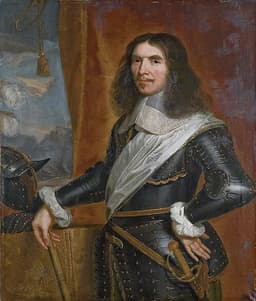
Turenne
General · Modern
75.8Total
Basic Information
Born
1823
1611
Died
1864
1675
Era
Modern
Modern
Nationality
China
France
Occupation
General
General
Civilization
Eastern
Western
Score Comparison
Military (10%)
77.2
79.9
Political (20%)
68.0
72.0
Influence (20%)
62.0
88.0
Legacy (20%)
50.0
65.0
Leadership (15%)
74.0
77.2
Strategy (15%)
66.9
72.0
TOTAL
63.7
75.8
Li Xiucheng — Complete Timeline
1858 AD
Battle of SanheWar◆ Major
Li Xiucheng led Taiping forces to a decisive victory at the Battle of Sanhe, annihilating a Qing army. This victory revitalized the Taiping cause and secured their control over the lower Yangtze region.
Taiping RebellionBattleVictory
Impact: regional
1860 AD
Second Western ExpeditionWar◆ Major
Li Xiucheng led a major Taiping campaign to capture the lower Yangtze region, including the capture of Suzhou and Hangzhou. The expedition expanded Taiping territory but failed to capture Shanghai due to foreign intervention.
Taiping RebellionCampaignExpansion
Impact: regional
1864 AD
Defense of NanjingWar◆ Major
Li Xiucheng commanded the defense of Nanjing against Qing forces under Zeng Guofan. After the city fell, he was captured and executed, marking the end of the Taiping Rebellion.
Taiping RebellionSiegeDeath
Impact: nationaltragic
Turenne — Complete Timeline
1639 AD
Campaign in the ValtellinaWar
Turenne commanded French forces in the Valtellina during the Thirty Years' War. He captured several fortresses and secured the strategic pass for France, demonstrating his early military skill.
Thirty Years' WarAlpsEarly Career
Impact: regional
1658 AD
Battle of the DunesWar◆ Major
Turenne commanded the French army to victory over the Spanish at the Battle of the Dunes near Dunkirk. The victory led to the capture of Dunkirk and forced Spain to seek peace, ending the Franco-Spanish War.
Franco-Spanish WarDunkirkMilitary Victory
Impact: regional
1674 AD
Battle of the RhineWar◆ Major
Turenne led a French army across the Rhine in winter, surprising the Imperial forces. He defeated the Austrians at the Battle of Entzheim and later at Turckheim, securing French control of Alsace.
Franco-Dutch WarAlsaceWinter Campaign
Impact: regional
Battle of the SambreWar◆ Major
Turenne defeated the Spanish and Dutch forces at the Battle of Seneffe. The battle was costly but prevented the Allies from invading France. It demonstrated Turenne's tactical skill in defensive warfare.
Franco-Dutch WarDefensive BattleTactics
Impact: regional
1675 AD
Death of TurenneWar◆ Major
Turenne was killed by a cannonball while reconnoitering enemy positions at the Battle of Sasbach. His death was a major loss for France. He was buried with honors in the Basilica of Saint-Denis.
Death in BattleFranco-Dutch WarMilitary Loss
Impact: nationaltragic
Expert Analysis
Origins
Li Xiucheng (1823–1864) was born into a poor peasant family in Guangxi, China. He received no formal education and worked as a farmer and charcoal burner. His early life was marked by hardship, which drew him to the Taiping Heavenly Kingdom, a millenarian Christian-inspired movement that promised social reform. He joined the rebellion in 1851, quickly rising through the ranks due to his military acumen.
Henri de la Tour d'Auvergne, Vicomte de Turenne (1611–1675), was born into a noble family in Sedan, France. His father was a Protestant military commander, and his mother was a princess of the House of Orange. Turenne received a military education and began his career as a soldier in the Dutch States Army under his maternal uncle, Maurice of Nassau. His aristocratic background provided connections and early opportunities.
Rise to Power
Li Xiucheng rose to prominence during the Taiping Rebellion (1850–1864). His first major success came in 1856 when he defended the Taiping capital, Tianjing (Nanjing), against the Qing Imperial Army. In 1858, he achieved a decisive victory at the Battle of Sanhe, annihilating a Qing force of 6,000 troops and killing the Qing general Li Xubin. This victory revived the Taiping cause after internal strife. He was awarded the title "Loyal Prince" in 1859 and became the primary military commander of the Taiping forces.
Turenne's rise began in the Thirty Years' War. He fought under his uncle Maurice of Nassau and later joined the French army in 1630. By 1634, he was a colonel, and in 1635 he became a maréchal de camp. His breakthrough came in 1644 when he was appointed Marshal of France at age 33. He led French forces to victory at the Battle of Freiburg (1644) and later at the Battle of Nördlingen (1645). During the Fronde (1648–1653), he initially sided with the rebels but later switched allegiance to King Louis XIV, securing his position as the king's foremost general.
Leadership & Governance
Li Xiucheng was a field commander who led from the front, often sharing hardships with his troops. He implemented a strategy of rapid movement and surprise attacks, using the Taiping's religious fervor to motivate soldiers. He also engaged in local governance in captured territories, imposing Taiping laws that banned opium, gambling, and prostitution, and redistributing land. However, his political influence was limited by the Taiping leadership, particularly Hong Xiuquan, who often overruled his strategic advice.
Turenne was a master of maneuver warfare, emphasizing logistics and intelligence. He introduced the use of light artillery and coordinated infantry-cavalry tactics. His leadership style was methodical and cautious, avoiding unnecessary risks. In governance, he served as a military governor and advised the king on military policy, but he never held high political office. His influence came from his military success and loyalty to the crown.
Triumph & Tragedy
Li Xiucheng's greatest triumph was the capture of Suzhou and Hangzhou in 1860 during the Second Western Expedition, which expanded Taiping control over the wealthy lower Yangtze region. His greatest tragedy was the fall of Nanjing in 1864. He defended the city for months but was betrayed by a subordinate, captured, and executed. He attempted to save the Taiping king Hong Xiuquan's family but failed. His legacy is mixed: he was a capable commander but could not overcome the rebellion's internal decay.
Turenne's triumphs include the Battle of the Dunes (1658), where he defeated the Spanish and captured Dunkirk, and his winter crossing of the Rhine in 1674, which surprised the Imperial forces. His greatest tragedy was his death at the Battle of Sasbach in 1675, killed by a cannonball while scouting. His death was a severe loss for France, as he was at the height of his powers. He also suffered a major defeat at the Battle of Seneffe (1674) when his attack was repulsed with heavy losses, though he prevented an invasion.
Character & Destiny
Li Xiucheng was known for his loyalty and compassion. He often tried to minimize civilian casualties and even released captured Qing officials. However, his loyalty to Hong Xiuquan was a weakness: he followed orders that led to strategic blunders, such as the failed defense of Nanjing. His humble origins made him relatable to his troops but limited his political savvy.
Turenne was pragmatic and adaptable. He converted from Protestantism to Catholicism in 1668 to gain favor with the king, showing his political astuteness. He was respected for his professionalism and integrity. His cautious nature sometimes delayed decisive action, but his strategic vision was ahead of his time. His death on the battlefield was fitting for a soldier, but it cut short his potential.
Legacy
Li Xiucheng's legacy is primarily within the context of the Taiping Rebellion. He is remembered as the "Loyal Prince" who fought to the end. His military tactics influenced later Chinese peasant rebellions, but the Taiping's defeat meant his impact was limited. In modern China, he is sometimes viewed sympathetically as a folk hero. His military score of 77.2 reflects his battlefield prowess, but his political score of 68.0 and legacy score of 50.0 indicate his limited long-term influence.
Turenne's legacy is far greater. He is considered one of the greatest generals of the 17th century, alongside Condé and Marlborough. His reforms in logistics, artillery, and combined arms influenced French military doctrine for generations. He trained many future commanders, and his campaigns are studied in military academies. His military score of 79.9 and influence score of 88.0 highlight his enduring impact. He scored 75.8 total, 12.1 points higher than Li Xiucheng's 63.7.
Conclusion
Turenne had a greater impact on military history. His innovations shaped European warfare for centuries, while Li Xiucheng's achievements were confined to a failed rebellion. Turenne's total score of 75.8 vs Li Xiucheng's 63.7 reflects this disparity. While Li Xiucheng was a skilled commander in a desperate cause, Turenne's strategic vision and lasting influence on military organization make him the more significant figure. The data supports Turenne as the superior commander.
Rankings
🥇
TurenneLeader
Mil: 79.9Pol: 72.0Inf: 88.0
75.8
🥈
Li Xiucheng
Mil: 77.2Pol: 68.0Inf: 62.0
63.7
+12.1 behind
How This Comparison Works
Algorithm
Each figure is scored on 6 dimensions (0—100 scale) based on structured historical data: Military (10%), Political (20%), Influence (20%), Legacy (20%), Leadership (15%), Strategy (15%). The weighted total produces the final ranking.
Data Sources
Scores are computed from structured sub-indicators in the database. Scale factors adjust for era (Ancient ×0.85, Modern ×1.0) and civilization size (Eastern ×1.05, Other ×0.80) to account for differences in population and military scale.
Maximum 3 Figures
Comparisons are limited to 2—3 figures to ensure readability and statistical meaningfulness.
Error Margins
±5 points per dimension — Sub-scores are derived from historical records with inherent uncertainty. Two figures within 5 points on a dimension should be considered roughly equivalent in that area.
Total Score Accuracy
±3 points overall — The weighted combination of 6 dimensions produces a total score with approximately ±3 points of uncertainty. Differences of less than 3 points are not statistically significant— the figures are effectively tied.
Known Limitations
- Historical records are incomplete and uneven across civilizations
- Figures from oral-tradition societies may be underrepresented
- Occupation labels can misclassify multi-role figures
- Scores measure capability and impact, not moral character
- Quantitative scoring is a comparison tool, not absolute truth
Capability Radar
Military (10%) — Battles & Warfare
Battles
75
85
Win Rate
70
88
Expansion
72
80
Political (20%) — Governance & Reform
Reform
40
60
Diplomacy
50
75
Economy
35
55
Influence (20%) — Cultural & Global Reach
Cultural
45
65
Global
35
70
Legacy (20%) — Historical Impact
Historical
55
80
Longevity
40
75
Leadership (15%) — Power & Stability
Tenure
55
70
Stability
30
65
Strategy (15%) — Tactics & Innovation
Strategy
78
92
Tactics
80
90
Reform
60
75
Similar Comparisons
Comments & Discussion
No comments yet. Be the first to share your thoughts!