Loading...
This comparison has not been analyzed yet.
One-time AI generation (~1 minute). Scores and timeline are already available below.
Liao Hua vs Zhu Ran
Zhu Ran leads by 3.8 pts · 2 figures compared
…

Liao Hua
General · Ancient
40.3Total
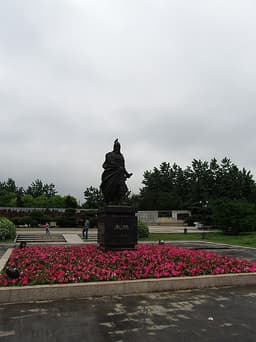
Zhu Ran
General · Ancient
44.1Total
Basic Information
Born
185
182
Died
264
249
Era
Ancient
Ancient
Nationality
China
China
Occupation
General
General
Civilization
Eastern
Eastern
Score Comparison
Military (10%)
40.0
52.5
Political (20%)
35.0
35.0
Influence (20%)
45.5
47.1
Legacy (20%)
37.5
39.2
Leadership (15%)
40.9
40.4
Strategy (15%)
41.7
60.0
TOTAL
40.3
44.1
Liao Hua — Complete Timeline
184 AD
Participated in Yellow Turban RebellionWar
Liao Hua joined Liu Bei's forces during the Yellow Turban Rebellion, fighting against the rebel armies. This marked the beginning of his long military career, which spanned from the Han dynasty's decline to the fall of Shu.
Yellow TurbanShu HanMilitary Service
228 AD
Defended Shu During Northern ExpeditionsWar
Liao Hua served as a general under Zhuge Liang during the Northern Expeditions against Wei. He commanded rear-guard forces and participated in several battles, including the defense of Hanzhong.
Northern ExpeditionsShu HanBattle
Impact: regional
263 AD
Witnessed Fall of ShuWar◆ Major
Liao Hua was one of the last surviving generals of Shu when Wei invaded in 263. He advised against surrender but was overruled. After the fall of Shu, he was taken to Luoyang as a prisoner, where he died the following year.
Fall of ShuThree KingdomsEnd of Era
Impact: regionaltragic
Zhu Ran — Complete Timeline
190 AD
Childhood Friendship with Sun QuanOther
Zhu Ran grew up alongside Sun Quan as a childhood friend. This close relationship led to Sun Quan entrusting him with important military commands and positions of authority throughout his career.
FriendshipSun QuanTrust
Impact: regionalconstructive
200 AD
Service under Sun QuanWar◆ Major
Zhu Ran served Sun Quan as a general, participating in campaigns against Cao Cao and Liu Bei. He was known for his strategic acumen and was given command of key defensive positions.
ServiceSun QuanStrategy
Impact: regionalconstructive
223 AD
Defense of JianglingWar◆ Major
Zhu Ran led the successful defense of Jiangling against a Wei siege. He held the city for months despite being outnumbered, using clever tactics to repel attacks until reinforcements arrived.
DefenseJianglingSiege
Impact: regionalconstructive
249 AD
Death of Zhu RanOther
Zhu Ran died of natural causes after a long and distinguished career. Sun Quan mourned his death deeply, honoring his childhood friend and loyal general with posthumous titles.
DeathLoyaltyFriendship
Impact: regional
This comparison has not been analyzed yet.
One-time AI generation (~1 minute). Scores and timeline are already available below.
Rankings
🥇
Zhu RanLeader
Mil: 52.5Pol: 35.0Inf: 47.1
44.1
🥈
Liao Hua
Mil: 40.0Pol: 35.0Inf: 45.5
40.3
+3.8 behind
How This Comparison Works
Algorithm
Each figure is scored on 6 dimensions (0—100 scale) based on structured historical data: Military (10%), Political (20%), Influence (20%), Legacy (20%), Leadership (15%), Strategy (15%). The weighted total produces the final ranking.
Data Sources
Scores are computed from structured sub-indicators in the database. Scale factors adjust for era (Ancient ×0.85, Modern ×1.0) and civilization size (Eastern ×1.05, Other ×0.80) to account for differences in population and military scale.
Maximum 3 Figures
Comparisons are limited to 2—3 figures to ensure readability and statistical meaningfulness.
Error Margins
±5 points per dimension — Sub-scores are derived from historical records with inherent uncertainty. Two figures within 5 points on a dimension should be considered roughly equivalent in that area.
Total Score Accuracy
±3 points overall — The weighted combination of 6 dimensions produces a total score with approximately ±3 points of uncertainty. Differences of less than 3 points are not statistically significant— the figures are effectively tied.
Known Limitations
- Historical records are incomplete and uneven across civilizations
- Figures from oral-tradition societies may be underrepresented
- Occupation labels can misclassify multi-role figures
- Scores measure capability and impact, not moral character
- Quantitative scoring is a comparison tool, not absolute truth
Capability Radar
Military (10%) — Battles & Warfare
Battles
25
45
Win Rate
30
40
Expansion
5
30
Political (20%) — Governance & Reform
Reform
5
10
Diplomacy
15
30
Economy
5
20
Influence (20%) — Cultural & Global Reach
Cultural
15
20
Global
5
10
Legacy (20%) — Historical Impact
Historical
20
25
Longevity
15
20
Leadership (15%) — Power & Stability
Tenure
40
40
Stability
10
35
Strategy (15%) — Tactics & Innovation
Strategy
20
45
Tactics
20
50
Reform
5
10
Similar Comparisons
Comments & Discussion
No comments yet. Be the first to share your thoughts!