Loading...
This comparison has not been analyzed yet.
One-time AI generation (~1 minute). Scores and timeline are already available below.
Lin Xin of Shang vs Parshatatar
Parshatatar leads by 4.8 pts · 2 figures compared
…

Lin Xin of Shang
Emperor · Ancient
35.6Total
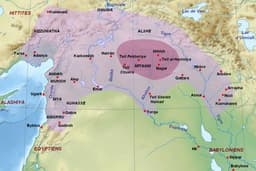
Parshatatar
Emperor · Ancient
40.4Total
Basic Information
Born
-1070
-1480
Died
-1060
-1460
Era
Ancient
Ancient
Nationality
Shang China
Mitanni
Occupation
Emperor
Emperor
Civilization
Eastern
Middle Eastern
Score Comparison
Military (10%)
10.2
35.0
Political (20%)
35.0
29.3
Influence (20%)
40.9
47.1
Legacy (20%)
31.7
38.3
Leadership (15%)
44.5
48.4
Strategy (15%)
45.0
38.6
TOTAL
35.6
40.4
Lin Xin of Shang — Complete Timeline
1070 BC
Ascended to the throne of the Shang dynastyPolitical Action◆ Major
Lin Xin became king of the Shang dynasty following the death of his predecessor, likely his father Wu Ding or a close relative. His accession occurred during the late Shang period, a time of internal stability but growing external pressure from the Zhou people. The exact circumstances of his succession are not recorded.
Shang DynastySuccessionRoyal Accession
Impact: regional
1065 BC
Reigned during a period of limited recorded activityPolitical Action
Lin Xin's reign is poorly documented in surviving Shang oracle bone inscriptions and later Chinese historical texts. No major military campaigns, construction projects, or religious reforms are attributed to him. This lack of records suggests a brief or uneventful rule, possibly overshadowed by his predecessor Wu Ding's long reign.
Shang DynastyHistorical GapLimited Records
Impact: regional
1060 BC
Died after a short reign of approximately 10 yearsPolitical Action◆ Major
Lin Xin died around 1060 BC, ending a reign of roughly a decade. His death led to the succession of another Shang king, likely his brother or son. The brevity of his rule and lack of notable achievements contributed to his obscurity in historical records, with later texts like the Bamboo Annals providing only minimal details.
Shang DynastyDeath of KingShort Reign
Impact: regional
Parshatatar — Complete Timeline
1475 BC
Continuation of Mitanni ExpansionWar◆ Major
Parshatatar continued the expansion of the Mitanni kingdom initiated by his predecessor. He led campaigns into the Khabur River region and further into Syria, securing Mitanni dominance over northern Mesopotamia.
Mitanni ExpansionKhaburSyria
Impact: regionaldestructive
1470 BC
Strengthening of the Mitanni StatePolitical Action
Parshatatar strengthened the Mitanni state by reinforcing the central administration and military. He built fortifications and organized the army, preparing for future conflicts with Egypt and the Hittites.
Mitanni StrengtheningAdministrationMilitary
Impact: nationalconstructive
1460 BC
Father of ShaushtatarPolitical Action
Parshatatar fathered Shaushtatar, who would become the greatest Mitanni king. He ensured a stable succession, passing on a strong and expanded kingdom to his son.
SuccessionShaushtatarMitanni Dynasty
Impact: national
This comparison has not been analyzed yet.
One-time AI generation (~1 minute). Scores and timeline are already available below.
Rankings
🥇
ParshatatarLeader
Mil: 35.0Pol: 29.3Inf: 47.1
40.4
🥈
Lin Xin of Shang
Mil: 10.2Pol: 35.0Inf: 40.9
35.6
+4.8 behind
How This Comparison Works
Algorithm
Each figure is scored on 6 dimensions (0—100 scale) based on structured historical data: Military (10%), Political (20%), Influence (20%), Legacy (20%), Leadership (15%), Strategy (15%). The weighted total produces the final ranking.
Data Sources
Scores are computed from structured sub-indicators in the database. Scale factors adjust for era (Ancient ×0.85, Modern ×1.0) and civilization size (Eastern ×1.05, Other ×0.80) to account for differences in population and military scale.
Maximum 3 Figures
Comparisons are limited to 2—3 figures to ensure readability and statistical meaningfulness.
Error Margins
±5 points per dimension — Sub-scores are derived from historical records with inherent uncertainty. Two figures within 5 points on a dimension should be considered roughly equivalent in that area.
Total Score Accuracy
±3 points overall — The weighted combination of 6 dimensions produces a total score with approximately ±3 points of uncertainty. Differences of less than 3 points are not statistically significant— the figures are effectively tied.
Known Limitations
- Historical records are incomplete and uneven across civilizations
- Figures from oral-tradition societies may be underrepresented
- Occupation labels can misclassify multi-role figures
- Scores measure capability and impact, not moral character
- Quantitative scoring is a comparison tool, not absolute truth
Capability Radar
Military (10%) — Battles & Warfare
Battles
5
20
Win Rate
5
20
Expansion
5
30
Political (20%) — Governance & Reform
Reform
5
20
Diplomacy
5
30
Economy
5
20
Influence (20%) — Cultural & Global Reach
Cultural
5
20
Global
5
20
Legacy (20%) — Historical Impact
Historical
5
20
Longevity
5
20
Leadership (15%) — Power & Stability
Tenure
10
30
Stability
10
30
Strategy (15%) — Tactics & Innovation
Strategy
5
20
Tactics
5
20
Reform
5
20
Similar Comparisons
Comments & Discussion
No comments yet. Be the first to share your thoughts!