Loading...
Liu Zongyuan vs Napoleon Bonaparte
Napoleon Bonaparte leads by 19.7 pts · 2 figures compared
…
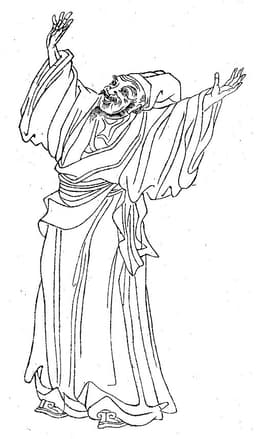
Liu Zongyuan
Politician · Medieval
51.2Total

Napoleon Bonaparte
General · Modern
70.9Total
Basic Information
Born
773
1769
Died
819
1821
Era
Medieval
Modern
Nationality
China
France
Occupation
Politician
General
Civilization
Eastern
Western
Score Comparison
Military (10%)
44.2
94.0
Political (20%)
43.7
72.0
Influence (20%)
62.0
40.0
Legacy (20%)
54.0
80.0
Leadership (15%)
50.7
78.0
Strategy (15%)
36.0
90.0
TOTAL
51.2
70.9
Liu Zongyuan — Complete Timeline
805 AD
Participated in the Yongzhen ReformPolitical Action◆ Major
Liu Zongyuan joined the Yongzhen Reform, a short-lived reform movement under Emperor Shunzong aimed at reducing eunuch power and corruption. The reform failed after a few months, and Liu was exiled to Yongzhou (modern Hunan).
Political ReformExileTang Dynasty
Impact: nationaltragic
Exiled to YongzhouPolitical Action◆ Major
Liu Zongyuan was exiled to Yongzhou as a result of the Yongzhen Reform's failure. He spent ten years in remote southern posts, where he wrote many of his most famous essays and poems, including 'Eight Records of Yongzhou'.
ExileLiteratureTang Dynasty
Impact: nationaltragic
810 AD
Composed 'The Snake Catcher'Cultural◆ Major
Liu Zongyuan wrote the essay 'The Snake Catcher' (Bu She Zhe Shuo), a critique of oppressive taxation and government corruption. The work used a parable to expose the suffering of common people under Tang rule, becoming a classic of social criticism.
LiteratureSocial CriticismTang Dynasty
Impact: nationalconstructive
815 AD
Exiled to LiuzhouPolitical Action
Liu Zongyuan was transferred to an even more remote post in Liuzhou (modern Guangxi). He served as prefect there until his death, implementing local reforms and writing extensively about the region's customs and landscapes.
ExileLocal GovernanceTang Dynasty
Napoleon Bonaparte — Complete Timeline
1799 AD
Coup of 18 BrumaireOther◆ Major
Napoleon Bonaparte, with support from his brother Lucien and key political figures, overthrew the Directory in a bloodless coup. He established the Consulate with himself as First Consul, effectively becoming the ruler of France. This event ended the French Revolution's most unstable period.
French RevolutionCoupRise to Power
Impact: regional
1804 AD
Promulgation of the Napoleonic CodeOther◆ Major
Napoleon enacted the Civil Code of the French, known as the Napoleonic Code, a comprehensive set of laws that replaced the fragmented feudal legal systems. The code established legal equality, protected property rights, and secularized law. It became the basis for legal systems in many European and world countries.
Legal ReformNapoleonic CodeCivil Law
Impact: globalconstructive
1805 AD
Battle of AusterlitzWar◆ Major
Napoleon's Grande Arm
Napoleonic WarsBattleDecisive Victory
Impact: global
1812 AD
Invasion of RussiaWar◆ Major
Napoleon led the Grande Arm
Napoleonic WarsInvasionDisaster
Impact: globaldestructive
1815 AD
Battle of WaterlooWar◆ Major
Napoleon's French army was defeated by the combined forces of the Duke of Wellington's Anglo-Allied army and Gebhard Leberecht von Bl
Napoleonic WarsBattleFinal Defeat
Impact: globaldestructive
Expert Analysis
liu-zongyuan-vs-napoleon-bonaparte
The Conqueror and the Exile
On a June morning in 1815, Napoleon Bonaparte stood on the muddy fields of Waterloo, watching his Imperial Guard crumble before the British squares. Half a world away and twelve centuries earlier, a Chinese scholar-official named Liu Zongyuan sat in a thatched hut by a river in what is now Hunan, writing about a snake catcher who risked death each day rather than face the tax collector. One man commanded armies that shook continents; the other wrote essays that would outlast dynasties. What drove such different fates—and what, if anything, do they share?
Origins
Napoleon was born in 1769 on Corsica, an island only recently annexed by France. His family was minor nobility, proud and resentful of French domination. He spoke Italian before French, and his early letters seethed with Corsican nationalism. Yet France’s military academies offered a path upward, and the ambitious boy took it. The French Revolution, which erupted when he was twenty, shattered the old order and opened opportunities unimaginable under the Bourbon monarchy.
Liu Zongyuan was born in 773, during the Tang Dynasty’s long twilight. His family was part of the scholar-official class that had governed China for centuries. Like Napoleon, he was brilliant and precocious; he passed the highest civil service examinations in his early twenties, winning a post in the imperial capital of Chang’an. But where Napoleon entered a world of revolution and war, Liu entered a world of court intrigue, eunuch power, and bureaucratic stagnation. The difference in their eras was not merely chronological—it was structural. Napoleon’s Europe was fragmenting into nation-states; Liu’s China was consolidating under an ancient imperial system that rewarded conformity.
Rise to Power
Napoleon’s ascent was meteoric. In 1793, at age twenty-four, he recaptured the port of Toulon from British forces, earning promotion to brigadier general. By 1796 he commanded the Army of Italy, where his lightning campaigns humiliated the Austrians. He was not yet thirty when he seized power in the 1799 coup of 18 Brumaire, becoming First Consul. His rise combined military genius with political audacity: he understood that in revolutionary France, a general who won victories could become a ruler.
Liu’s rise was slower and more precarious. In 805, when Emperor Shunzong briefly ascended the throne, Liu joined the Yongzhen Reform, a movement of young officials determined to curb eunuch power and reduce corruption. The reforms lasted only months. The emperor fell ill; the eunuchs struck back. Liu was stripped of his rank and exiled to Yongzhou, a remote region in the south. He was thirty-two years old. His political career, such as it was, had lasted barely a decade. Where Napoleon seized history by the throat, Liu was seized by it and thrown aside.
Leadership & Governance
As emperor, Napoleon governed with a blend of brilliance and tyranny. He centralized the state, created the Bank of France, and most durably, codified French law in the Napoleonic Code—a system that abolished feudal privileges, protected property rights, and spread across Europe. His political score of 75 reflects genuine administrative achievement. Yet his leadership was autocratic; he suppressed dissent, censored the press, and crowned himself emperor in 1804. His military score of 94 and strategy score of 93 speak to his unmatched battlefield instincts: the daring at Austerlitz in 1805, the disastrous hubris of the 1812 invasion of Russia.
Liu governed only in miniature. As prefect of Liuzhou from 815 until his death in 819, he dug wells, opened schools, and freed slaves—practical reforms in a tiny corner of the empire. His political score of 54 is modest, but it misses the point. Liu’s true governance was through his pen. In exile he wrote essays and poems that dissected power with surgical precision. “The Snake Catcher,” composed in 810, tells of a man who captures venomous snakes for the imperial court rather than pay taxes—a devastating parable of how systems crush the weak. He could not change the empire, but he could make it see itself.
Triumph & Tragedy
Napoleon’s triumph was the creation of an empire that stretched from Spain to Poland. His tragedy was its destruction. The invasion of Russia in 1812 cost half a million men. The 1813 Battle of Leipzig broke his hold on Germany. Exiled to Elba, he returned for the Hundred Days, only to meet final defeat at Waterloo in 1815. He died in 1821, a prisoner on Saint Helena, still insisting on his own greatness.
Liu’s triumph was literary. His essays and poems, written in the bitterness of exile, became classics of Chinese literature, studied for a thousand years. His tragedy was personal and political: he never returned to the center, never saw his reforms enacted, and died at forty-six, still in exile. His legacy score of 68.6, while lower than Napoleon’s 78, understates his cultural impact in the Chinese world—comparable to a Dante or a Milton.
Character & Destiny
Napoleon was driven by an insatiable will. “Impossible is a word to be found only in the dictionary of fools,” he said. His confidence bordered on megalomania, and his refusal to compromise—whether at Waterloo or in the Peninsular War—ultimately destroyed him. He could not stop; he could not share power. His character was his destiny.
Liu was driven by integrity and grief. His poems mourn lost friends, lost opportunities, lost youth. He was not a revolutionary but a reformer, and when reform failed, he did not rage—he wrote. His character was shaped by Confucian ideals of service and duty, and his destiny was to serve not an emperor but a civilization.
Legacy
Napoleon’s legacy is written in law codes, national borders, and the memory of war. He reshaped Europe, inspired nationalism, and created the modern state. He is remembered as both liberator and tyrant, genius and cautionary tale.
Liu’s legacy is quieter but no less real. His essays are still read in Chinese classrooms. His poems still speak to exiles and outsiders. He did not conquer anything, but he endured, and in enduring, he created something that outlasted the empire that cast him out.
Conclusion
Standing at the end of their stories, one sees two kinds of greatness. Napoleon bent the world to his will and was broken by it. Liu bent his art to the world and was sustained by it. The conqueror changed history; the exile changed how history is understood. Both were prisoners of their times, and both escaped—one through power, the other through words. Perhaps the deepest difference is this: Napoleon wanted to be remembered, and Liu wanted to be understood. Both got what they wished for.
Rankings
🥇
Napoleon BonaparteLeader
Mil: 94.0Pol: 72.0Inf: 40.0
70.9
🥈
Liu Zongyuan
Mil: 44.2Pol: 43.7Inf: 62.0
51.2
+19.7 behind
How This Comparison Works
Algorithm
Each figure is scored on 6 dimensions (0—100 scale) based on structured historical data: Military (10%), Political (20%), Influence (20%), Legacy (20%), Leadership (15%), Strategy (15%). The weighted total produces the final ranking.
Data Sources
Scores are computed from structured sub-indicators in the database. Scale factors adjust for era (Ancient ×0.85, Modern ×1.0) and civilization size (Eastern ×1.05, Other ×0.80) to account for differences in population and military scale.
Maximum 3 Figures
Comparisons are limited to 2—3 figures to ensure readability and statistical meaningfulness.
Error Margins
±5 points per dimension — Sub-scores are derived from historical records with inherent uncertainty. Two figures within 5 points on a dimension should be considered roughly equivalent in that area.
Total Score Accuracy
±3 points overall — The weighted combination of 6 dimensions produces a total score with approximately ±3 points of uncertainty. Differences of less than 3 points are not statistically significant— the figures are effectively tied.
Known Limitations
- Historical records are incomplete and uneven across civilizations
- Figures from oral-tradition societies may be underrepresented
- Occupation labels can misclassify multi-role figures
- Scores measure capability and impact, not moral character
- Quantitative scoring is a comparison tool, not absolute truth
Capability Radar
Military (10%) — Battles & Warfare
Battles
40
95
Win Rate
40
90
Expansion
44
95
Political (20%) — Governance & Reform
Reform
40
95
Diplomacy
15
80
Economy
20
85
Influence (20%) — Cultural & Global Reach
Cultural
70
85
Global
40
90
Legacy (20%) — Historical Impact
Historical
65
95
Longevity
60
90
Leadership (15%) — Power & Stability
Tenure
20
85
Stability
10
70
Strategy (15%) — Tactics & Innovation
Strategy
48
95
Tactics
50
98
Reform
55
92
Similar Comparisons
Comments & Discussion
CorsicaKicker6/17/2026
Napoleon is the ultimate pragmatist, Liu the ultimate idealist. Napoleon burned through Europe rewriting laws and borders; Liu sat in exile writing fables like "The Snake Catcher" to critique a system he couldn't change. One broke thrones, the other broke literary molds. They share lonely brilliance, sure, but don't romanticize it—Napoleon would have crushed Liu's world without a second thought. Power doesn't stop for poetry.
蛇语者6/17/2026
拿什么比?一个是铁血征服者,一个是失意文人。拿破仑在滑铁卢输给的是惠灵顿,而柳宗元输给的是永贞革新的政治漩涡。两人都尝过流放的滋味:拿破仑去了圣赫勒拿岛,柳宗元去了永州。但拿破仑至死都在谋划东山再起,柳宗元却在贬谪中写下了《江雪》——“孤舟蓑笠翁,独钓寒江雪”。孤独的境界,完全不同。柳宗元的灵魂更冷,也更干净。
ZeroTaxMan6/17/2026
Cut the romantic nonsense. Napoleon expanded France’s tax base across half of Europe; Liu Zongyuan wrote a famous essay arguing that oppressive taxation was worse than poisonous snakes. That’s the real difference—one built systems of extraction, the other critiqued them from exile. If they swapped places, Napoleon would have ordered the snake catcher to pay up, and Liu would have penned a brutal satire about Waterloo. Each was a prisoner of his era’s logic.
兵棋推演6/17/2026
作为军事史爱好者,我必须说这两人根本不在一个赛道。拿破仑是战争大师,亲自指挥过六十多场战役,用炮兵和机动战术改变了欧洲战场格局。而柳宗元呢?他的一生和战场毫无关系,唯一和政治有关的“永贞革新”也只持续了146天就流产了。把两人放在一起比较,就像把战列舰和毛笔比速度。选拿破仑,至少他有实战战绩;柳宗元,不过是文人失意的注脚罢了。
Historian5126/17/2026
Liu Zongyuan would have seen right through Napoleon. Think about it: both were brilliant outsiders—Napoleon a Corsican in France, Liu a reformer in conservative Tang court. Both were exiled. But Liu spent his banishment writing about the suffering of ordinary people, while Napoleon spent his writing memoirs to justify himself. That tells you everything. Liu's "Snake Catcher" is a moral indictment; Napoleon's memoirs are a PR campaign. History remembers both, but only one earned it.