Loading...
This comparison has not been analyzed yet.
One-time AI generation (~1 minute). Scores and timeline are already available below.
Lloyd Fredendall vs Paik Sun-yup
Paik Sun-yup leads by 21.4 pts · 2 figures compared
…
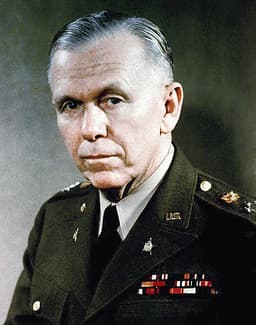
Lloyd Fredendall
General · Modern
39.6Total

Paik Sun-yup
General · Modern
61.0Total
Basic Information
Born
1883
1920
Died
1963
—
Era
Modern
Modern
Nationality
United States
South Korea
Occupation
General
General
Civilization
Western
Eastern
Score Comparison
Military (10%)
45.0
70.0
Political (20%)
26.4
68.0
Influence (20%)
47.1
62.0
Legacy (20%)
39.2
54.0
Leadership (15%)
33.5
62.0
Strategy (15%)
45.0
55.0
TOTAL
39.6
61.0
Lloyd Fredendall — Complete Timeline
1943 AD
Command at the Battle of Kasserine PassWar◆ Major
Fredendall commanded II Corps during the Battle of Kasserine Pass in Tunisia. His forces were defeated by German forces under Erwin Rommel, suffering heavy casualties and a significant territorial loss. This defeat led to his relief from command.
World War IINorth African CampaignDefeat
Impact: regionaldestructive
Relief from Command of II CorpsPolitical Action◆ Major
Following the defeat at Kasserine Pass, General Dwight D. Eisenhower relieved Fredendall of his command of II Corps. Fredendall was reassigned to training commands in the United States for the remainder of the war.
World War IICommand ChangeCareer End
Impact: nationaltragic
Paik Sun-yup — Complete Timeline
1941 AD
Commissioned as an officer in the Manchukuo Imperial ArmyWar◆ Major
Paik Sun-yup graduated from the Japanese Military Academy and was commissioned as a second lieutenant in the Manchukuo Imperial Army, a puppet state of Japan. He served in Manchuria during World War II, gaining combat experience.
World War IIManchukuoMilitary Service
Impact: regional
1946 AD
Defected to South Korea and joined the ROK ArmyPolitical Action◆ Major
After Japan's defeat, Paik Sun-yup defected to South Korea and joined the newly formed Republic of Korea Army. He was among the first Korean officers to be trained by the U.S. military, rising quickly through the ranks.
Korean ArmyDefectionPost-War
Impact: nationalconstructive
1950 AD
Commanded the 1st Infantry Division during the Korean WarWar◆ Major
As commander of the ROK 1st Infantry Division, Paik Sun-yup played a key role in the defense of the Pusan Perimeter. His division held the critical Taegu corridor against North Korean attacks, preventing the collapse of the UN forces.
Korean WarPusan PerimeterDefense
Impact: regional
1952 AD
Became the first four-star general in ROK historyPolitical Action◆ Major
Paik Sun-yup was promoted to the rank of General (four-star) in 1952, becoming the first officer in the Republic of Korea Army to achieve this rank. This reflected his leadership during the Korean War and his role in building the ROK military.
Korean ArmyPromotionMilitary History
Impact: nationalconstructive
1954 AD
Served as Chairman of the Joint Chiefs of StaffPolitical Action◆ Major
After the Korean War, Paik Sun-yup served as Chairman of the Joint Chiefs of Staff of the ROK Armed Forces. He oversaw the modernization and reorganization of the South Korean military during the post-war period.
Korean MilitaryPost-WarLeadership
Impact: nationalconstructive
This comparison has not been analyzed yet.
One-time AI generation (~1 minute). Scores and timeline are already available below.
Rankings
🥇
Paik Sun-yupLeader
Mil: 70.0Pol: 68.0Inf: 62.0
61.0
🥈
Lloyd Fredendall
Mil: 45.0Pol: 26.4Inf: 47.1
39.6
+21.4 behind
How This Comparison Works
Algorithm
Each figure is scored on 6 dimensions (0—100 scale) based on structured historical data: Military (10%), Political (20%), Influence (20%), Legacy (20%), Leadership (15%), Strategy (15%). The weighted total produces the final ranking.
Data Sources
Scores are computed from structured sub-indicators in the database. Scale factors adjust for era (Ancient ×0.85, Modern ×1.0) and civilization size (Eastern ×1.05, Other ×0.80) to account for differences in population and military scale.
Maximum 3 Figures
Comparisons are limited to 2—3 figures to ensure readability and statistical meaningfulness.
Error Margins
±5 points per dimension — Sub-scores are derived from historical records with inherent uncertainty. Two figures within 5 points on a dimension should be considered roughly equivalent in that area.
Total Score Accuracy
±3 points overall — The weighted combination of 6 dimensions produces a total score with approximately ±3 points of uncertainty. Differences of less than 3 points are not statistically significant— the figures are effectively tied.
Known Limitations
- Historical records are incomplete and uneven across civilizations
- Figures from oral-tradition societies may be underrepresented
- Occupation labels can misclassify multi-role figures
- Scores measure capability and impact, not moral character
- Quantitative scoring is a comparison tool, not absolute truth
Capability Radar
Military (10%) — Battles & Warfare
Battles
10
65
Win Rate
5
70
Expansion
0
30
Political (20%) — Governance & Reform
Reform
5
50
Diplomacy
10
60
Economy
5
40
Influence (20%) — Cultural & Global Reach
Cultural
5
45
Global
5
35
Legacy (20%) — Historical Impact
Historical
15
55
Longevity
10
40
Leadership (15%) — Power & Stability
Tenure
20
55
Stability
5
55
Strategy (15%) — Tactics & Innovation
Strategy
5
72
Tactics
5
68
Reform
5
60
Similar Comparisons
Comments & Discussion
No comments yet. Be the first to share your thoughts!