Loading...
This comparison has not been analyzed yet.
One-time AI generation (~1 minute). Scores and timeline are already available below.
Lord Castlereagh vs Per Albin Hansson
Per Albin Hansson leads by 4.3 pts · 2 figures compared
…

Lord Castlereagh
Politician · Modern
55.0Total
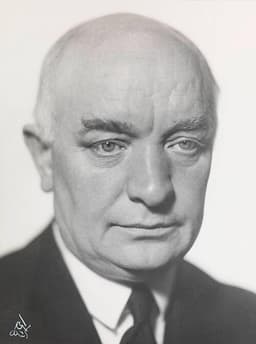
Per Albin Hansson
Politician · Modern
59.3Total
Basic Information
Born
1769
1885
Died
1822
1946
Era
Modern
Modern
Nationality
Ireland
Sweden
Occupation
Politician
Politician
Civilization
Western
Western
Score Comparison
Military (10%)
50.0
50.0
Political (20%)
72.0
72.0
Influence (20%)
55.0
62.0
Legacy (20%)
40.0
52.0
Leadership (15%)
75.0
72.0
Strategy (15%)
42.4
42.2
TOTAL
55.0
59.3
Lord Castlereagh — Complete Timeline
1814 AD
Treaty of Paris (1814)Political Action◆ Major
Castlereagh was the chief British negotiator for the Treaty of Paris, which ended the war with France and exiled Napoleon to Elba. The treaty restored the Bourbon monarchy and set lenient terms for France, aiming to stabilize Europe.
TreatyNapoleonic WarsPeace
Impact: globalconstructive
1815 AD
Congress of ViennaPolitical Action
Castlereagh represented Britain at the Congress of Vienna, which redrew the map of Europe after the Napoleonic Wars. He advocated for a balance of power and the containment of France, securing British interests and establishing a framework for European diplomacy that lasted decades.
DiplomacyPost-NapoleonicBalance of Power
Impact: globalconstructive
Quadruple AlliancePolitical Action◆ Major
Castlereagh helped form the Quadruple Alliance between Britain, Austria, Prussia, and Russia after Napoleon's final defeat. This alliance aimed to maintain the Vienna settlement and prevent future French aggression through periodic congresses.
AllianceDiplomacySecurity
Impact: globalconstructive
1822 AD
Suicide by Letter OpenerOther◆ Major
Castlereagh died by suicide at his country estate, North Cray Place, using a letter opener. He had been suffering from paranoia and overwork, exacerbated by political attacks. His death shocked the British political establishment.
SuicideMental HealthPolitical Figure
Impact: nationaltragic
Per Albin Hansson — Complete Timeline
1932 AD
Became Prime Minister of SwedenPolitical Action
Hansson became Prime Minister on September 24, 1932, leading a Social Democratic government. He initiated the 'Folkhemmet' (People's Home) welfare state program, which expanded social security, public housing, and labor rights, shaping modern Sweden.
FolkhemmetWelfare StateSocial Democracy
Impact: nationalconstructive
1939 AD
Declared Swedish Neutrality in World War IIPolitical Action◆ Major
At the outbreak of World War II in September 1939, Hansson declared Sweden's neutrality. This policy kept Sweden out of the war, though it involved controversial concessions to Nazi Germany, including iron ore exports and troop transit rights.
World War IINeutralityForeign Policy
Impact: global
Formed a National Unity GovernmentPolitical Action◆ Major
After the Soviet invasion of Finland in November 1939, Hansson formed a broad coalition government including all major parties except the Communists. This unity government managed Sweden's wartime policies and maintained domestic stability.
World War IICoalitionNational Unity
Impact: nationalconstructive
1940 AD
Negotiated the 'Permittenttrafik' AgreementPolitical Action◆ Major
In July 1940, Hansson's government agreed to allow German troops to transit through Sweden to Norway. This concession violated Sweden's neutrality and was heavily criticized, but it was seen as necessary to avoid German invasion.
World War IINeutralityConcession
Impact: regional
1946 AD
Expanded the Folkhemmet Welfare StateReform◆ Major
In his final years, Hansson oversaw the expansion of the Folkhemmet with the introduction of universal child allowances and improved pensions. These reforms solidified Sweden's social democratic model and were implemented shortly before his death.
FolkhemmetWelfareSocial Reform
Impact: nationalconstructive
This comparison has not been analyzed yet.
One-time AI generation (~1 minute). Scores and timeline are already available below.
Rankings
🥇
Per Albin HanssonLeader
Mil: 50.0Pol: 72.0Inf: 62.0
59.3
🥈
Lord Castlereagh
Mil: 50.0Pol: 72.0Inf: 55.0
55.0
+4.3 behind
How This Comparison Works
Algorithm
Each figure is scored on 6 dimensions (0—100 scale) based on structured historical data: Military (10%), Political (20%), Influence (20%), Legacy (20%), Leadership (15%), Strategy (15%). The weighted total produces the final ranking.
Data Sources
Scores are computed from structured sub-indicators in the database. Scale factors adjust for era (Ancient ×0.85, Modern ×1.0) and civilization size (Eastern ×1.05, Other ×0.80) to account for differences in population and military scale.
Maximum 3 Figures
Comparisons are limited to 2—3 figures to ensure readability and statistical meaningfulness.
Error Margins
±5 points per dimension — Sub-scores are derived from historical records with inherent uncertainty. Two figures within 5 points on a dimension should be considered roughly equivalent in that area.
Total Score Accuracy
±3 points overall — The weighted combination of 6 dimensions produces a total score with approximately ±3 points of uncertainty. Differences of less than 3 points are not statistically significant— the figures are effectively tied.
Known Limitations
- Historical records are incomplete and uneven across civilizations
- Figures from oral-tradition societies may be underrepresented
- Occupation labels can misclassify multi-role figures
- Scores measure capability and impact, not moral character
- Quantitative scoring is a comparison tool, not absolute truth
Capability Radar
Military (10%) — Battles & Warfare
Battles
28
27
Win Rate
30
31
Expansion
35
34
Political (20%) — Governance & Reform
Reform
70
75
Diplomacy
95
80
Economy
60
70
Influence (20%) — Cultural & Global Reach
Cultural
30
55
Global
75
55
Legacy (20%) — Historical Impact
Historical
75
60
Longevity
70
50
Leadership (15%) — Power & Stability
Tenure
85
65
Stability
80
85
Strategy (15%) — Tactics & Innovation
Strategy
37
39
Tactics
40
41
Reform
45
42
Similar Comparisons
Comments & Discussion
No comments yet. Be the first to share your thoughts!