Loading...
Lord Dalhousie vs Otto von Bismarck
Otto von Bismarck leads by 7.4 pts · 2 figures compared
…
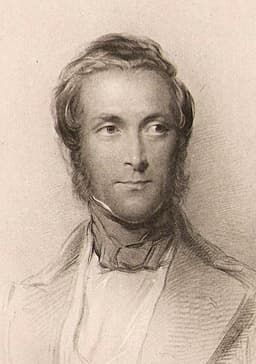
Lord Dalhousie
Politician · Modern
58.4Total
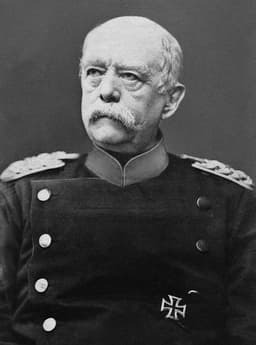
Otto von Bismarck
Politician · Modern
65.8Total
Basic Information
Born
1812
1815
Died
1860
1898
Era
Modern
Modern
Nationality
United Kingdom
Germany
Occupation
Politician
Politician
Civilization
Western
Western
Score Comparison
Military (10%)
40.0
55.0
Political (20%)
60.0
85.0
Influence (20%)
58.3
82.0
Legacy (20%)
55.0
40.0
Leadership (15%)
74.0
80.0
Strategy (15%)
60.0
50.0
TOTAL
58.4
65.8
Lord Dalhousie — Complete Timeline
1848 AD
Second Anglo-Sikh WarWar◆ Major
Dalhousie oversaw the Second Anglo-Sikh War in 1848-1849, which resulted in the British annexation of the Punjab. The Sikh army was defeated at the Battle of Gujrat, and the Treaty of Lahore in 1849 formally annexed the region, ending Sikh sovereignty and extending British rule to the northwest frontier.
Anglo-Sikh WarAnnexationPunjab
Impact: regional
Doctrine of LapsePolitical Action
Lord Dalhousie, as Governor-General of India, implemented the Doctrine of Lapse, a policy that allowed the British to annex any princely state where the ruler died without a natural heir. This policy led to the annexation of states like Satara, Jhansi, and Nagpur, causing widespread resentment among Indian rulers and contributing to the 1857 Rebellion.
AnnexationPolicy1857 Rebellion
Impact: regionaldestructive
1853 AD
Railway and Telegraph ExpansionInvention◆ Major
Dalhousie championed the development of railways and telegraphs in India. The first railway line from Bombay to Thane opened in 1853, and a telegraph network was established connecting major cities. These projects aimed to improve communication, trade, and military control, laying the foundation for India's modern infrastructure.
InfrastructureRailwayTelegraph
Impact: regionalconstructive
1856 AD
Annexation of AwadhPolitical Action◆ Major
Dalhousie annexed the Kingdom of Awadh in 1856 under the pretext of misgovernment. The annexation was highly controversial and deeply resented by the local population and nobility. It became a major cause of the 1857 Indian Rebellion, as Awadh's soldiers and landlords joined the uprising against British rule.
AnnexationAwadh1857 Rebellion
Impact: regionaldestructive
Otto von Bismarck — Complete Timeline
1870 AD
Franco-Prussian WarWar
Bismarck provoked France into declaring war by editing the Ems Dispatch to appear insulting. The resulting conflict saw Prussia and its allies decisively defeat France, leading to the fall of Napoleon III, the capture of Paris, and the annexation of Alsace-Lorraine.
WarProvocationAnnexation
Impact: globaldestructive
1871 AD
Unification of Germany ProclaimedPolitical Action
Following the Franco-Prussian War, Bismarck orchestrated the proclamation of the German Empire in the Hall of Mirrors at Versailles. King Wilhelm I of Prussia was declared German Emperor, uniting the German states under Prussian leadership and establishing the Second Reich.
UnificationGerman EmpireNationalism
Impact: globalconstructive
1878 AD
Enactment of the Anti-Socialist LawsPolitical Action◆ Major
After two assassination attempts on Kaiser Wilhelm I, Bismarck pushed through laws banning socialist organizations, publications, and meetings. The laws remained in force until 1890, suppressing the Social Democratic Party while Bismarck simultaneously introduced welfare reforms to undercut its appeal.
RepressionSocialismWelfare State
Impact: nationaldestructive
Congress of BerlinPolitical Action◆ Major
Bismarck hosted the Congress of Berlin to revise the Treaty of San Stefano and resolve the Eastern Crisis. He acted as 'honest broker,' reducing Russian gains, granting independence to Romania, Serbia, and Montenegro, and placing Bosnia-Herzegovina under Austro-Hungarian administration.
DiplomacyBalkansBalance of Power
Impact: global
1883 AD
Establishment of the Welfare StateReform◆ Major
Bismarck introduced the Health Insurance Bill (1883), Accident Insurance Bill (1884), and Old Age and Disability Insurance Bill (1889). These laws created the first modern welfare state, providing workers with social security and aiming to reduce support for socialist movements.
Social ReformWelfareInsurance
Impact: globalprogressive
1890 AD
Dismissal as ChancellorPolitical Action◆ Major
Emperor Wilhelm II forced Bismarck to resign due to policy disagreements, particularly over anti-socialist laws and foreign policy. Bismarck's departure marked the end of an era, leading to a more aggressive German foreign policy and the eventual unraveling of his alliance system.
ResignationWilhelm IIPolicy Shift
Impact: global
Expert Analysis
Otto von Bismarck vs Lord Dalhousie
The Iron Chancellor and The Imperial Architect: Contrasting Paths to Power
In the Hall of Mirrors at Versailles, January 18, 1871, a triumphant Prussian king was proclaimed Emperor of a unified Germany. Eight years later, in the same century, a British Governor-General in Calcutta signed papers that would annex the ancient kingdom of Awadh, planting seeds of rebellion that would erupt into the Indian Mutiny of 1857. One man created a nation; the other helped dismantle an empire. Both were conservative aristocrats wielding immense power in the 19th century. Yet their legacies could not be more different. What drove Otto von Bismarck and Lord Dalhousie to such divergent outcomes?
Origins
Otto von Bismarck was born in 1815 into the Prussian Junker class, a landowning aristocracy that valued military service and absolute monarchy. His father was a retired cavalry officer, his mother from a bourgeois family—a mix that gave him both the instincts of a traditional noble and the pragmatism of a modern bureaucrat. Bismarck studied law at Göttingen and Berlin, but his true education came from observing the political chessboard of post-Napoleonic Europe. He was a child of the Congress of Vienna era, where stability was prized above all.
James Andrew Broun-Ramsay, the 10th Earl of Dalhousie, was born in 1812 into Scottish aristocracy. His father was a military hero and Governor-General of Canada. Dalhousie attended Harrow and Christ Church, Oxford, absorbing the confident, expansionist ethos of Victorian Britain. Where Bismarck grew up amid the fragility of German states, Dalhousie was raised in the certainty of an empire that already ruled the waves and a fifth of the world. Their eras shaped them: Bismarck learned that power required careful balance; Dalhousie learned that power could be taken for granted.
Rise to Power
Bismarck entered politics reluctantly, serving as a deputy in the Prussian Landtag. His breakthrough came in 1862, when King Wilhelm I appointed him Minister President to resolve a budget crisis with parliament. Bismarck famously told the Prussian legislature, “The great questions of the time will not be resolved by speeches and majority decisions—but by blood and iron.” He was 47, a latecomer to high office, but he brought a strategist’s patience.
Dalhousie’s rise was faster and smoother. At 36, he became Governor-General of India in 1848, the youngest ever appointed. He arrived with a clear mandate: expand British territory and modernize the subcontinent. The East India Company’s board in London trusted him to be efficient, ruthless, and loyal. Where Bismarck had to fight for every inch of power against domestic opponents, Dalhousie inherited an administrative machine already primed for conquest.
Leadership & Governance
Bismarck governed through political genius. He manipulated alliances, controlled the press, and played rivals against each other. His military strategy was cautious: he provoked wars only when victory was certain, as in the Franco-Prussian War of 1870, where he edited the Ems Dispatch to insult France into declaring war. But his greatest innovation was domestic: the welfare state. In the 1880s, Bismarck introduced health insurance, accident insurance, and old-age pensions—not out of compassion, but to undercut socialist appeal. “Give the working man a pension,” he said, “and he will be content.”
Dalhousie governed through administrative efficiency and territorial expansion. He implemented the Doctrine of Lapse, which allowed the British to annex any princely state whose ruler died without a natural heir. This policy swallowed seven states, including the wealthy kingdom of Awadh in 1856. He also built railways, telegraphs, and roads, connecting India for the first time. But his reforms were imposed from above, ignoring local sentiment. The railway from Bombay to Thane, opened in 1853, was an engineering marvel—but it also enabled British troops to move faster to suppress rebellions.
Triumph & Tragedy
Bismarck’s triumph was the unification of Germany in 1871, proclaimed in the Hall of Mirrors at Versailles, a deliberate humiliation of France. He then spent two decades as Chancellor, maintaining peace in Europe through a web of treaties. His tragedy came in 1890, when the young Kaiser Wilhelm II dismissed him, resentful of his overbearing influence. Bismarck retired to his estate, bitter but alive, watching his creation drift toward the catastrophe he had warned against.
Dalhousie’s triumph was the annexation of Punjab after the Second Anglo-Sikh War (1848-1849), adding a rich province to British India. He also reformed the civil service and expanded education. But his tragedy was the Indian Rebellion of 1857, which he did not live to see in full—he died in 1860, aged 48, worn out by overwork and ill health. The rebellion was a direct consequence of his policies: the Doctrine of Lapse had alienated princes, and the annexation of Awadh had outraged soldiers and peasants alike. Dalhousie’s legacy was a revolt that nearly ended British rule.
Character & Destiny
Bismarck was a master of restraint. He knew when to stop—when to make peace, when to compromise. His personality was cynical, calculating, and deeply pragmatic. He once said, “Politics is the art of the possible.” This kept him in power for 28 years and preserved German peace for two decades. Dalhousie was driven by a different impulse: the Victorian faith in progress and duty. He wrote, “I have no ambition but to do my duty.” That duty meant expansion, modernization, and control—with little regard for the human cost. His character was that of a builder who did not see that his foundations were cracking.
Legacy
Bismarck is remembered as the Iron Chancellor, the architect of German unity and the welfare state. His political score of 88 reflects his mastery of statecraft, though his military score of 55 shows he was no general. His legacy is complex: he created a powerful Germany but also sowed the nationalism that would lead to two world wars. Yet his welfare reforms remain a model.
Dalhousie’s legacy is darker. His political score of 72 and influence of 70 acknowledge his administrative achievements, but his legacy score of 55 reflects the rebellion he provoked. He is remembered as the imperialist who overreached, whose Doctrine of Lapse became a byword for colonial arrogance. The railways he built still run, but the scars of 1857 remain.
Conclusion
Bismarck and Dalhousie both wielded vast power in an age of empires. One built a nation; the other dismantled one. The difference lay not in their ambitions but in their wisdom. Bismarck understood that power must be balanced with restraint, that lasting achievement requires patience. Dalhousie believed that power could be applied without consequence, that progress justified any means. In the end, the Iron Chancellor died in his bed, his work intact; the Imperial Architect died young, his work undone by rebellion. History’s verdict is clear: the statesman who knows when to stop outlasts the one who never stops at all.
Rankings
🥇
Otto von BismarckLeader
Mil: 55.0Pol: 85.0Inf: 82.0
65.8
🥈
Lord Dalhousie
Mil: 40.0Pol: 60.0Inf: 58.3
58.4
+7.4 behind
How This Comparison Works
Algorithm
Each figure is scored on 6 dimensions (0—100 scale) based on structured historical data: Military (10%), Political (20%), Influence (20%), Legacy (20%), Leadership (15%), Strategy (15%). The weighted total produces the final ranking.
Data Sources
Scores are computed from structured sub-indicators in the database. Scale factors adjust for era (Ancient ×0.85, Modern ×1.0) and civilization size (Eastern ×1.05, Other ×0.80) to account for differences in population and military scale.
Maximum 3 Figures
Comparisons are limited to 2—3 figures to ensure readability and statistical meaningfulness.
Error Margins
±5 points per dimension — Sub-scores are derived from historical records with inherent uncertainty. Two figures within 5 points on a dimension should be considered roughly equivalent in that area.
Total Score Accuracy
±3 points overall — The weighted combination of 6 dimensions produces a total score with approximately ±3 points of uncertainty. Differences of less than 3 points are not statistically significant— the figures are effectively tied.
Known Limitations
- Historical records are incomplete and uneven across civilizations
- Figures from oral-tradition societies may be underrepresented
- Occupation labels can misclassify multi-role figures
- Scores measure capability and impact, not moral character
- Quantitative scoring is a comparison tool, not absolute truth
Capability Radar
Military (10%) — Battles & Warfare
Battles
20
60
Win Rate
30
70
Expansion
85
80
Political (20%) — Governance & Reform
Reform
75
90
Diplomacy
55
95
Economy
65
80
Influence (20%) — Cultural & Global Reach
Cultural
40
65
Global
70
75
Legacy (20%) — Historical Impact
Historical
75
85
Longevity
60
70
Leadership (15%) — Power & Stability
Tenure
70
85
Stability
20
70
Strategy (15%) — Tactics & Innovation
Strategy
60
85
Tactics
15
55
Reform
40
75
Similar Comparisons
Comments & Discussion
数据调查官6/16/2026
Dalhousie的数据看似华丽——修了4000英里电报线和5000公里铁路——但这些基建全是为了榨干印度财富运往曼彻斯特。而俾斯麦在德国推的铁路网,真正连接了分散的经济体,催生了中欧工业崛起。表面都是搞现代化,但一个像吸血鬼抽血建管道,一个像医生搭血管。数据不会撒谎,但你得追问“为谁修路”这个根本问题。
蒸汽朋克古董商6/16/2026
说俾斯麦伟大,但他押注铁血政策时,贵族已经玩不转骑兵冲锋了——克尼格雷茨战役普鲁士用后装步枪和铁路运兵,纯粹技术碾压奥地利。Dalhousie呢?他把东印度公司的土兵薪饷压低到历史最低,忘记英国养兵靠金钱和威望。两人都热爱铁路,但一个用铁路快速投送克虏伯大炮,一个用铁路运棉花回利物浦。这就叫:技术决定论的下半场,永远看谁更懂人心。
Chronicler65326/16/2026
Dalhousie was a reckless paper-pusher who triggered the Great Mutiny with his Doctrine of Lapse. Bismarck, meanwhile, orchestrated three sharp wars to unify Germany without sparking a catastrophic internal revolt. Dalhousie’s annexation of Awadh in 1856 was a bureaucratic land grab that enraged 40 million Indians. Bismarck never blundered so stupidly because he understood power needs legitimacy, not just signatures. One was a statesman; the other was a clerk with guns.
Chronicler80866/16/2026
Let’s stop romanticizing Bismarck as the cool realist. His 1866 indemnity bill was a cynical bribe to the liberal Reichstag to approve his unconstitutional spending—paving the way for authoritarian rule behind a constitutional mask. Dalhousie was at least transparent about his imperial intent: his 1854 annexation memo doesn't pretend to care about Indian consent. Bismarck’s “blood and iron” was just PR for the same old aristocratic power grab. Give me an open imperialist over a sneaky legalist a
Chronicler66056/16/2026
Dalhousie behaved like a proconsul drunk on Roman provincial plunder—annexing states, smashing local power structures, building his own cult of personality. Bismarck, by contrast, was a conservative who kept the monarchies and aristocracies of Bavaria, Saxony, and Württemberg intact. Both expanded empires, but Dalhousie acted like a Caesar tearing down old institutions, while Bismarck acted like a Sulla—a reactionary who preserved forms while centralizing real control. One left a legacy of revol